
JetBlast Magazine Best of 2025
250 Years of the United States Navy Through Naval Airpower
By Jacob Herb
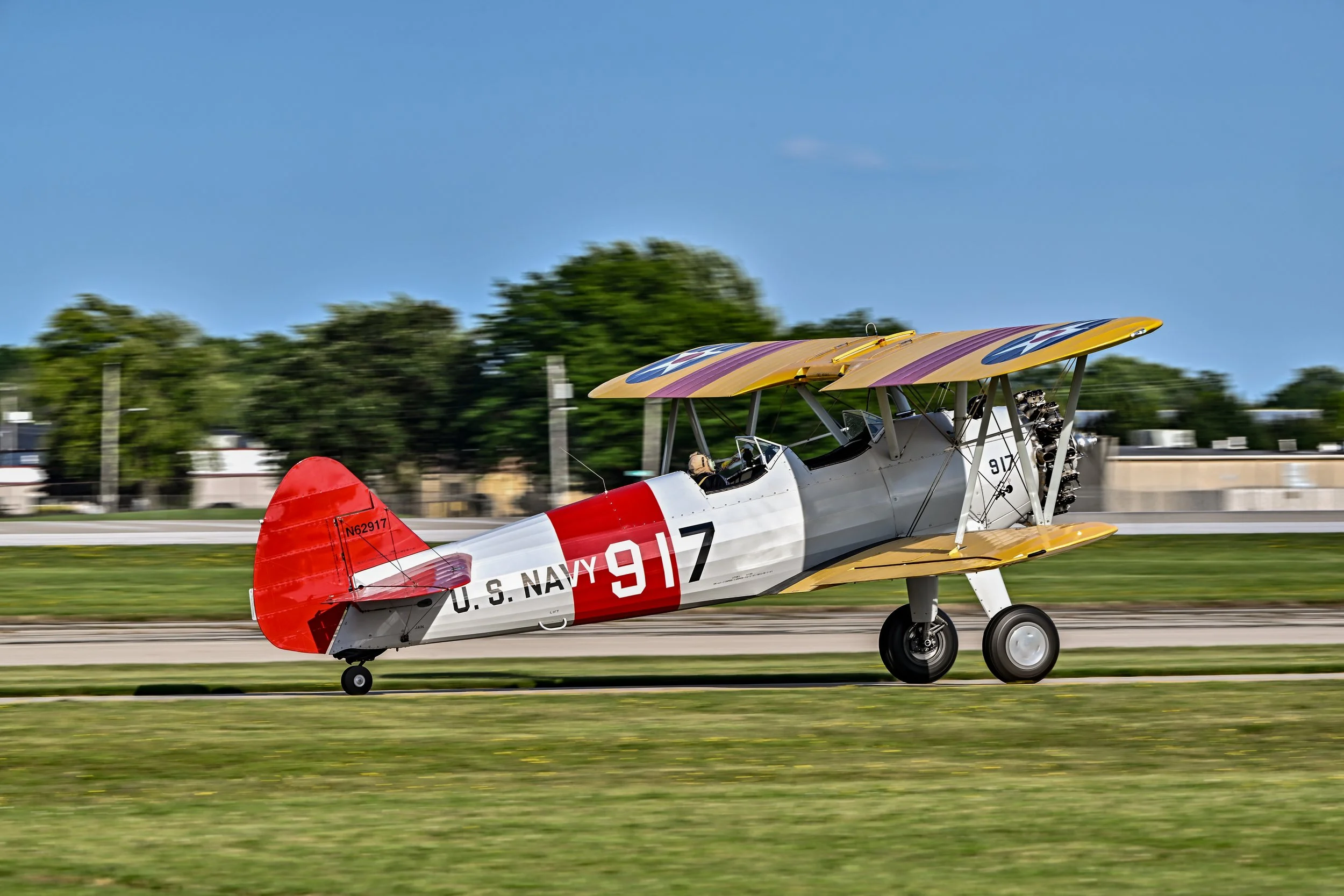
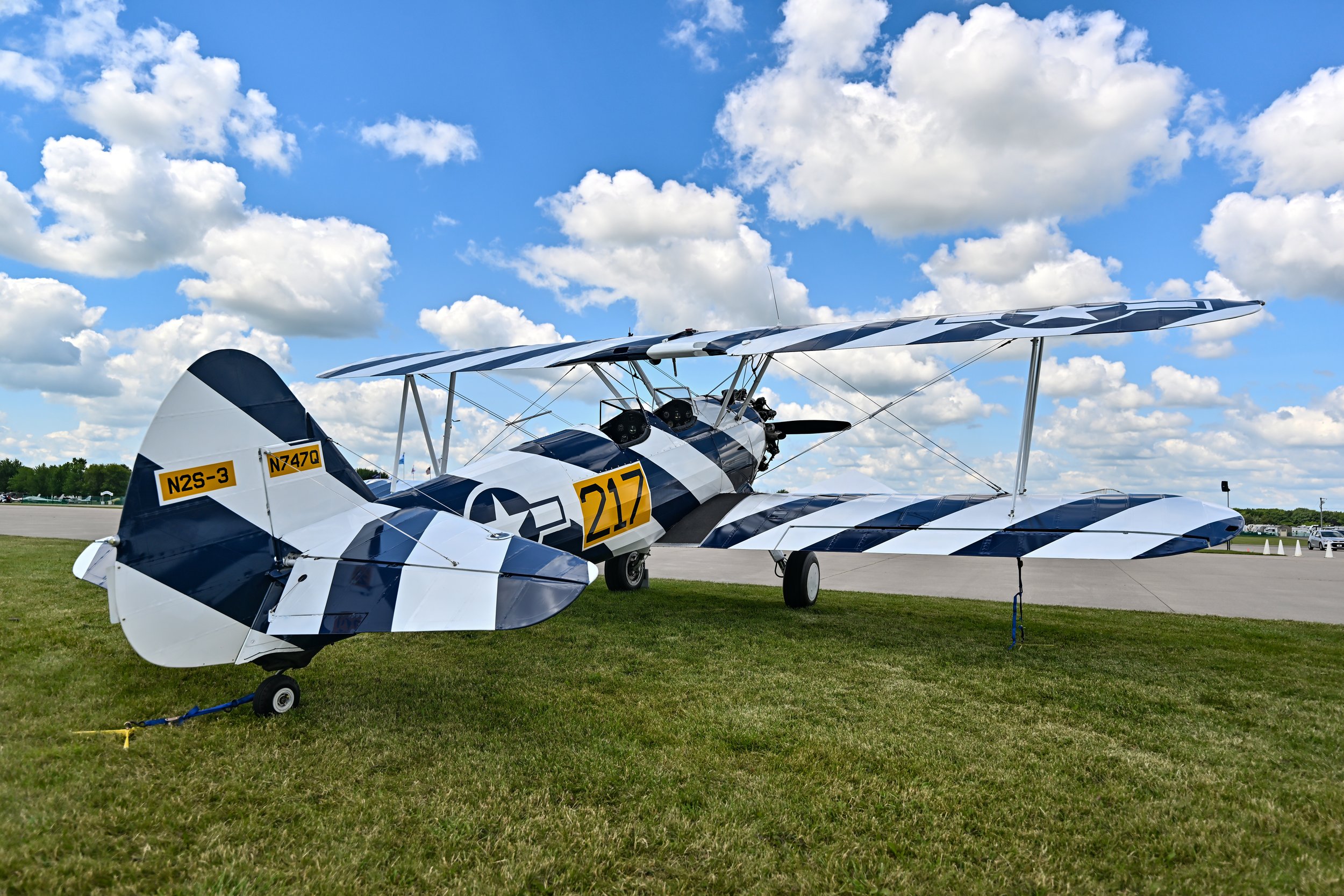
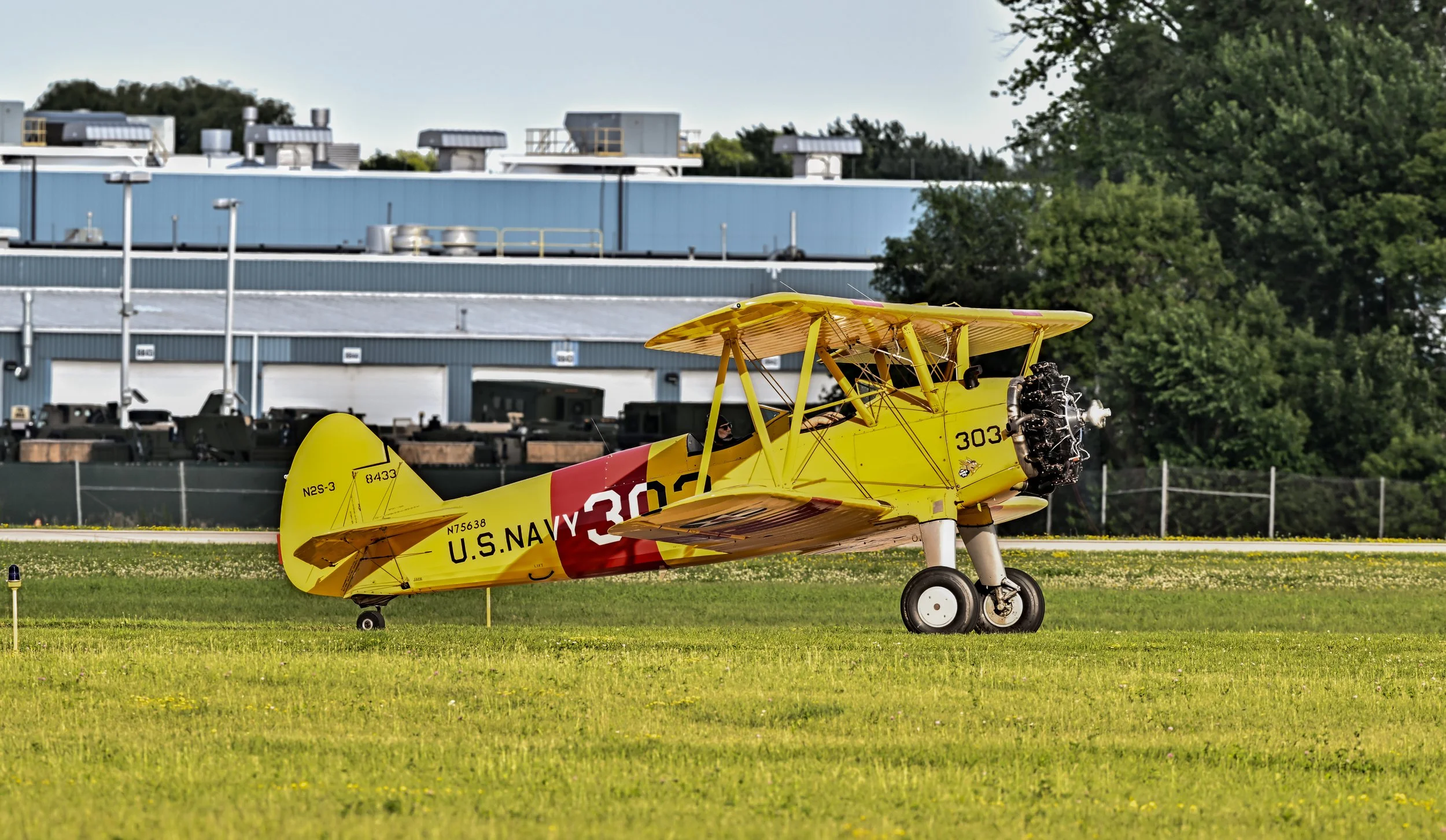
2025 saw the 250th anniversary of the United States Continental Navy standing up on 13 October, 1775. The Continental Navy was brought about to raid and defend against the British Navy during the Revolutionary War. In 1783, Congress sold the last ship in the naval arsenal ending a 10 year run due to budget constraints at the time. It wasn’t until 17 March, 1794 the United States Navy was brought back into light and became a permanent branch of the United States military. Naval aviation didn’t come until 1911 with the establishment of the United States Naval Flying Corps. The sole purpose for the flying corps was to protect naval shore bases. In 1921, US naval aviation took its first steps to becoming the mainstay of naval dominance. In 1922, the USS Jupiter was turned into the first naval carrier USS Langley. USS Lexington and Saratoga came about 2 years later and those two ships formed the backbone of a new modern navy. The carrier and the aircraft on served on them became the most lethal combination and prestigious pieces in a nations naval arsenal.
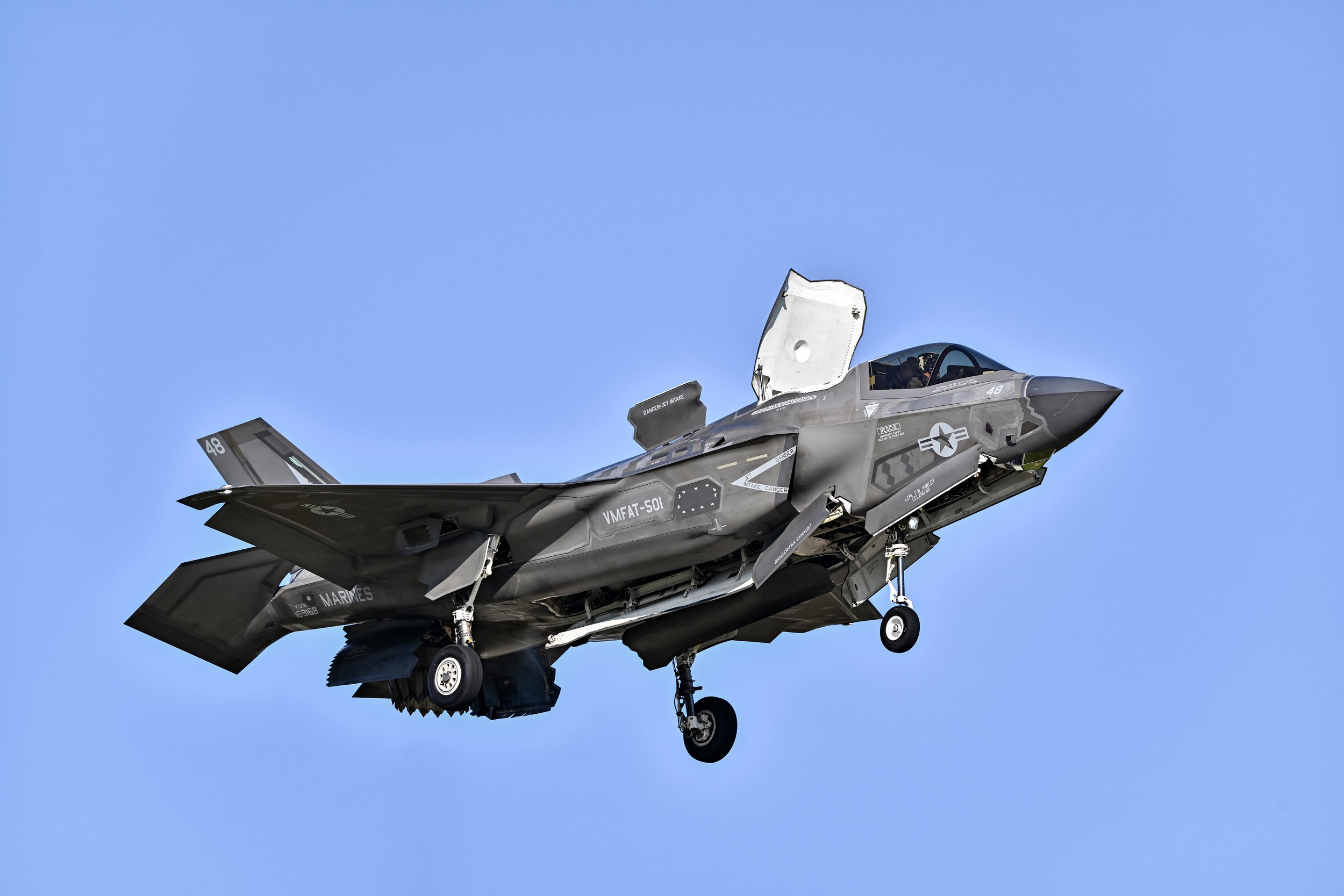
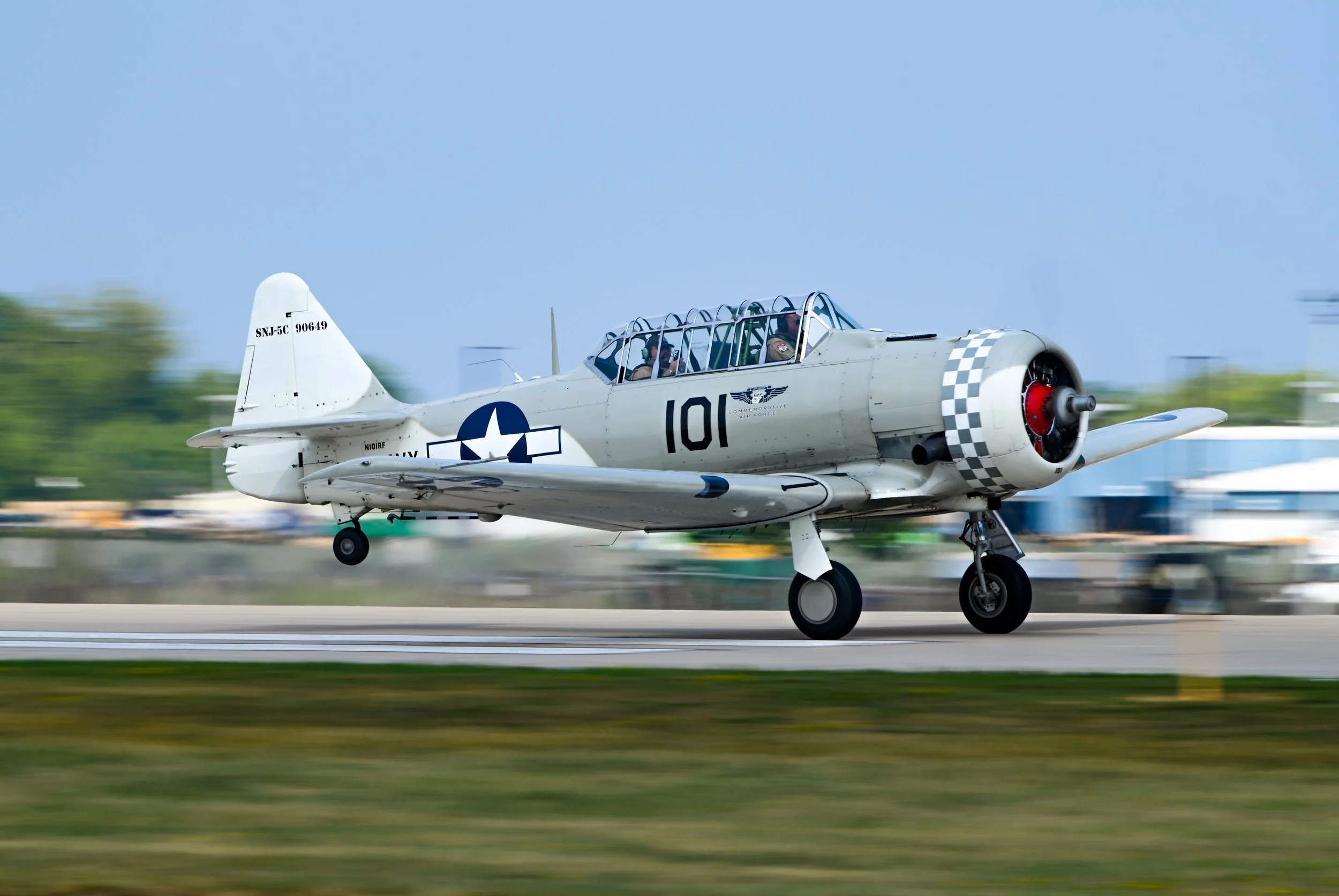
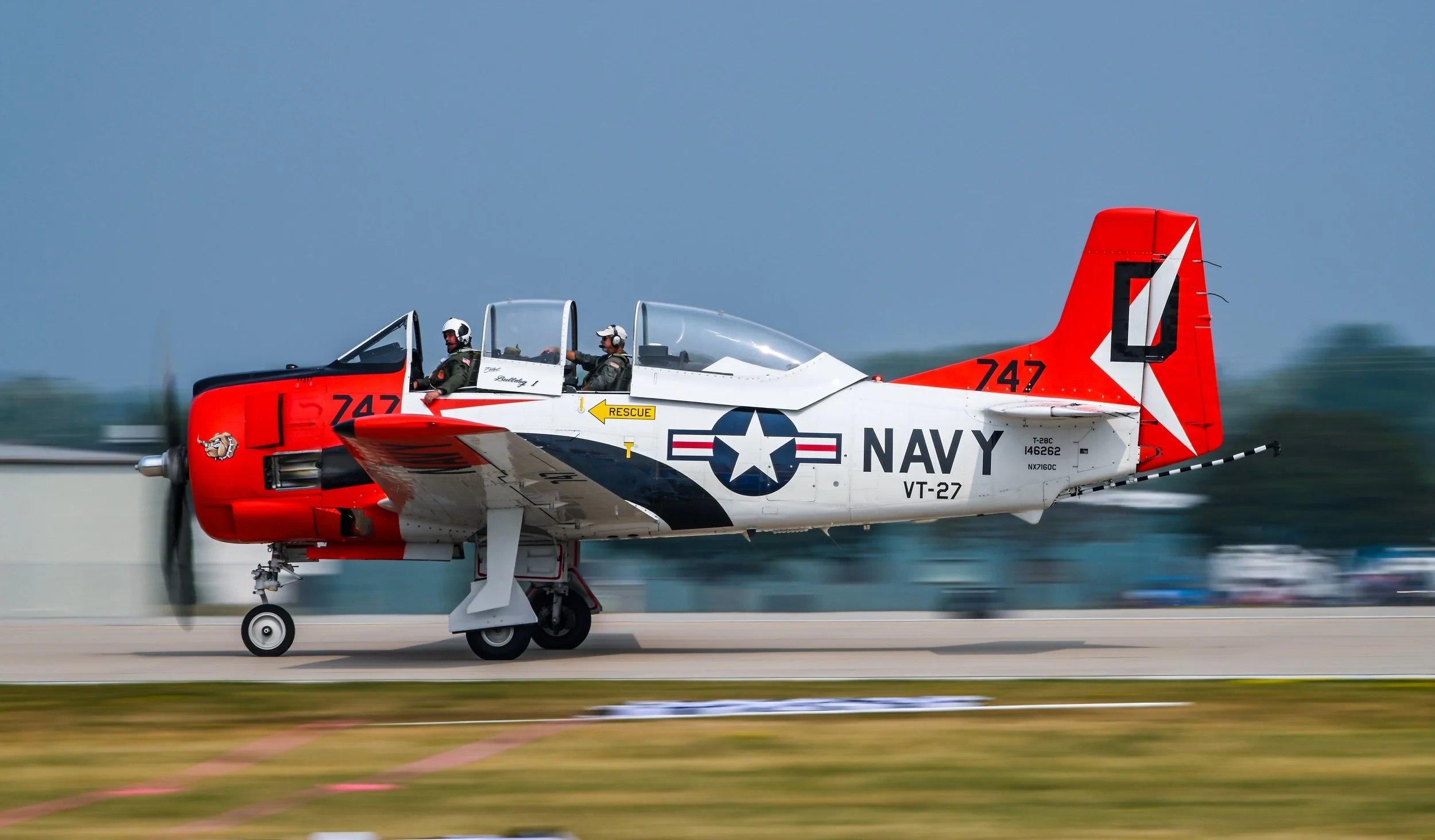
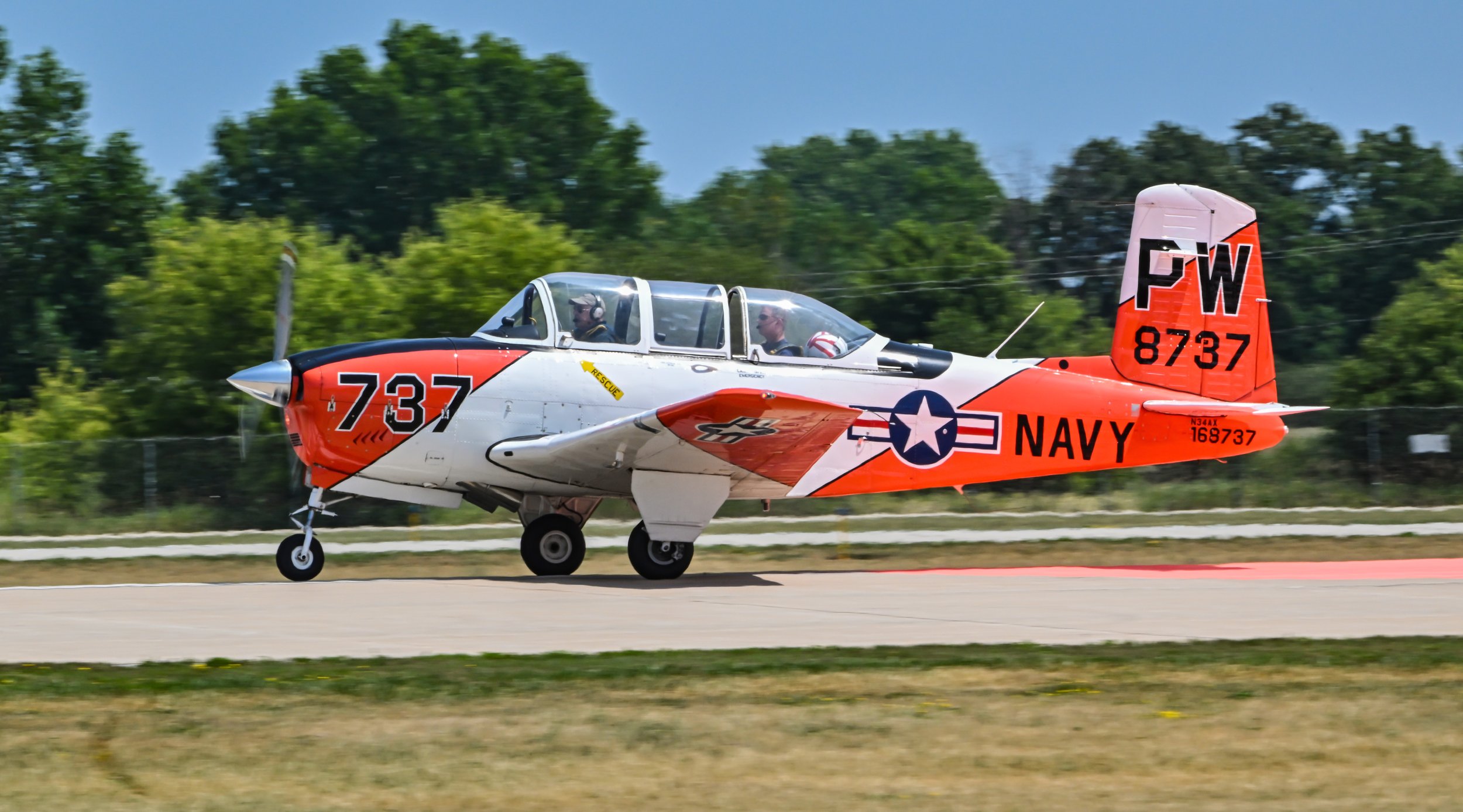
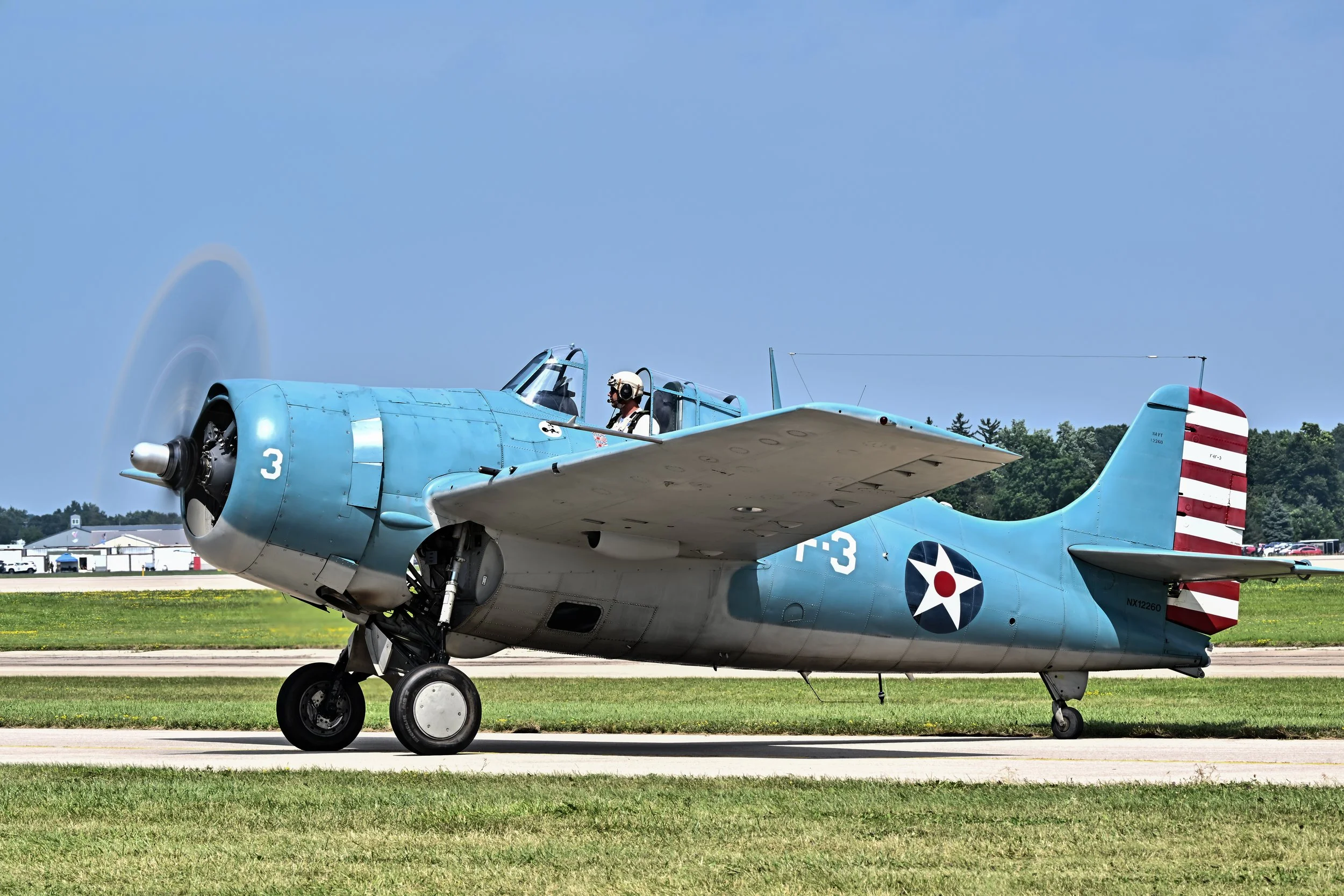
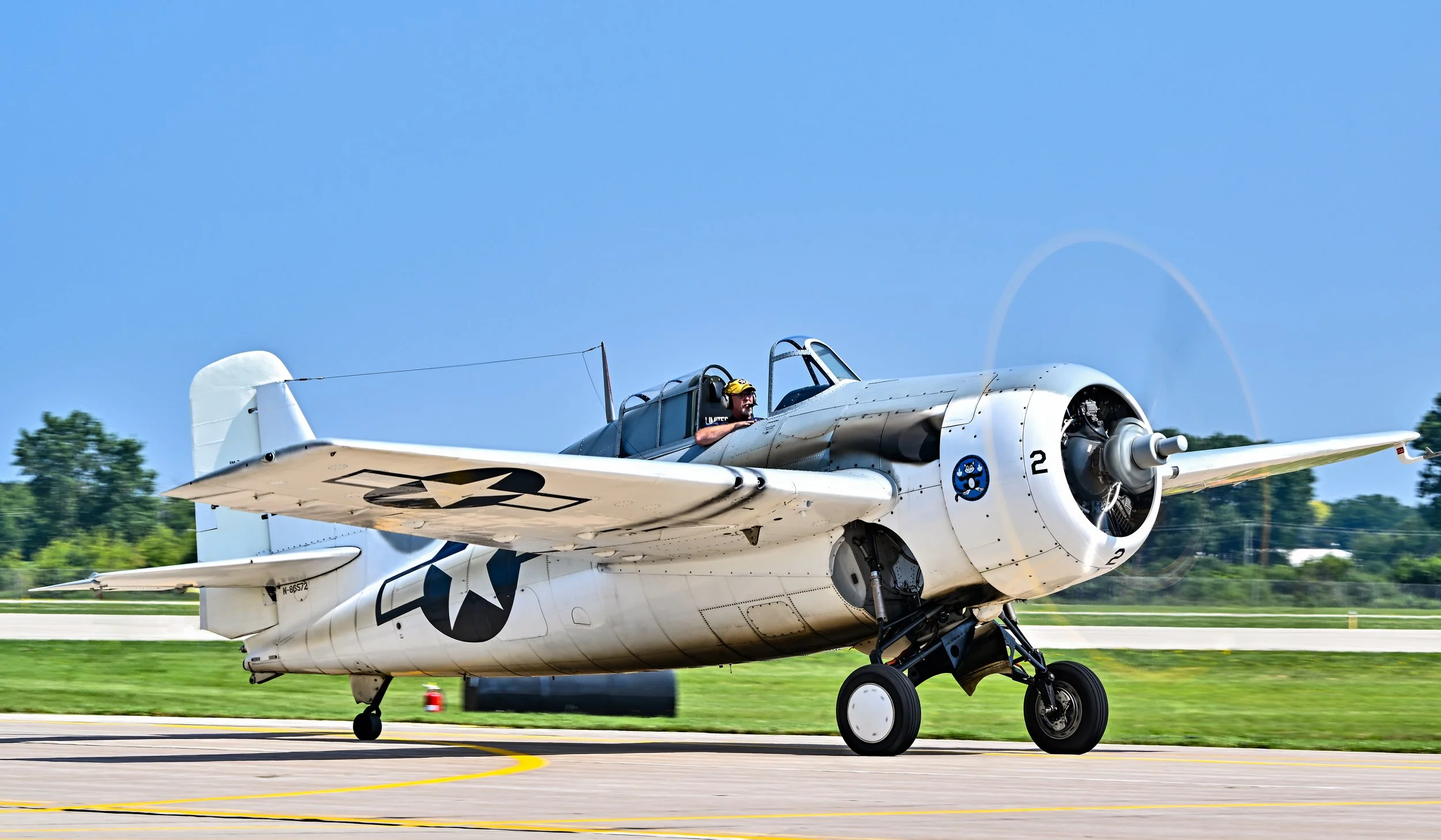
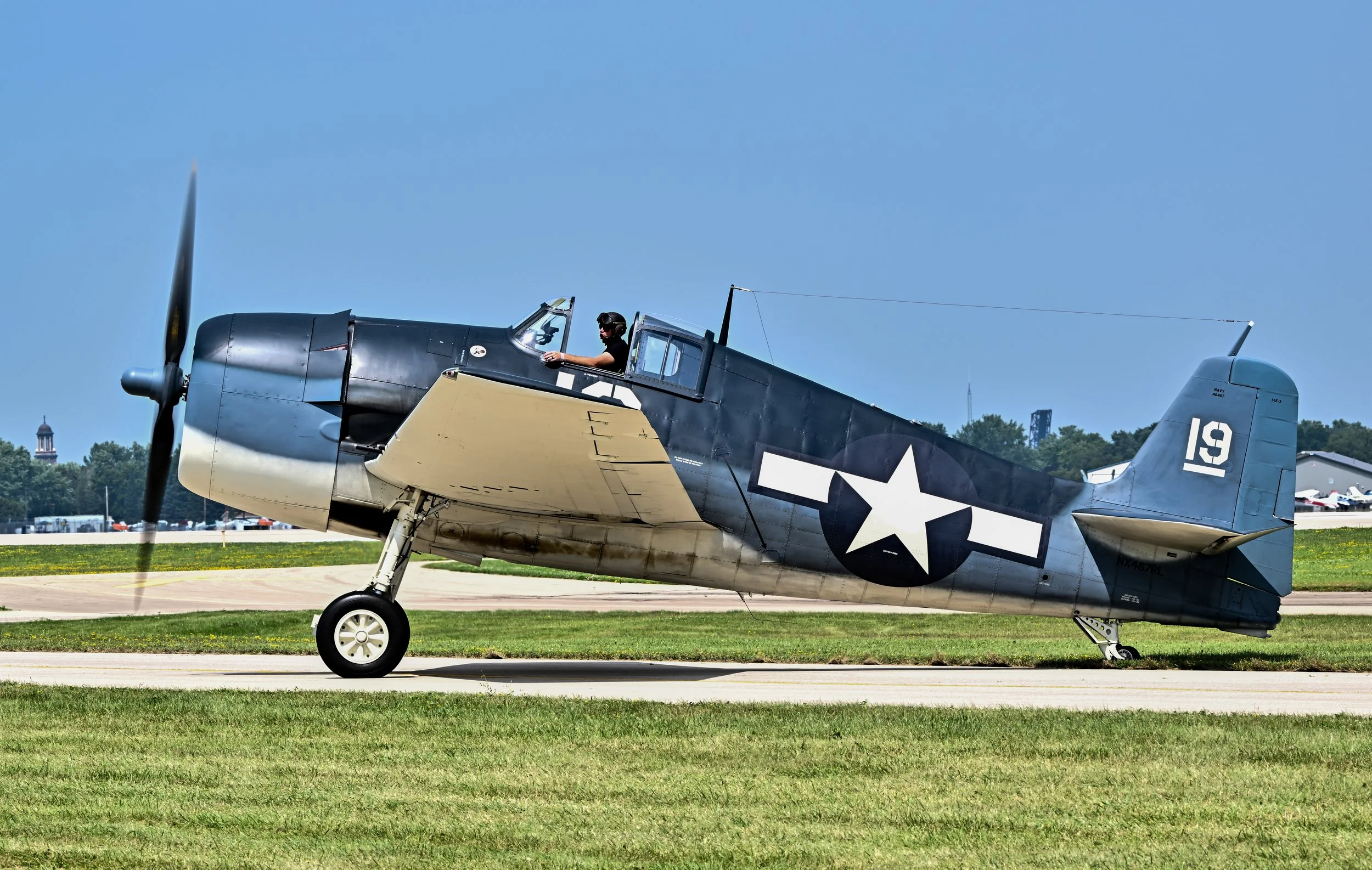
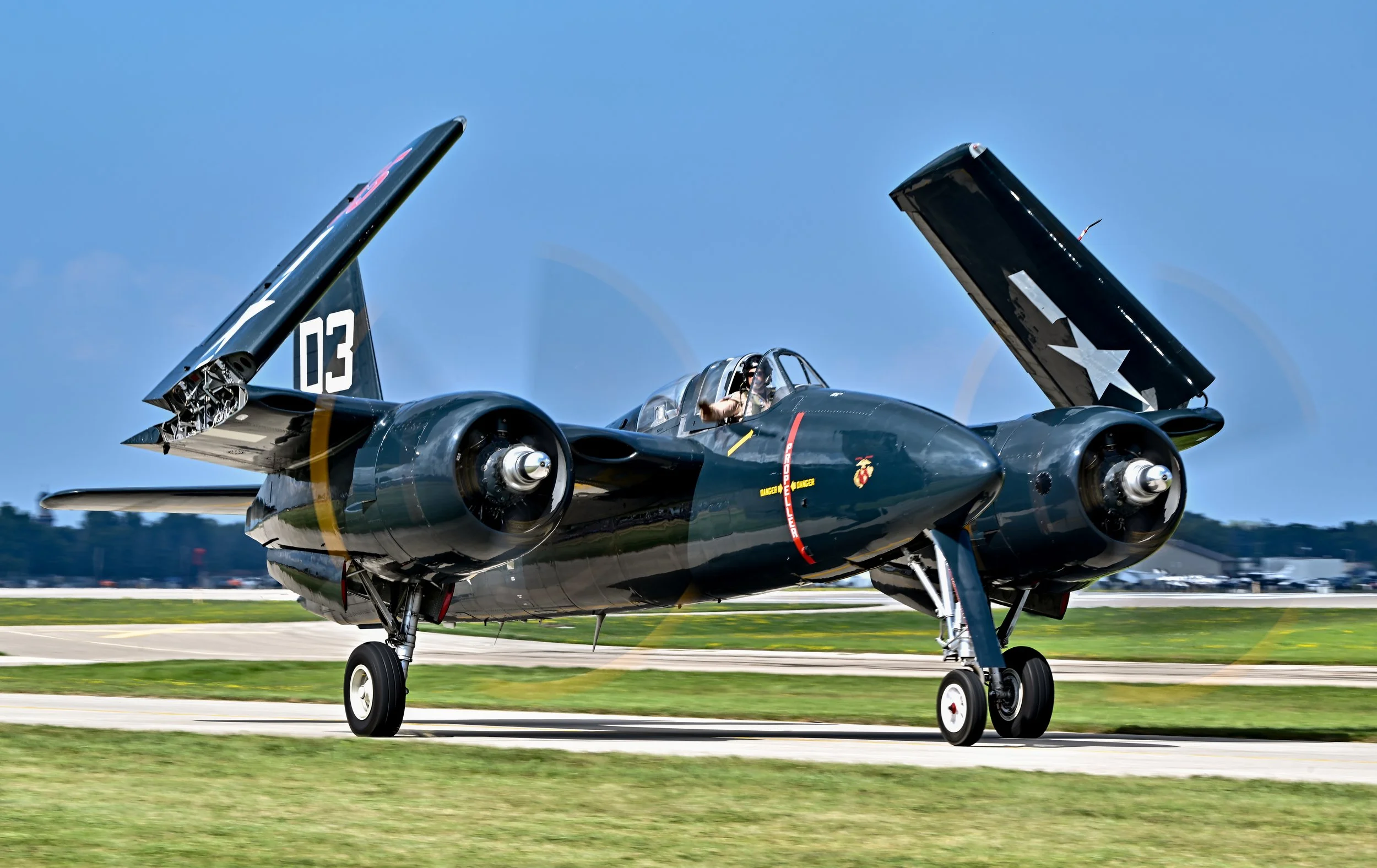
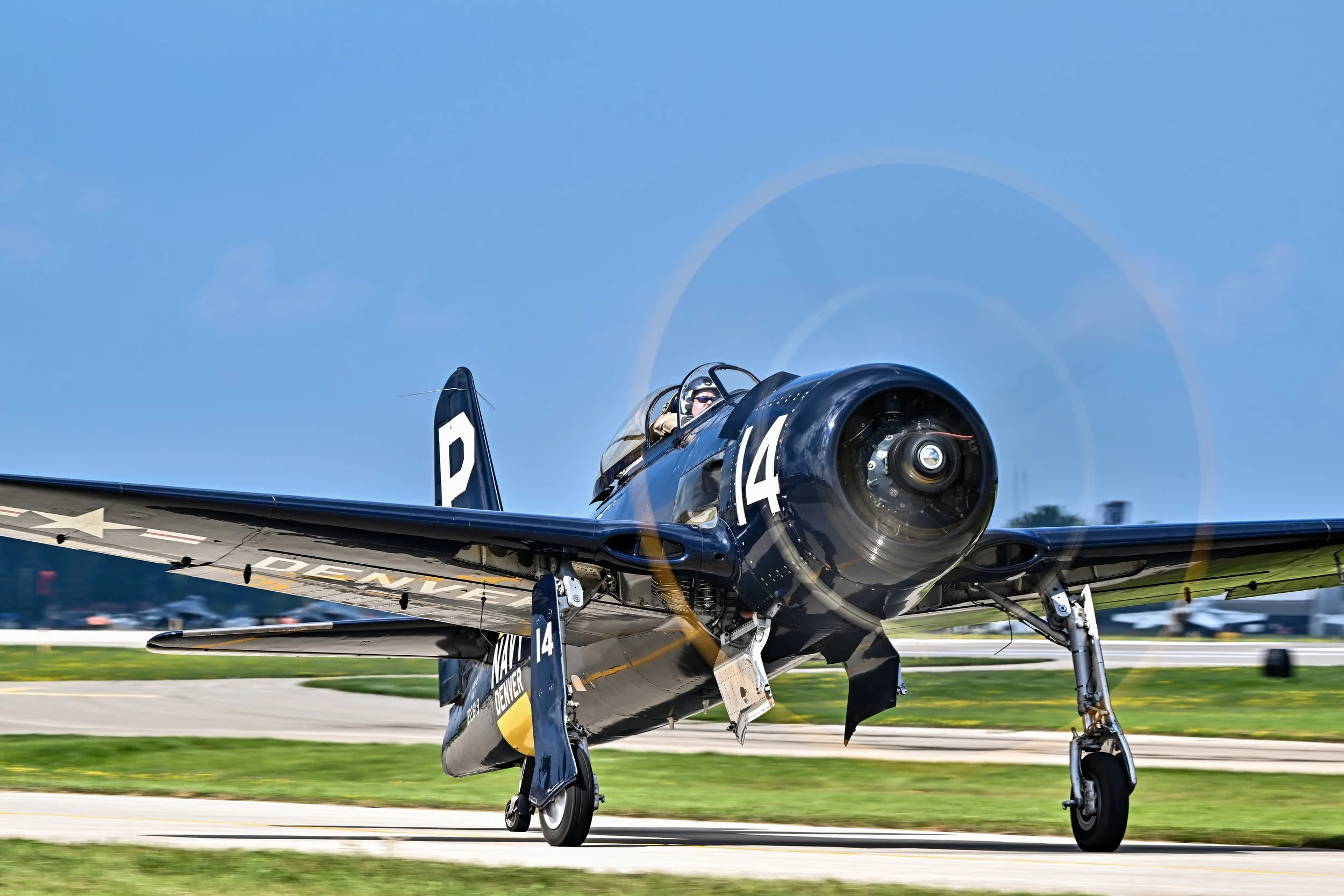
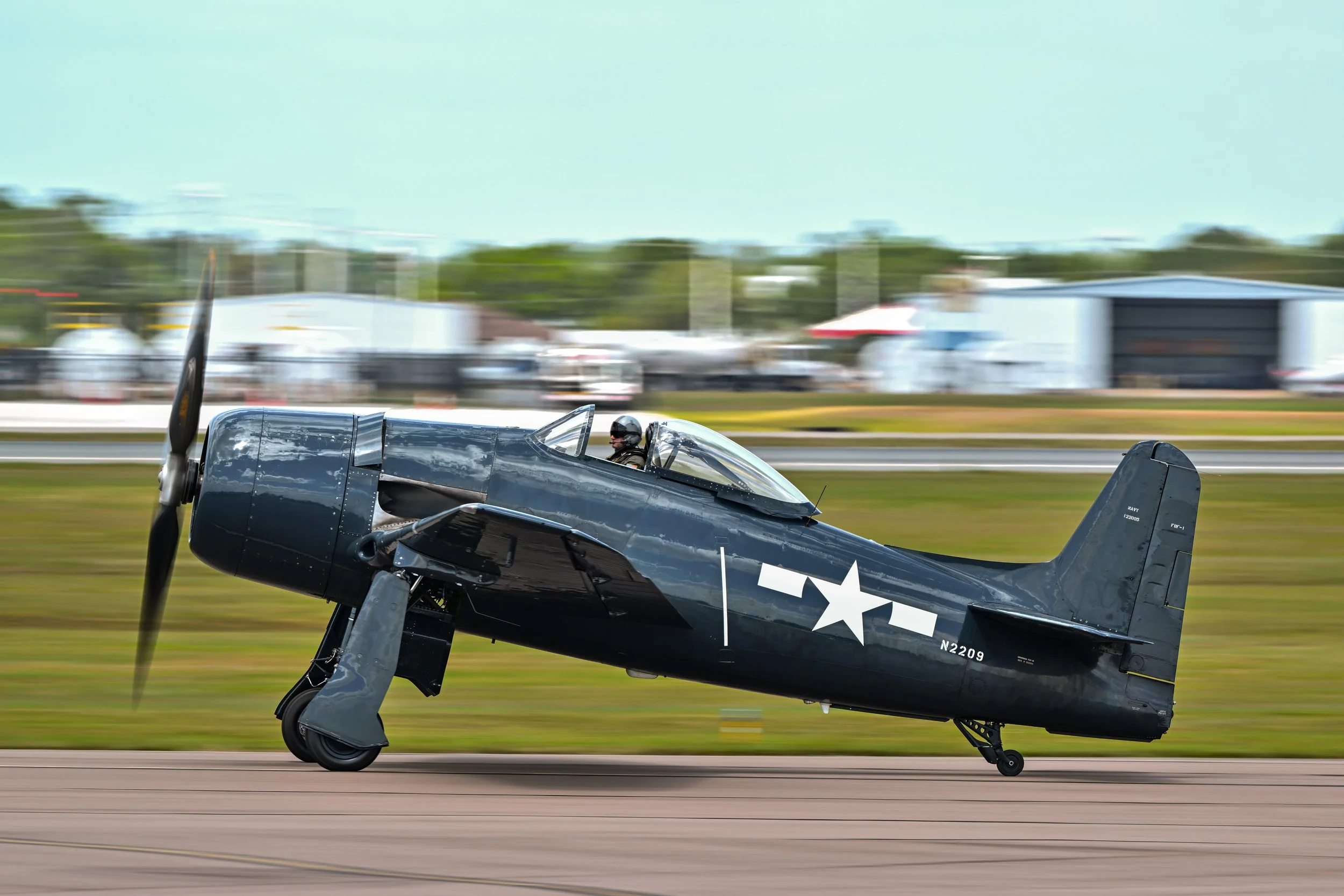
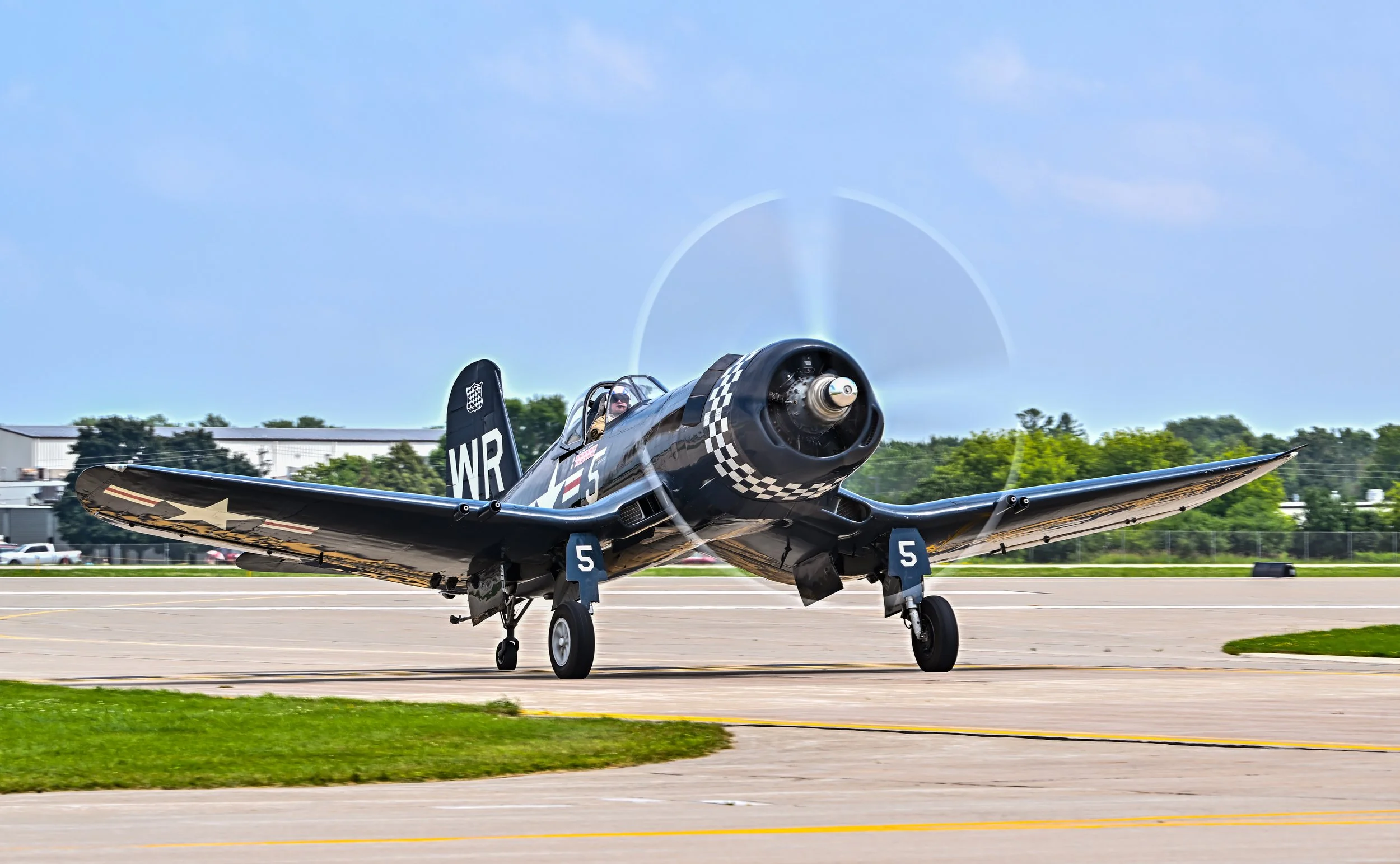
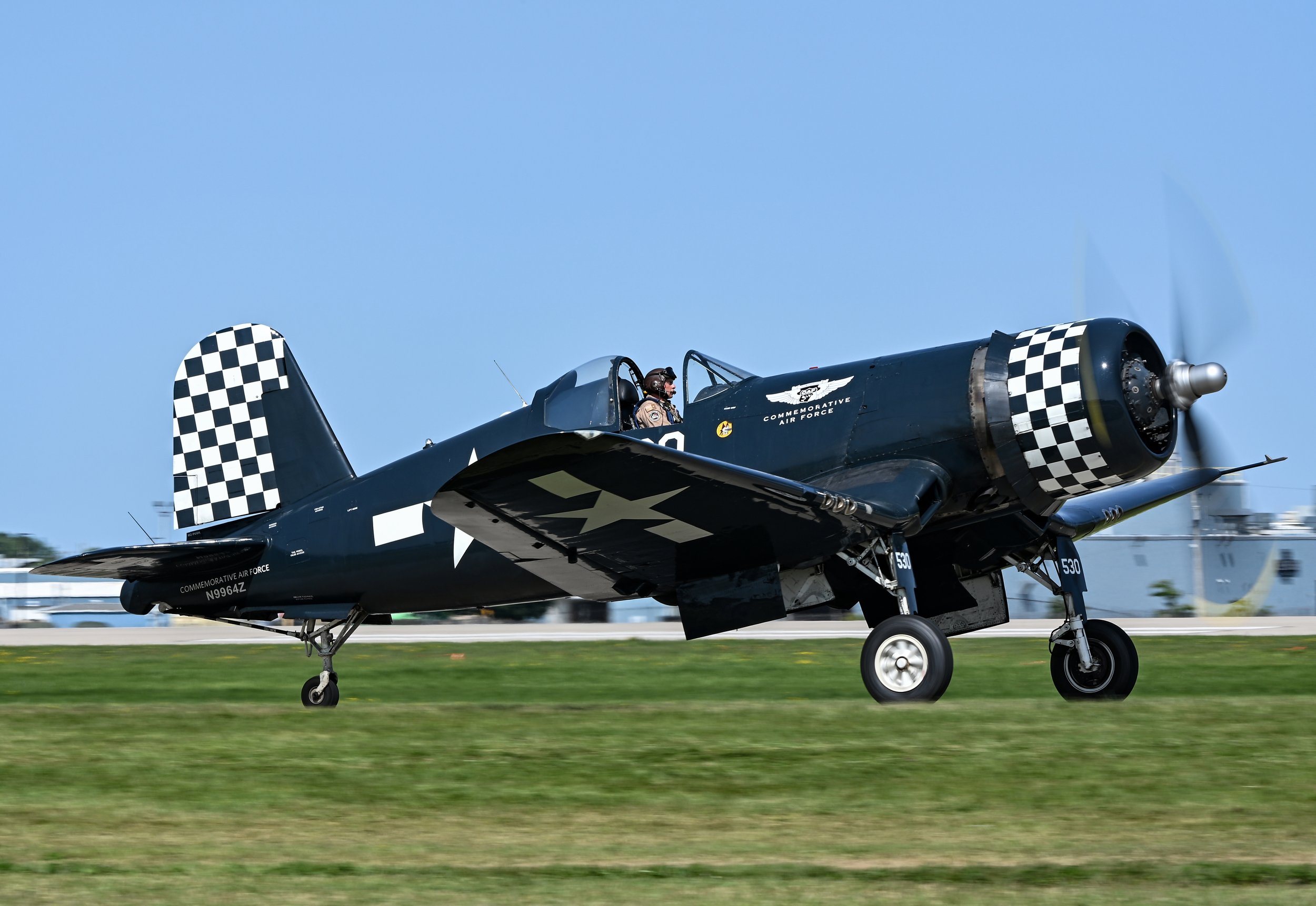
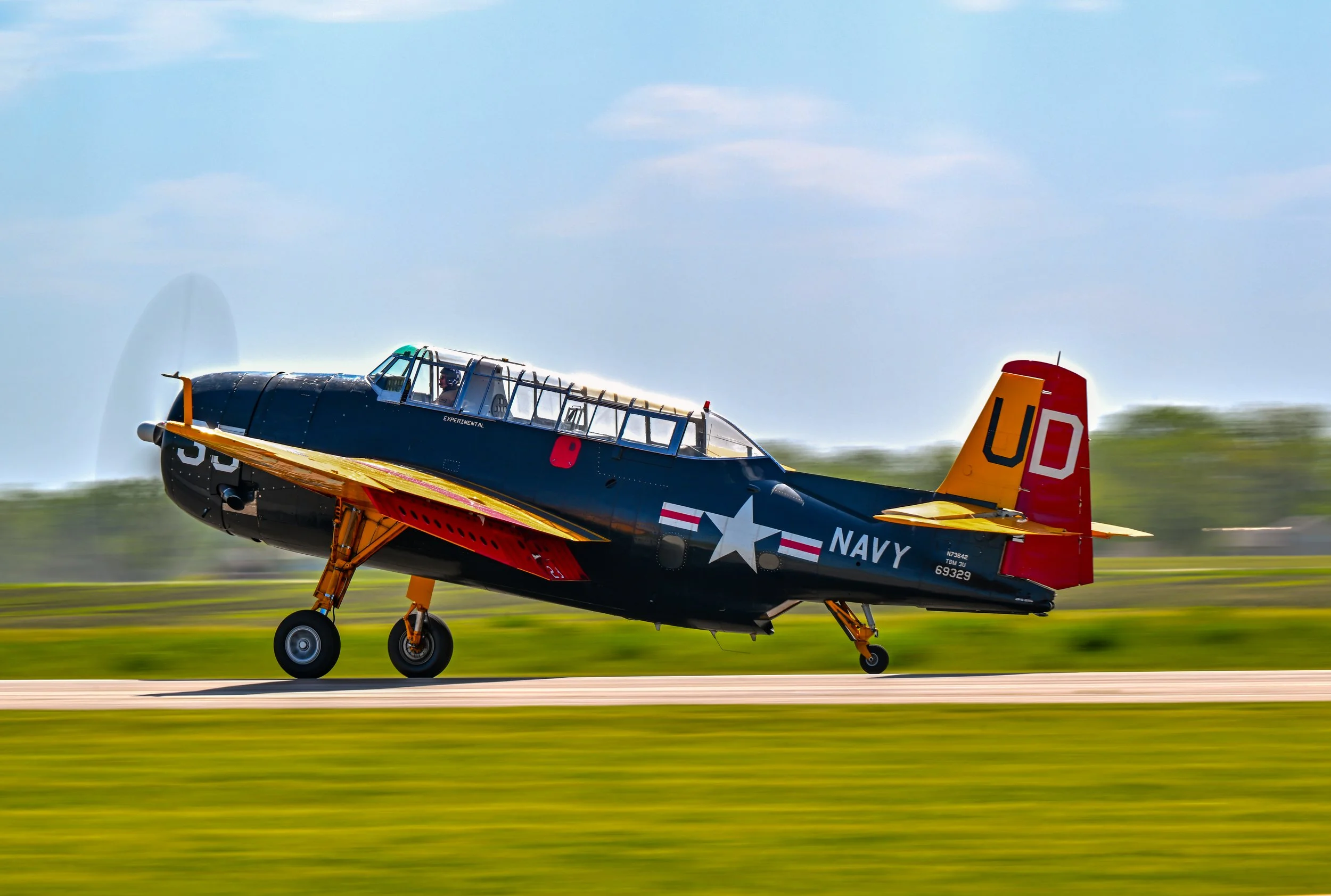
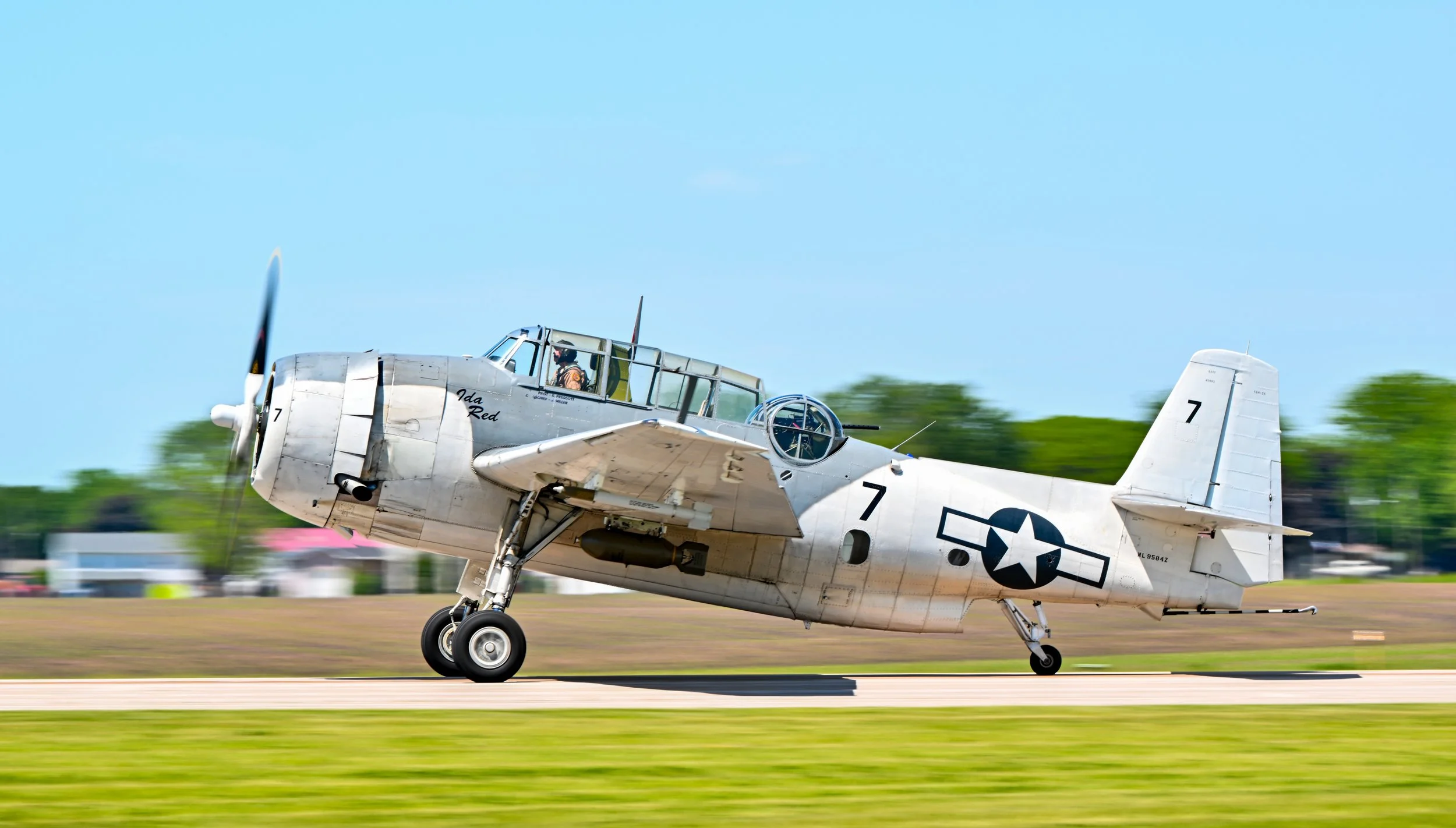
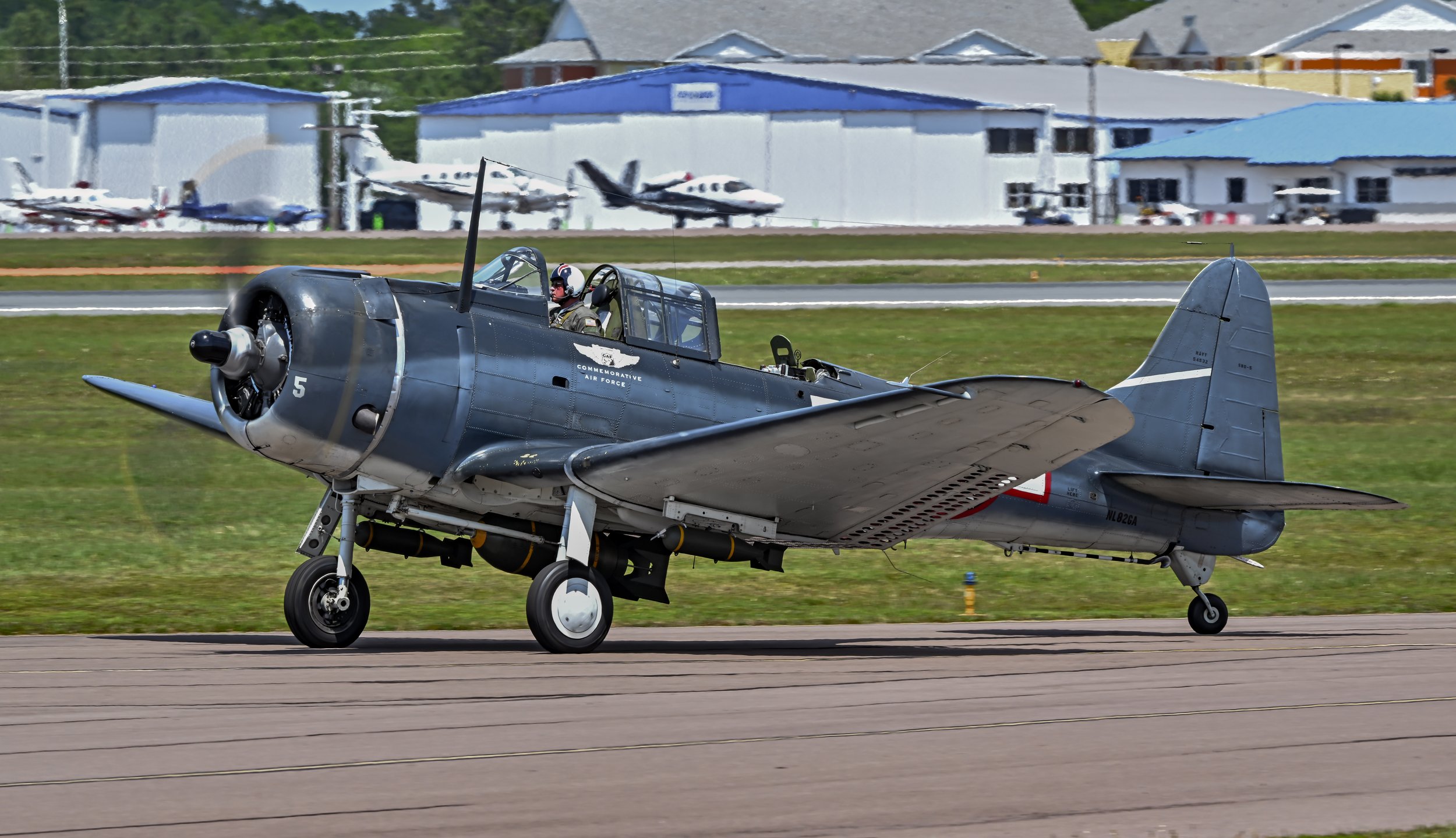
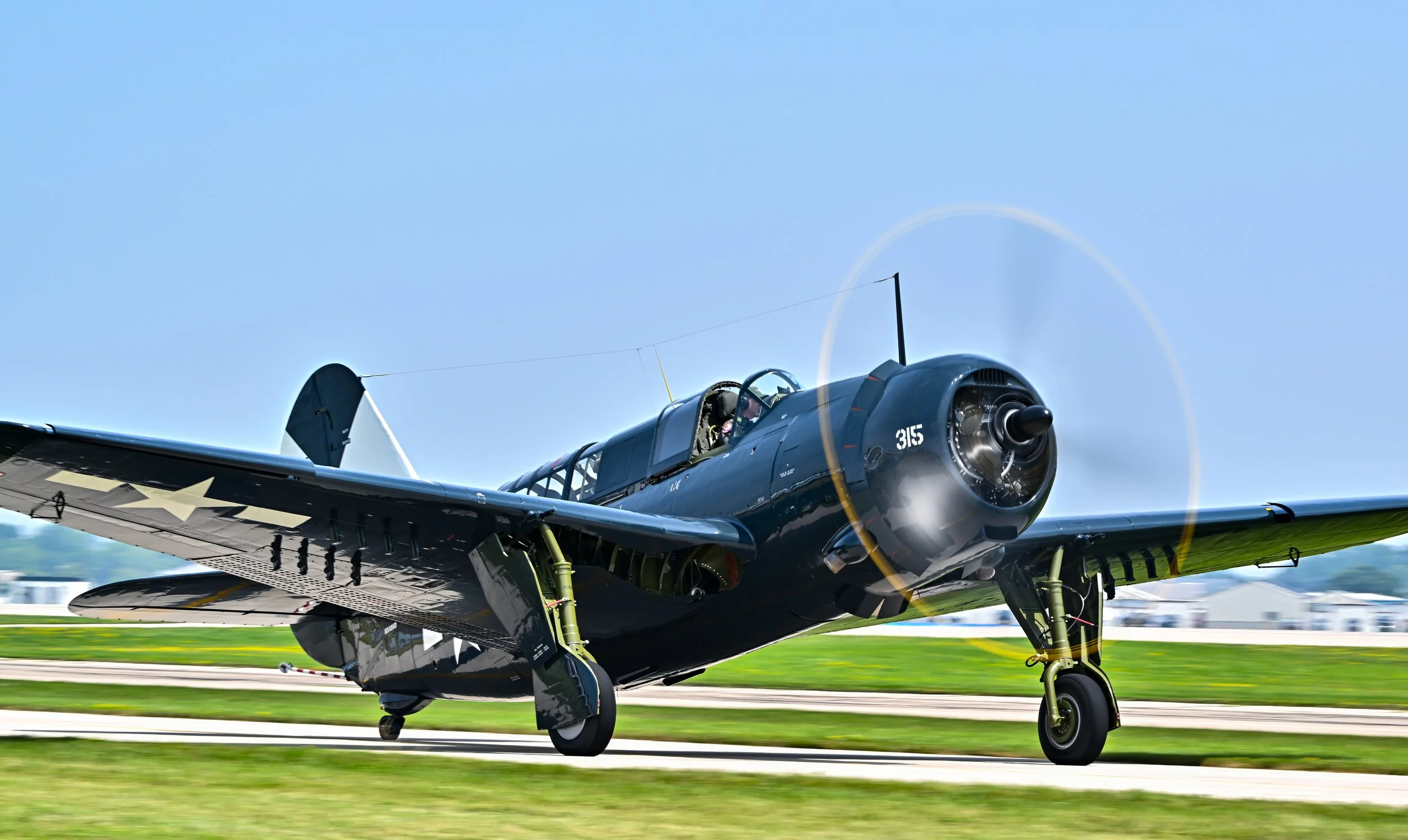
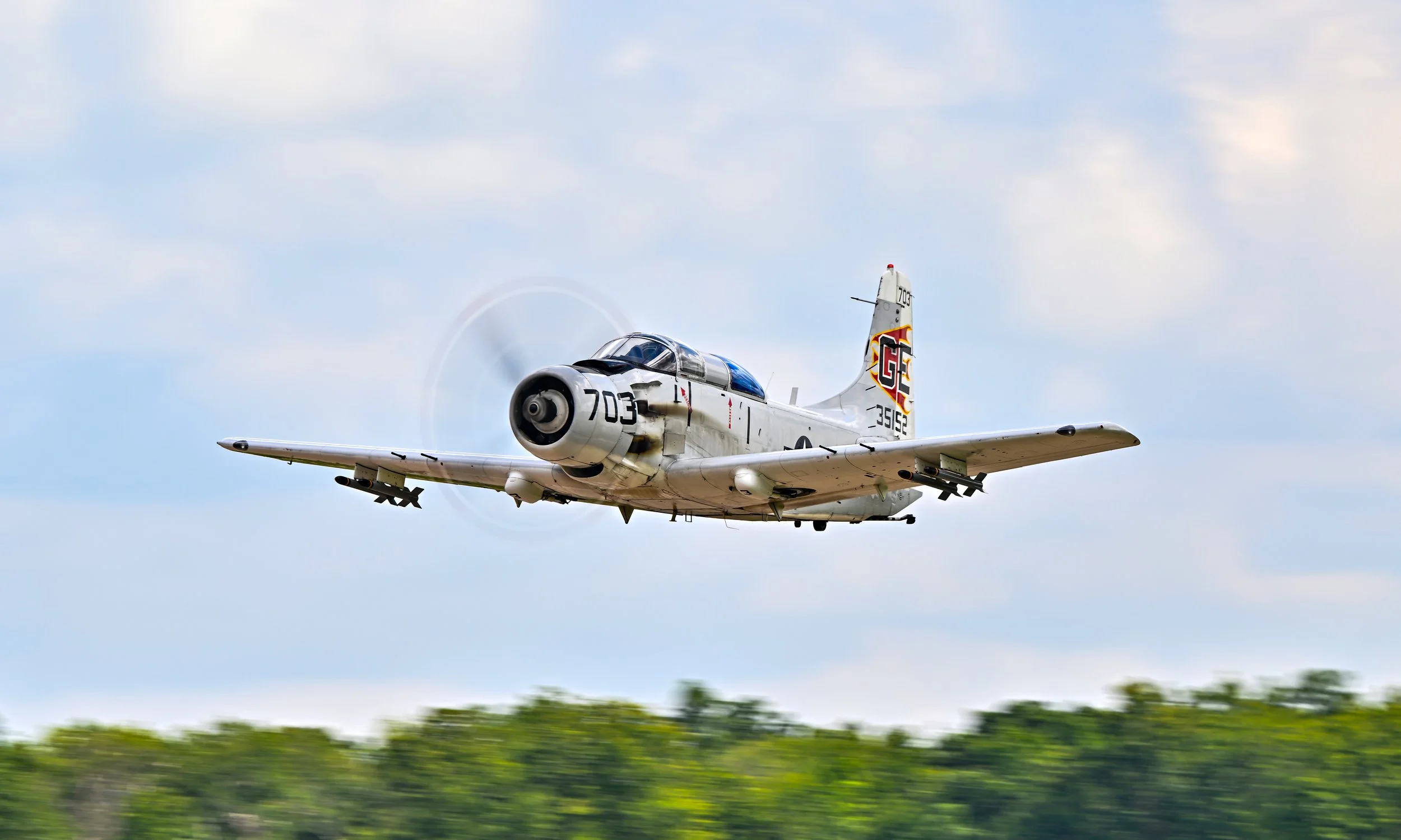
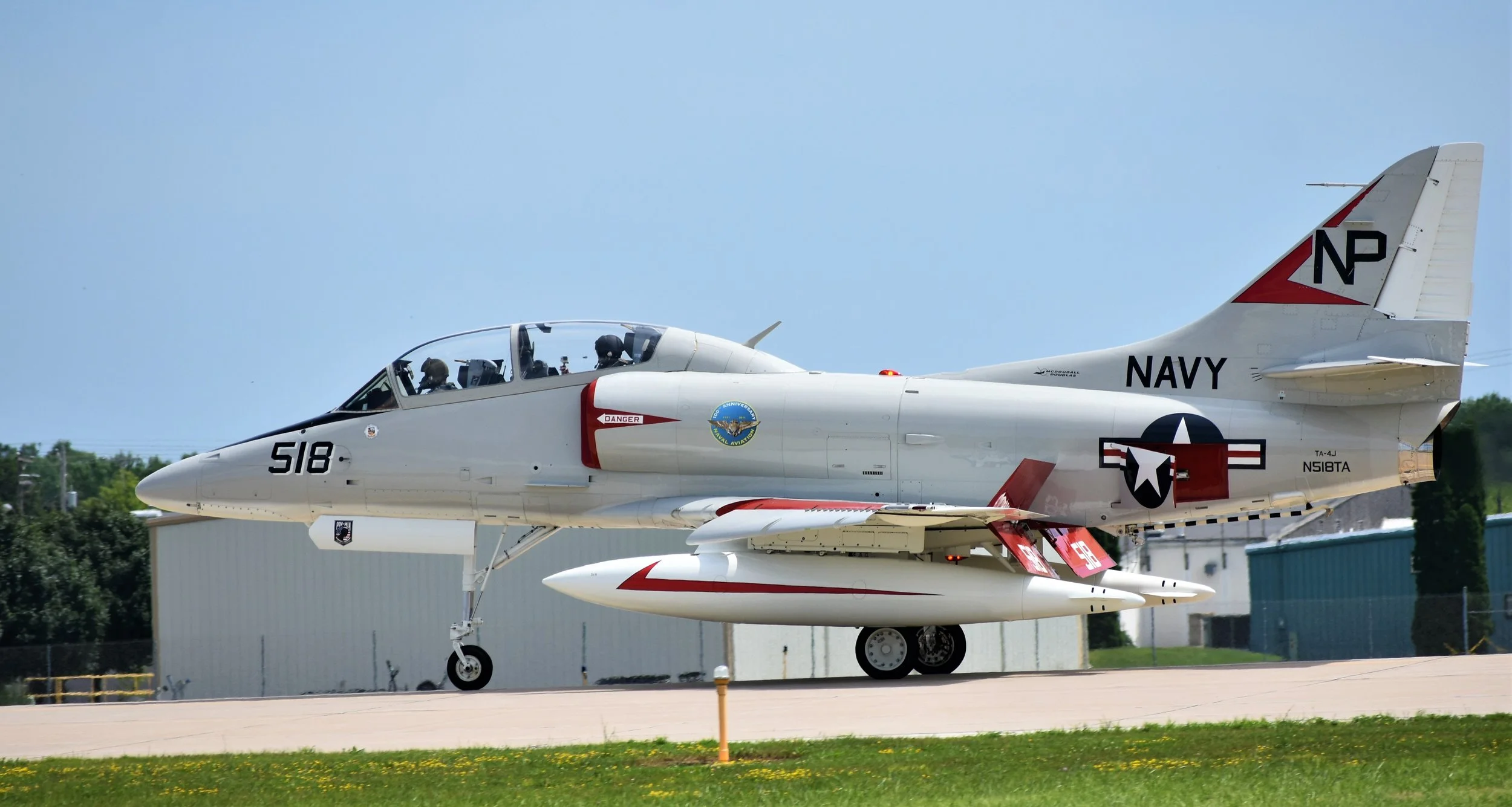
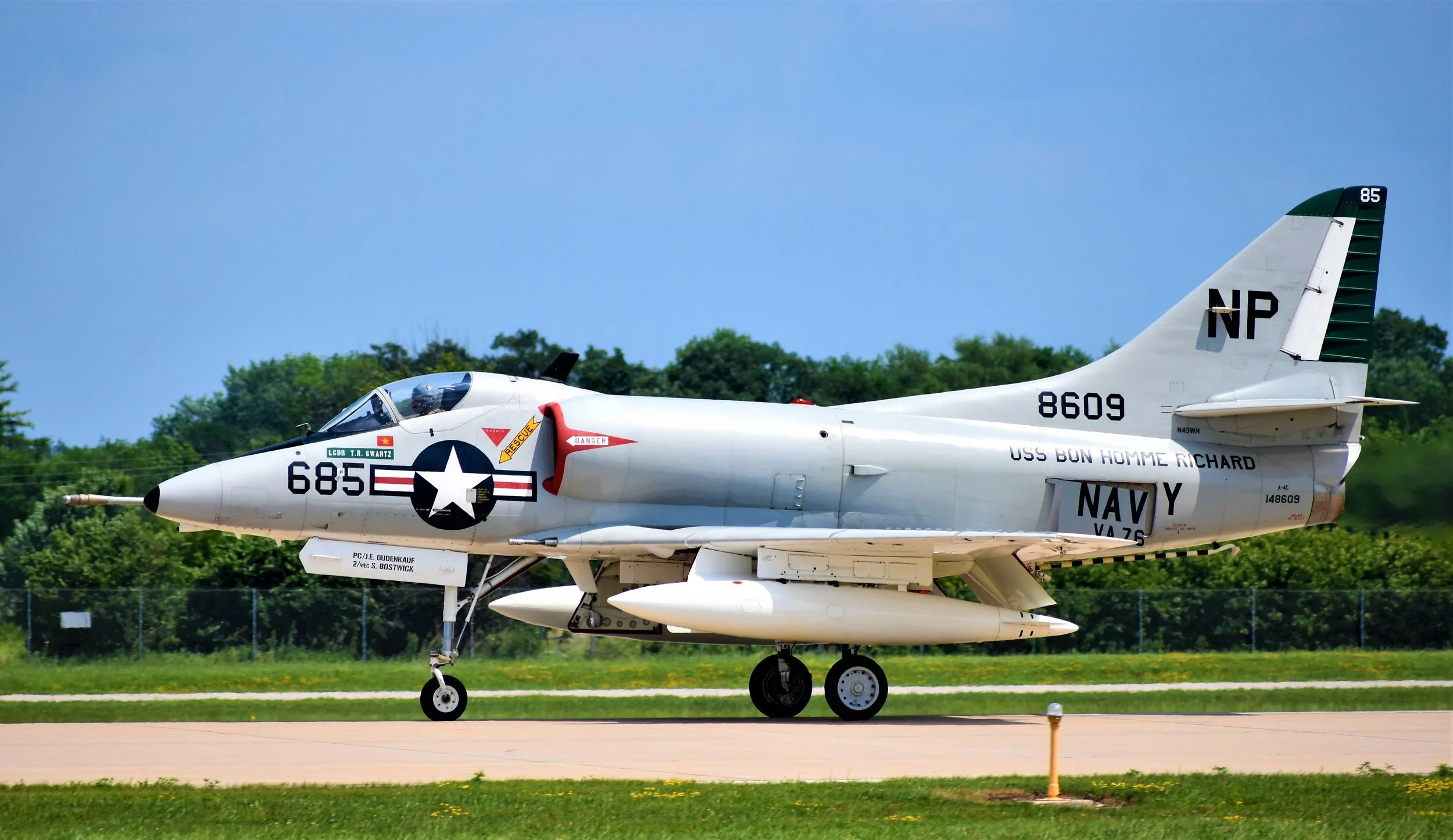
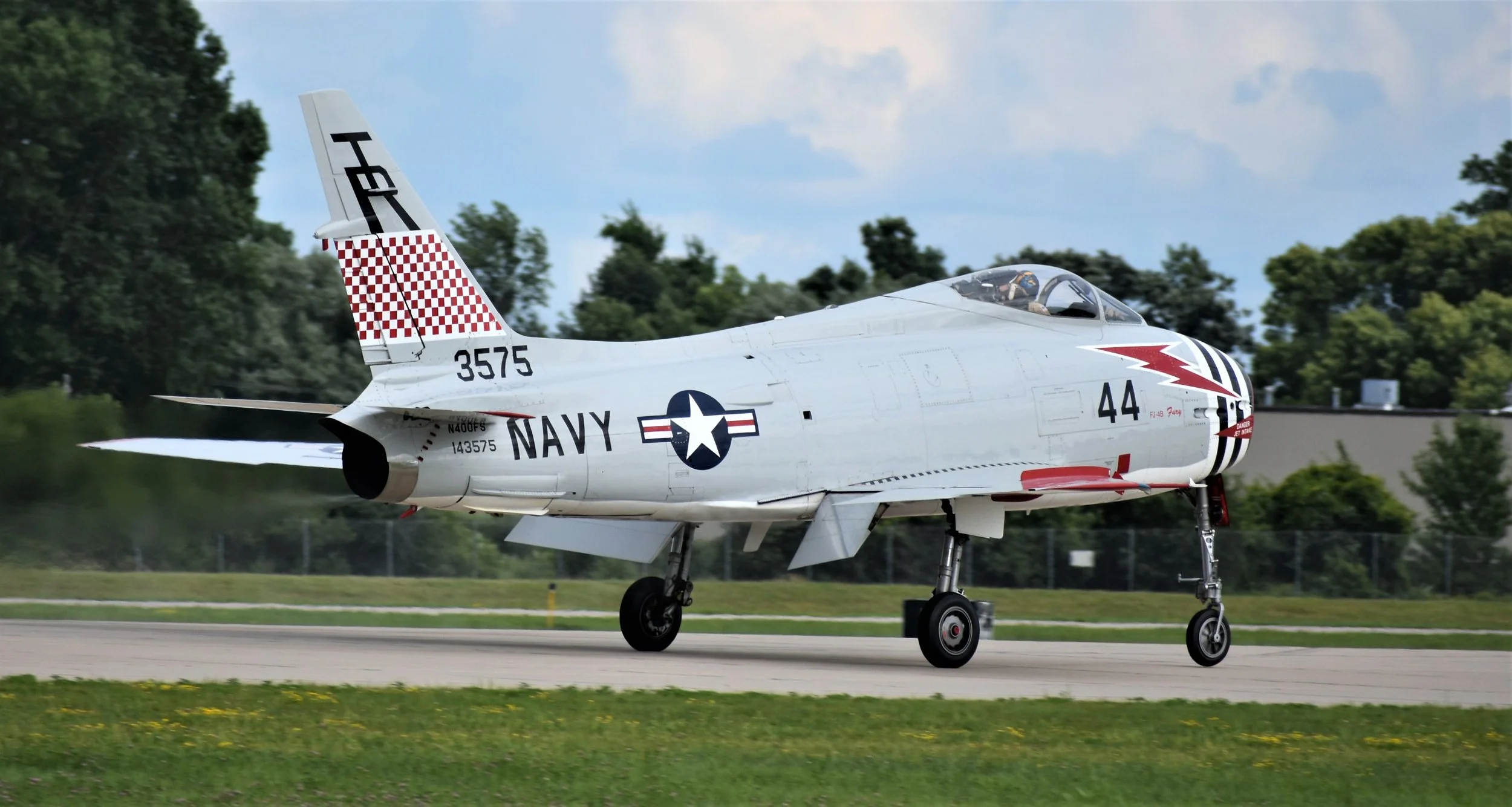
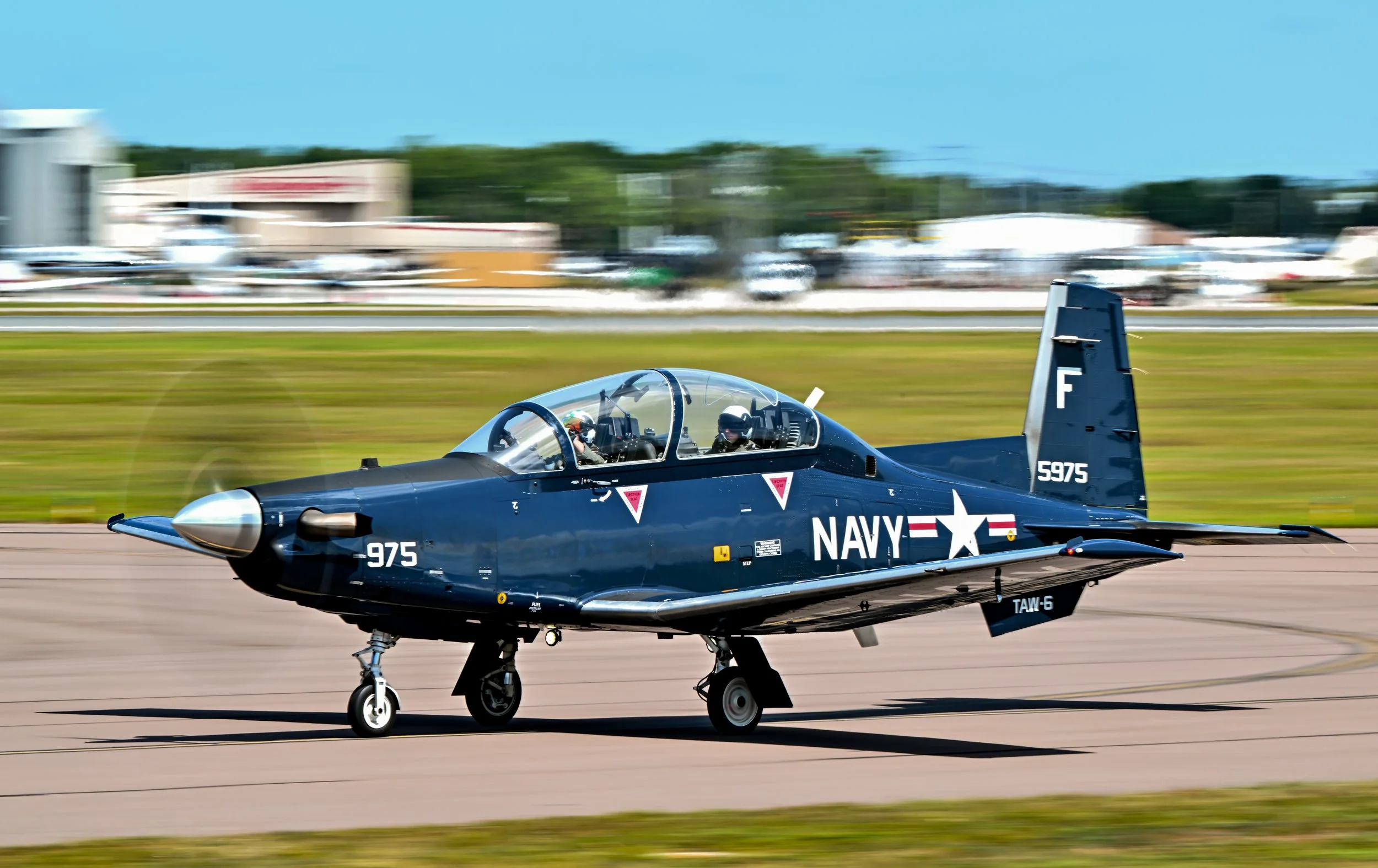
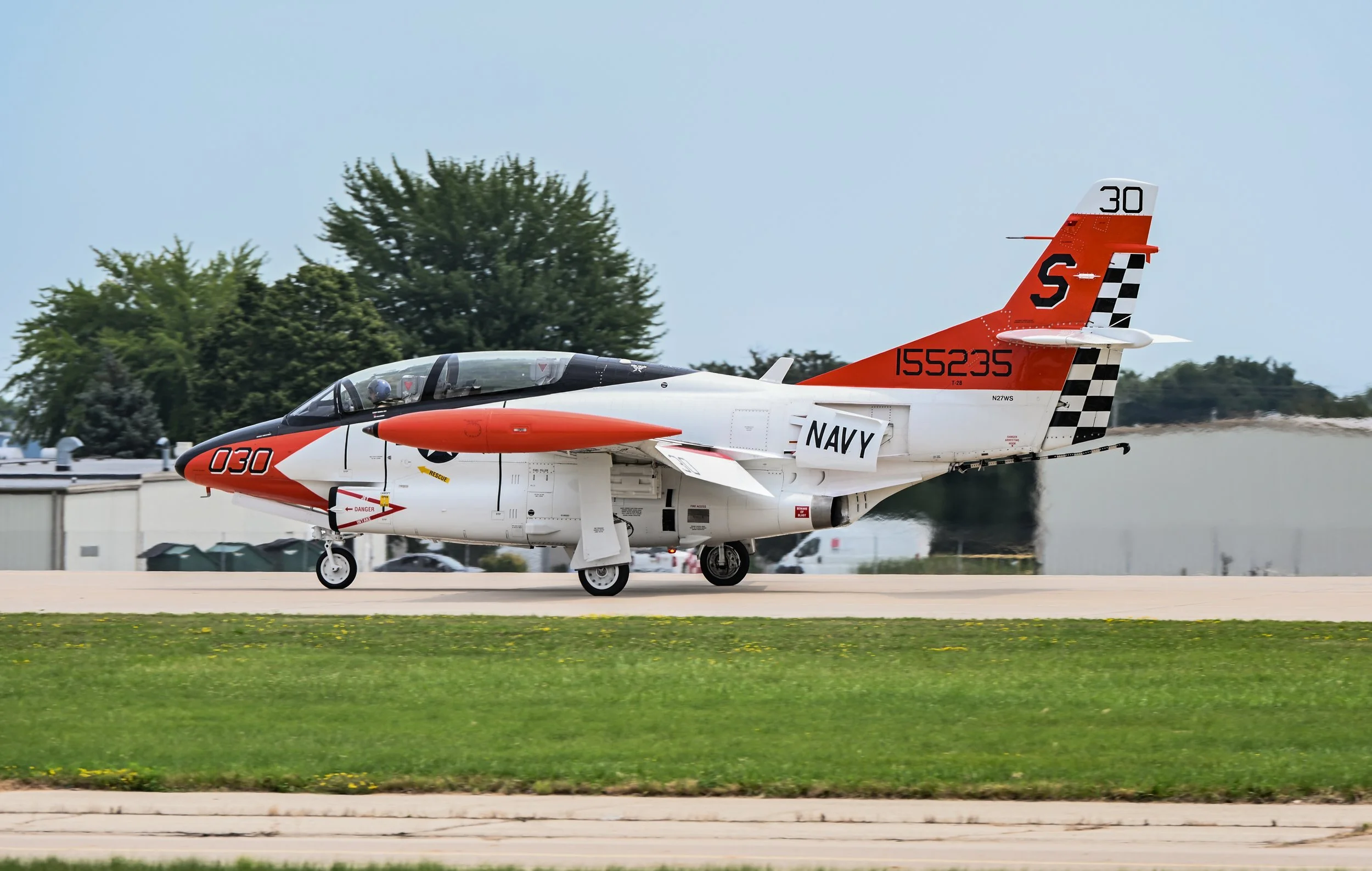
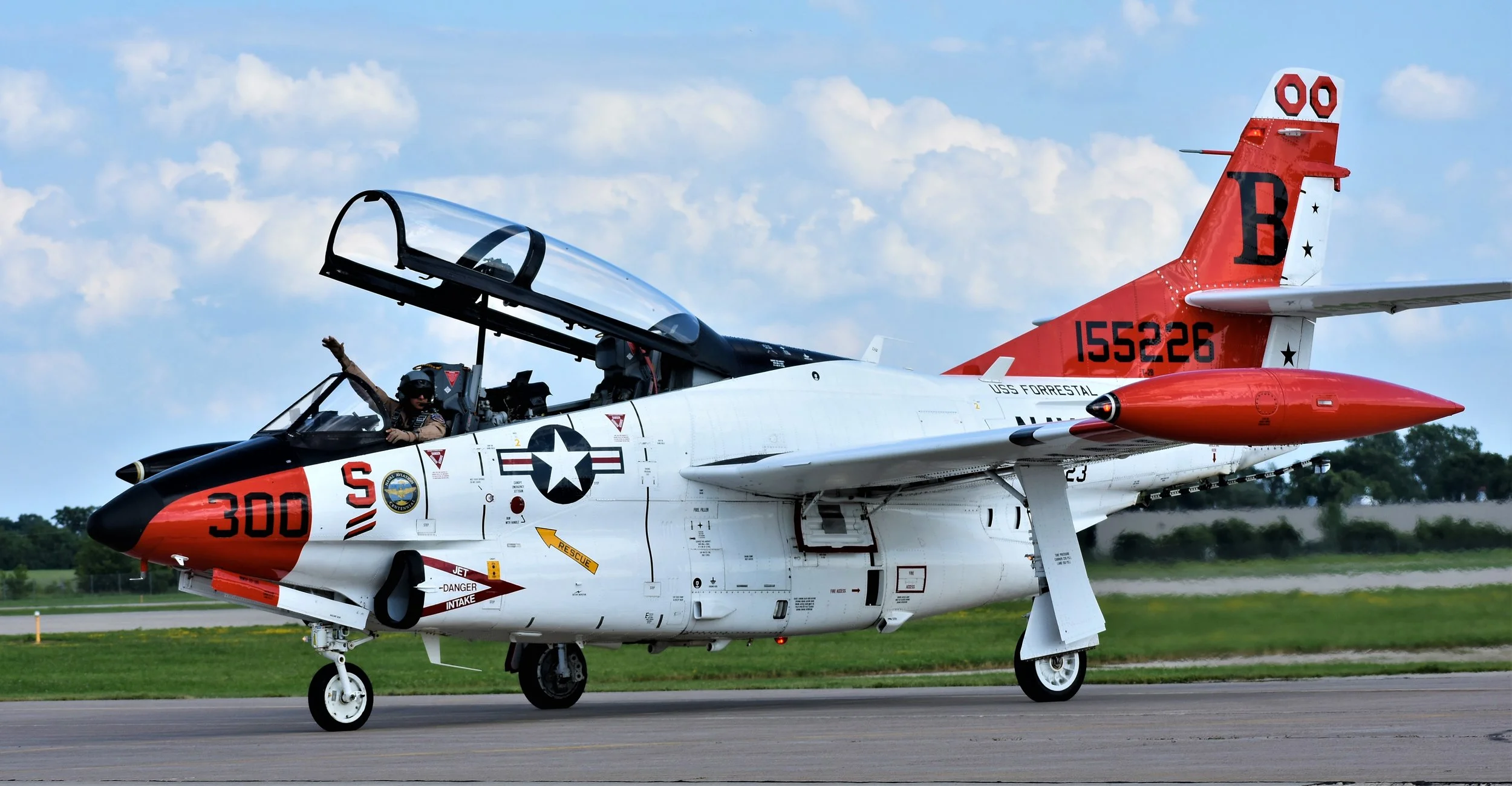
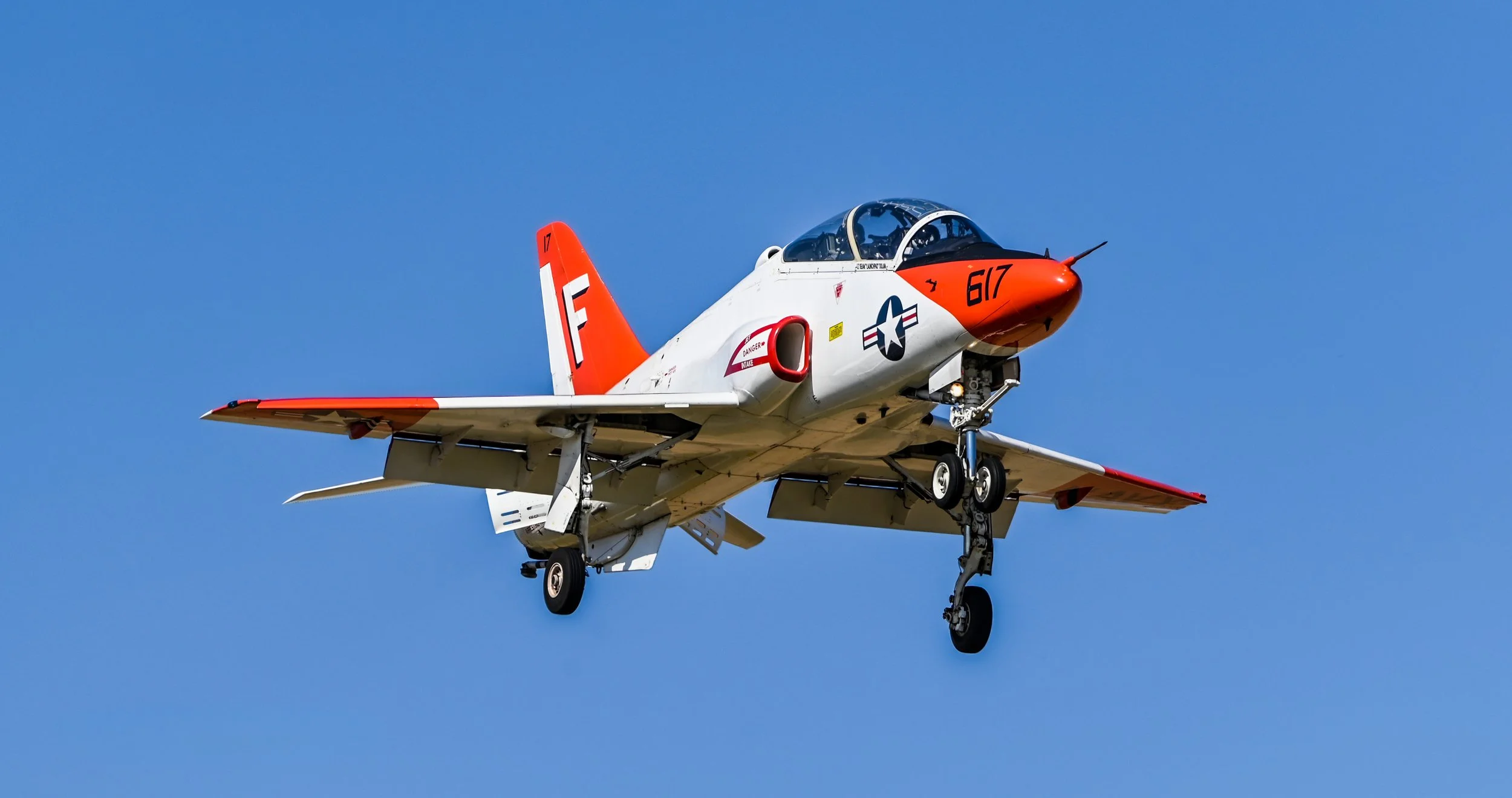
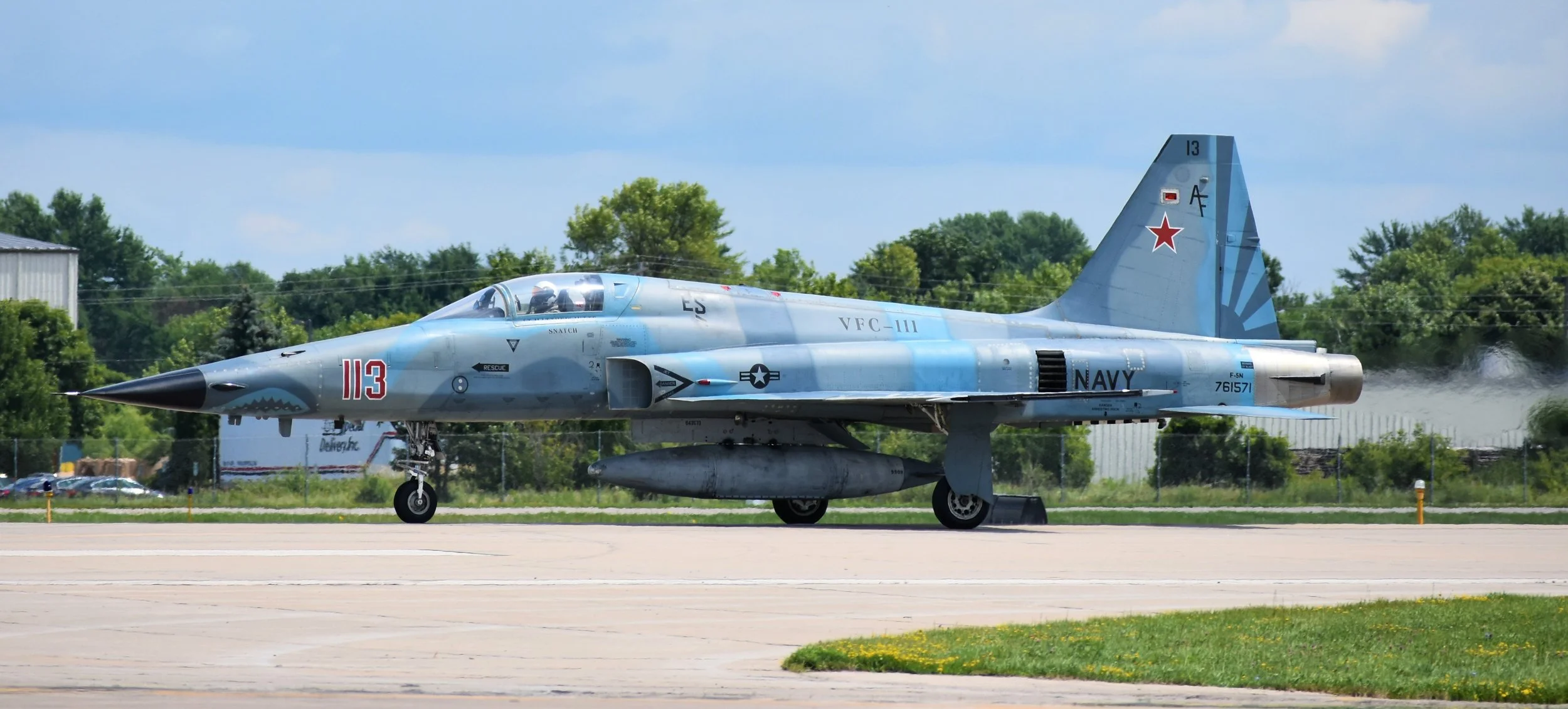
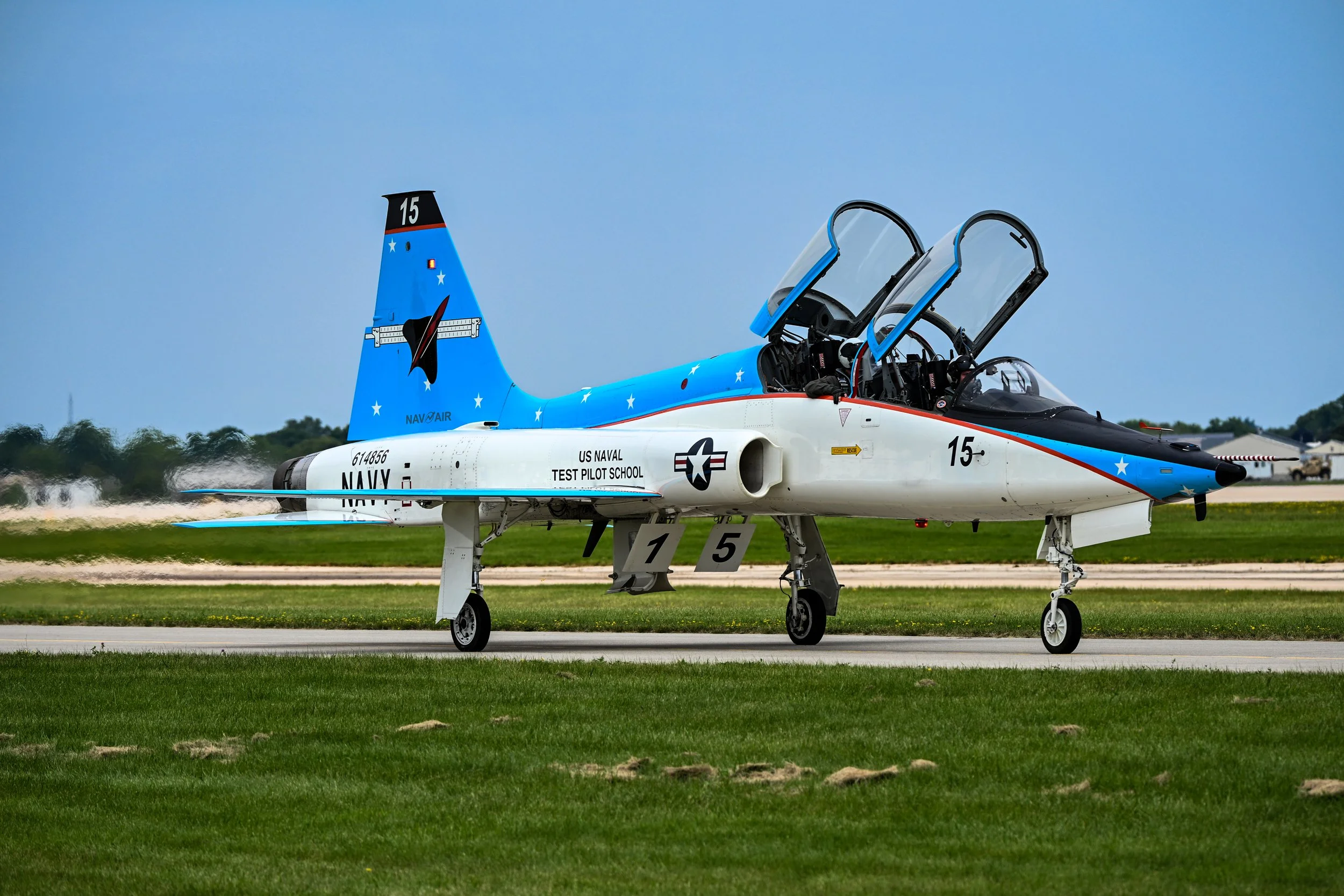
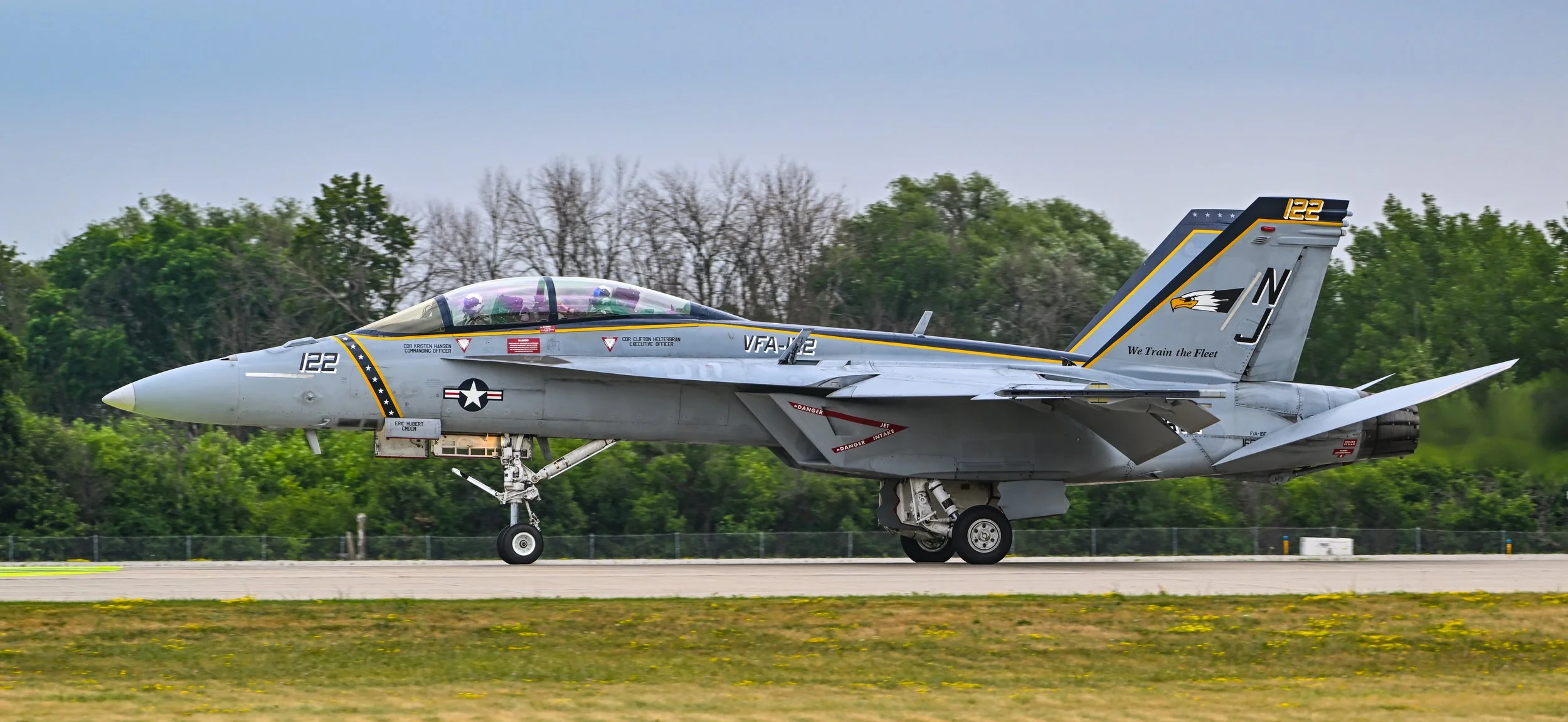
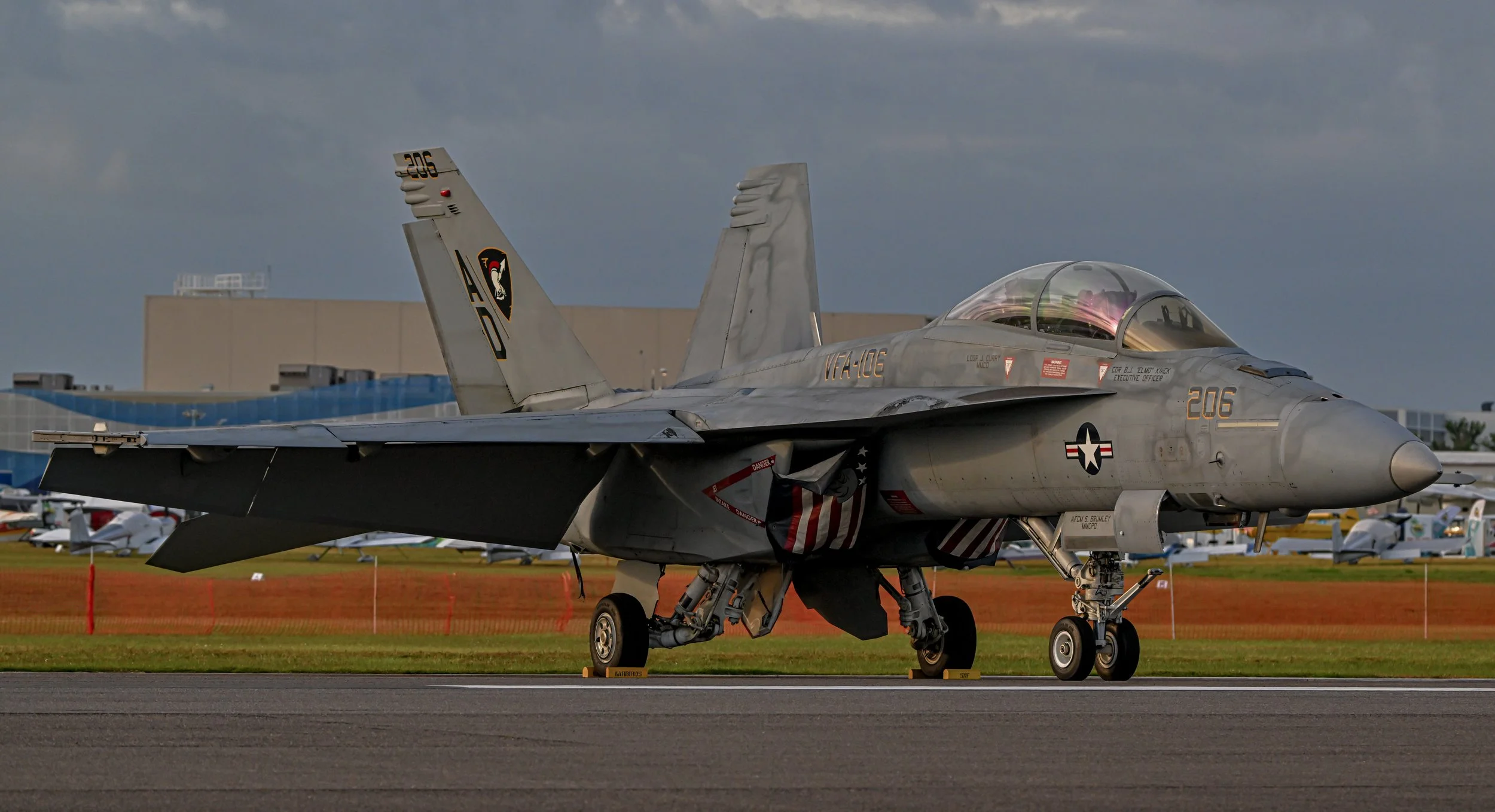
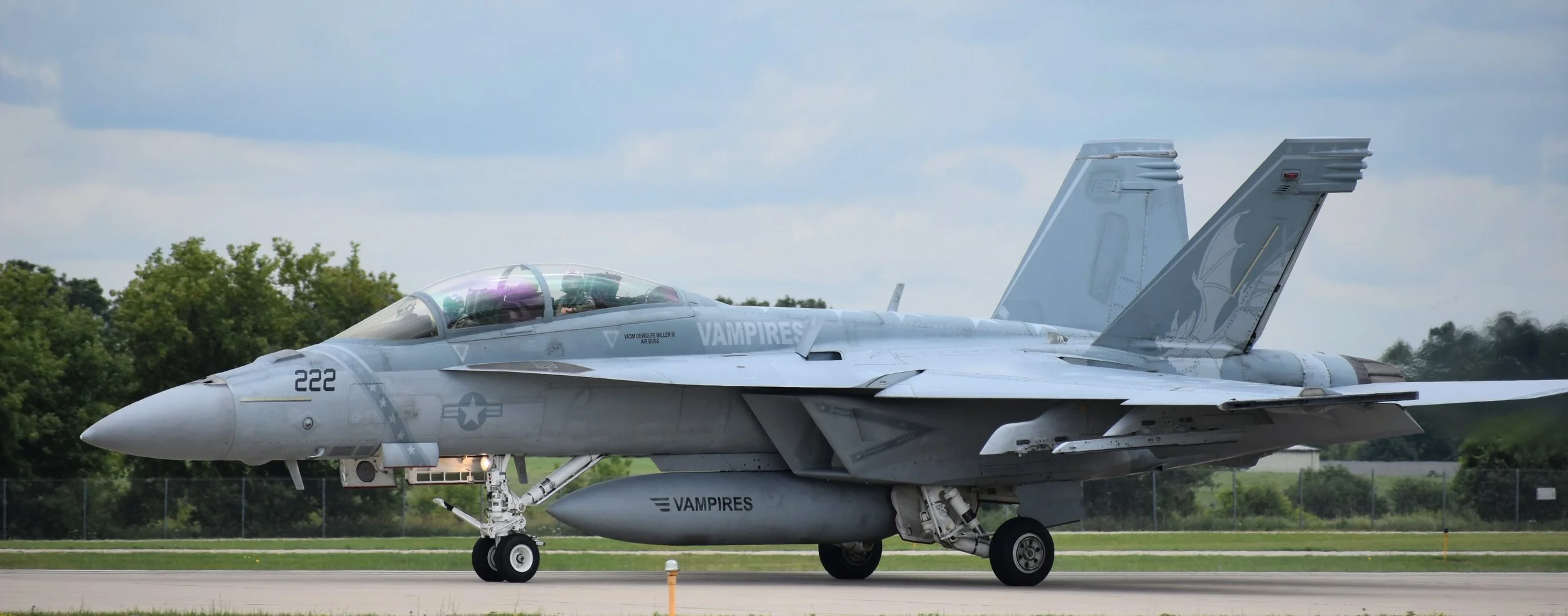
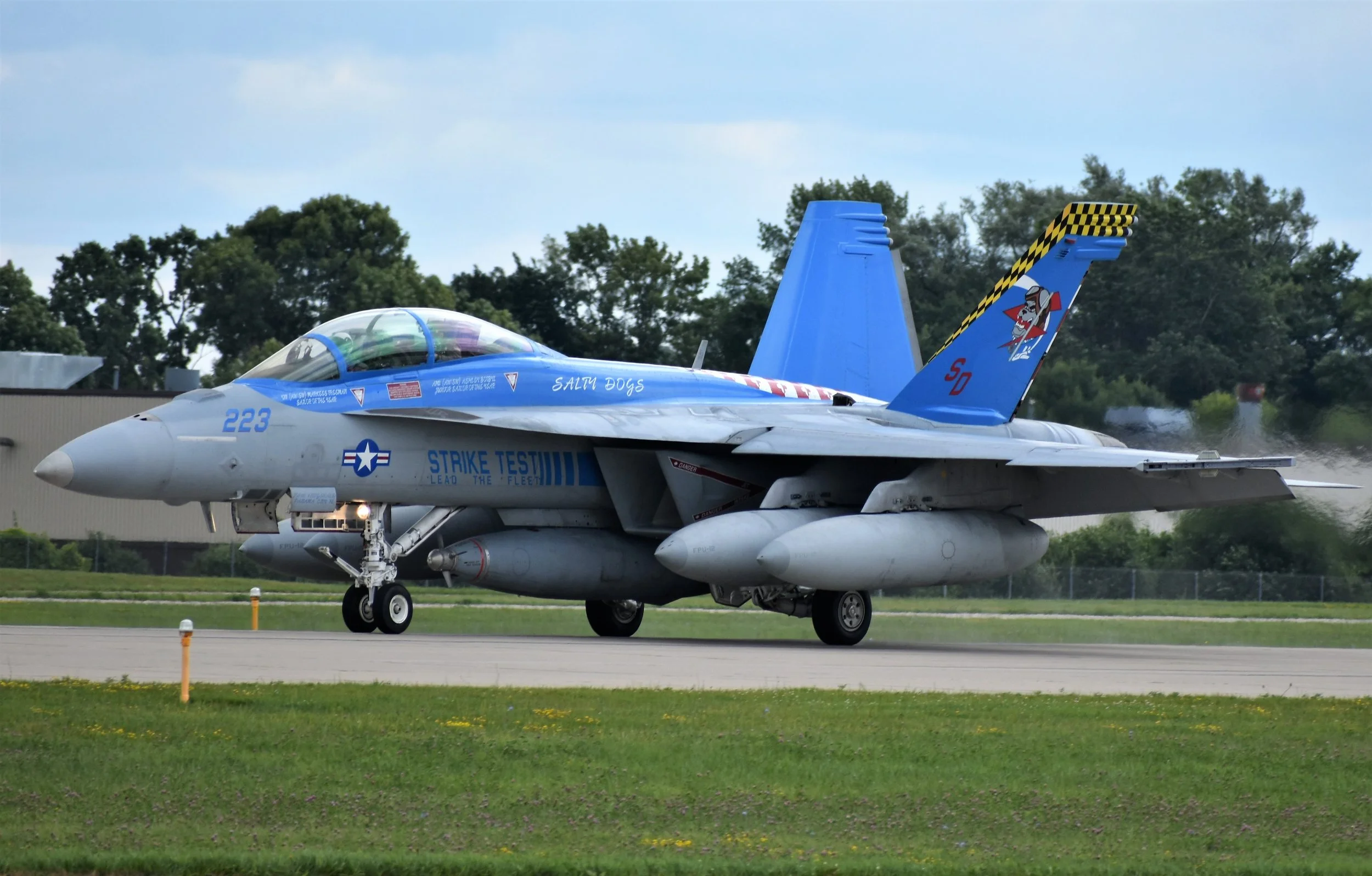
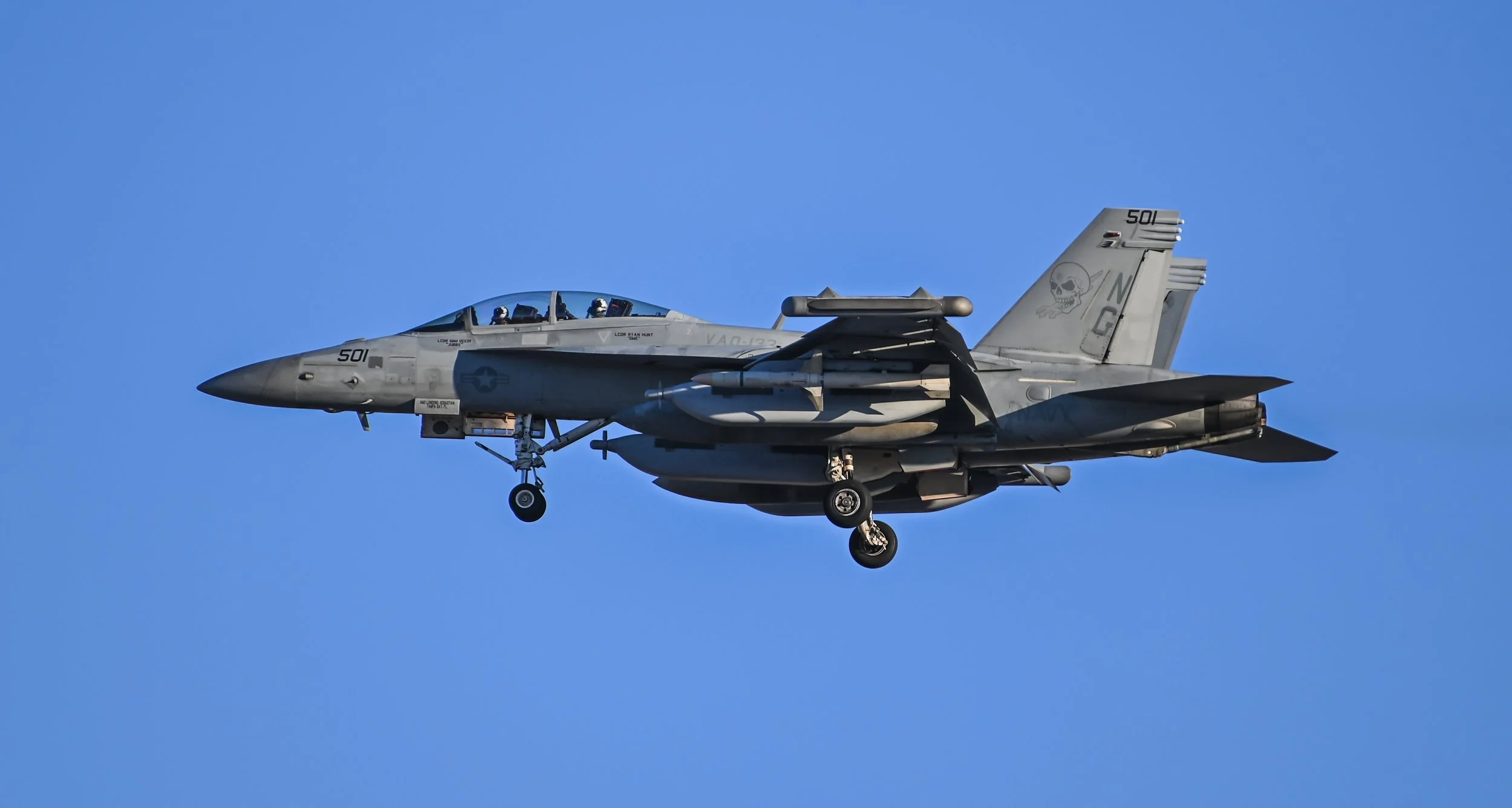
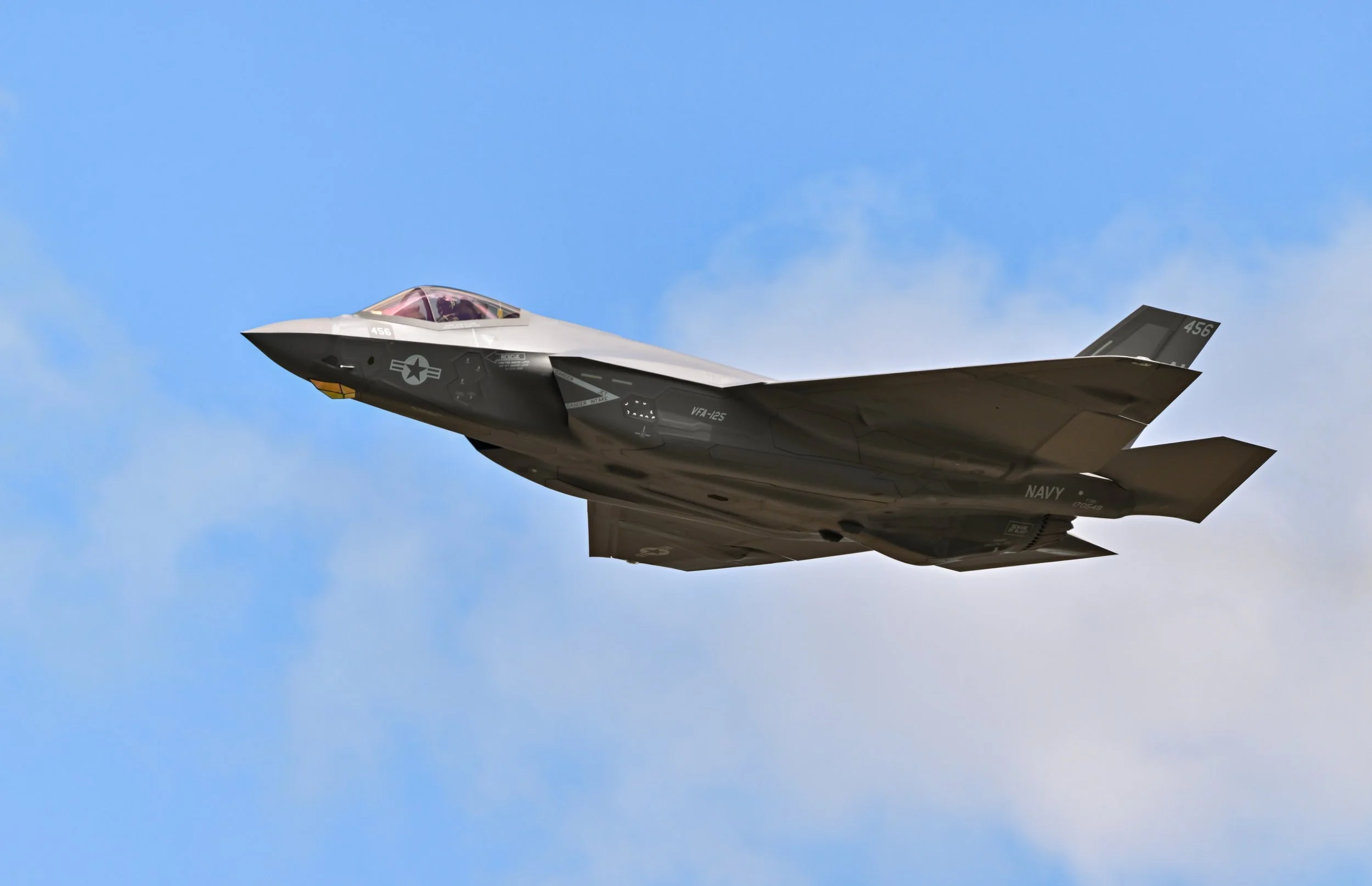
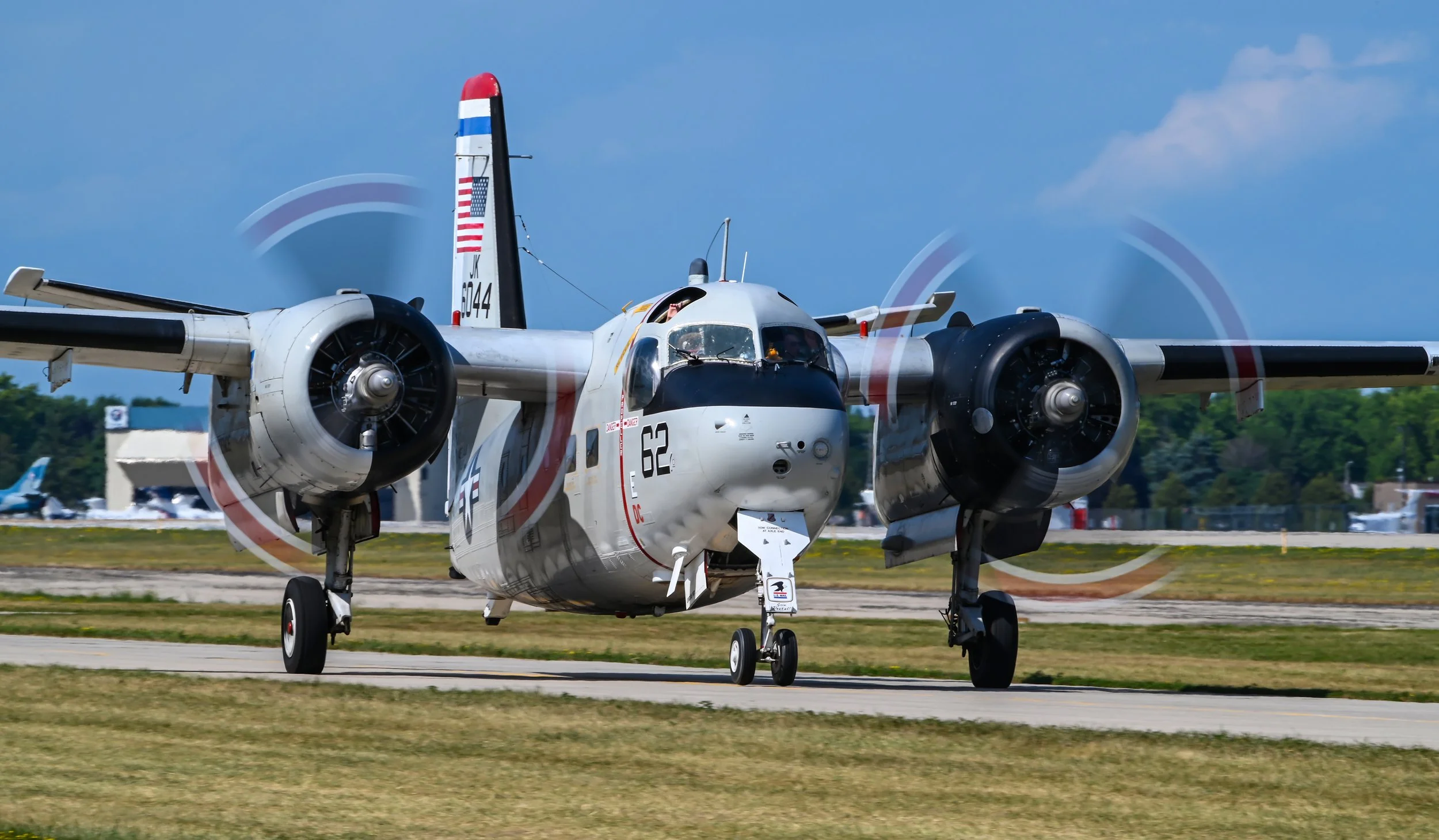
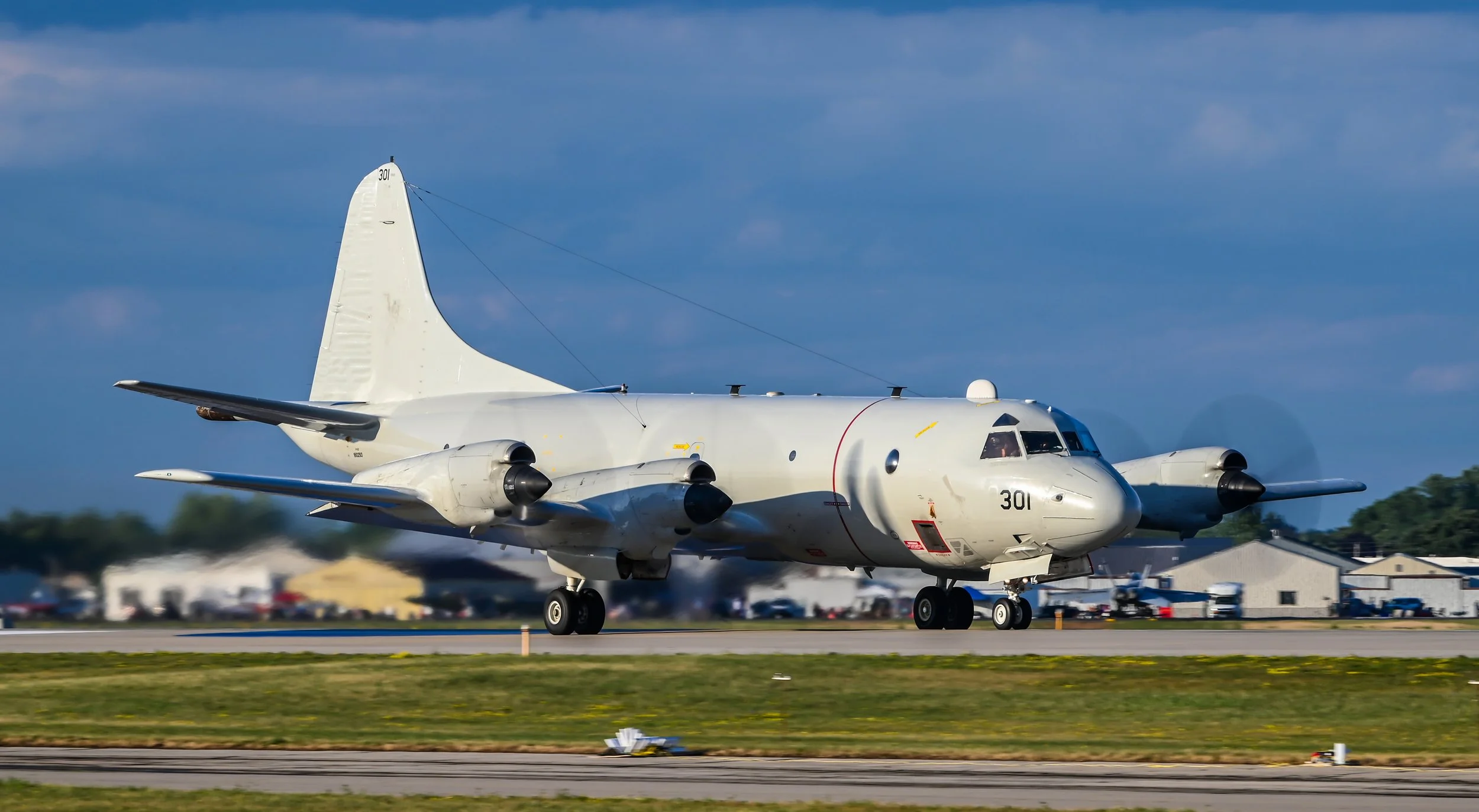
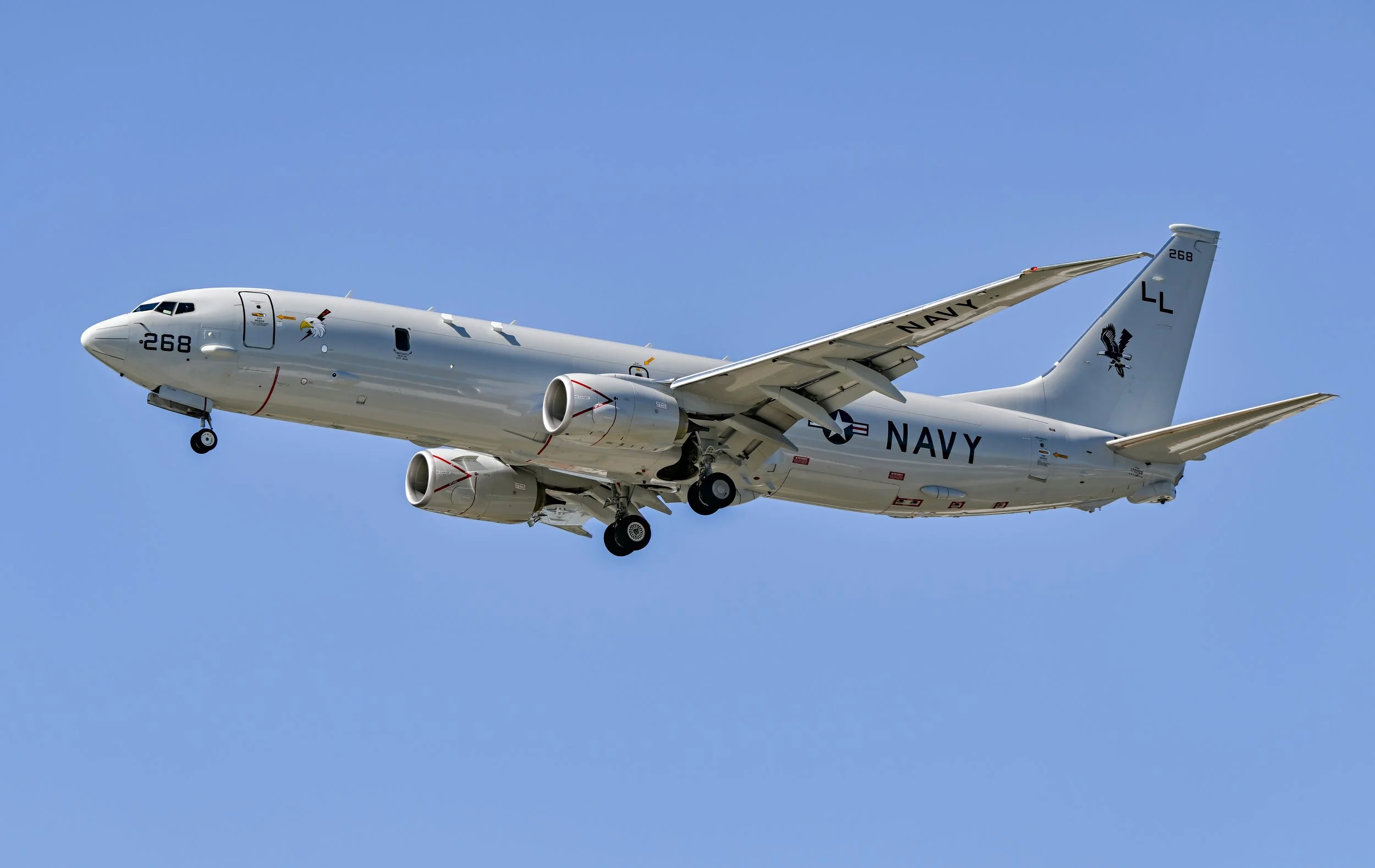
From Lt. Virgil C. Griffin piloting a Vought VE-7 to a monumental landing on the USS Langley (CV-1) to modern day F-35 Lightning IIs landing on the state of the art USS Gerald R Ford (CVN-78). The pictures below give a rough timeline of naval aviation from the early N2S-3 Kaydet (widely referred to as the Stearman) through the WWII fighters and bombers. Postwar into Korean and Vietnam Wars where jet powered aircraft dominated the scene like the A-4 Skyhawk and F-4 Phantom (not pictured sadly) into current world conflicts with the F-18 and F-35 Lightning II. From trainers to fighters, transports and surveillance and future drone wingman, naval airpower will continue to be vital in all facets for the United States Navy for generations to come.
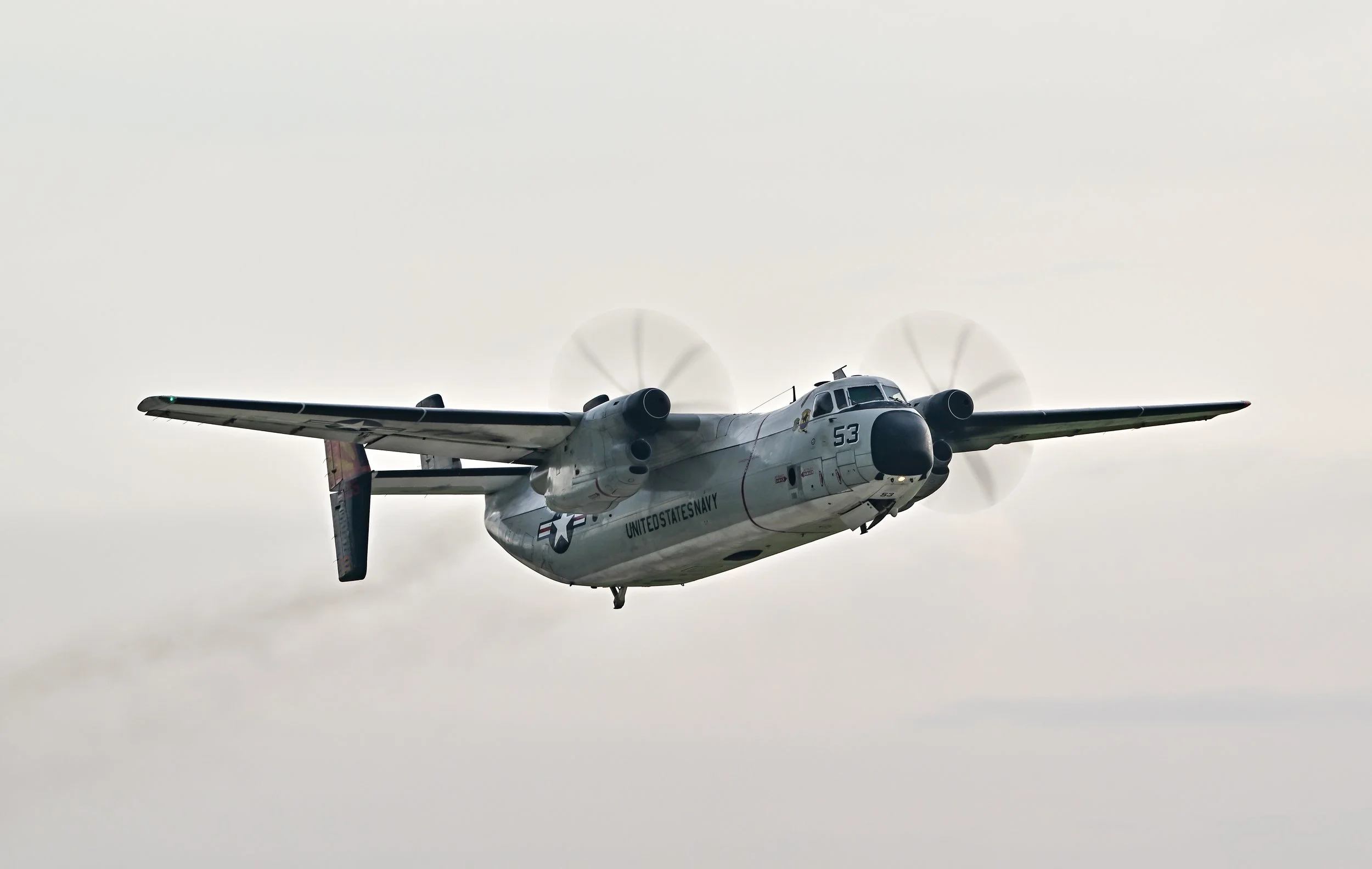
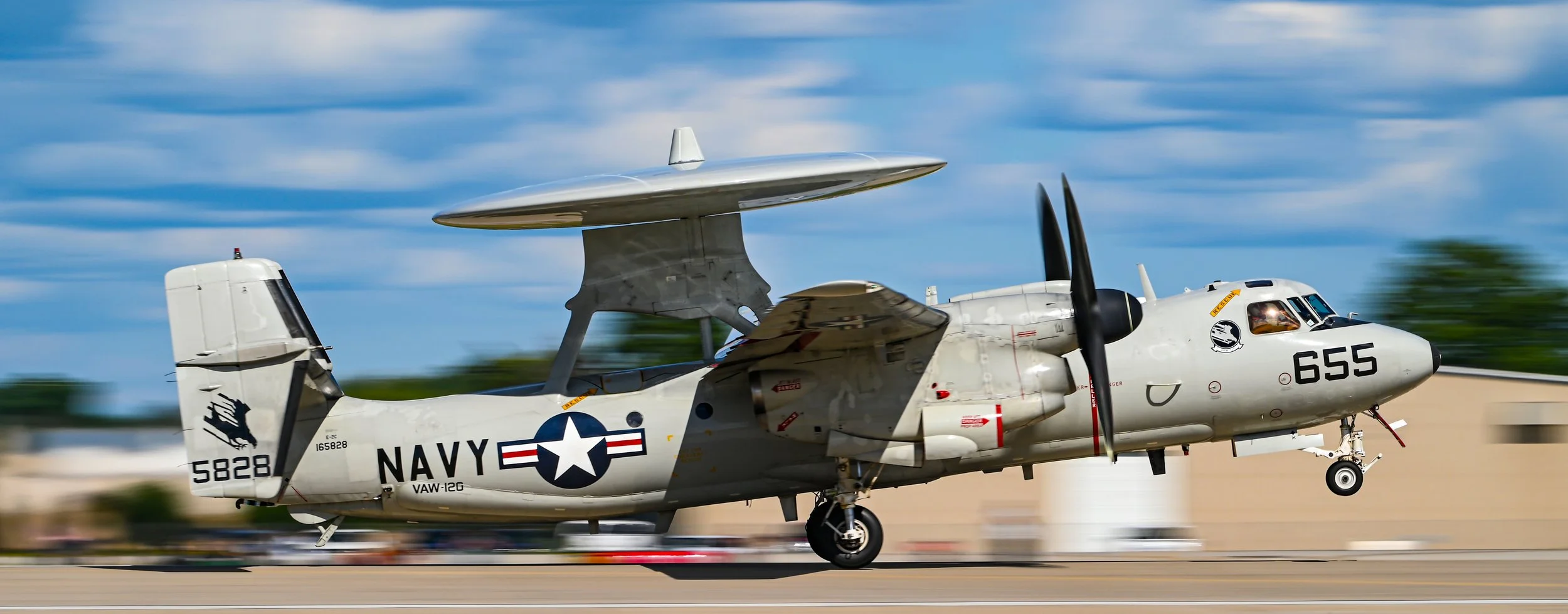
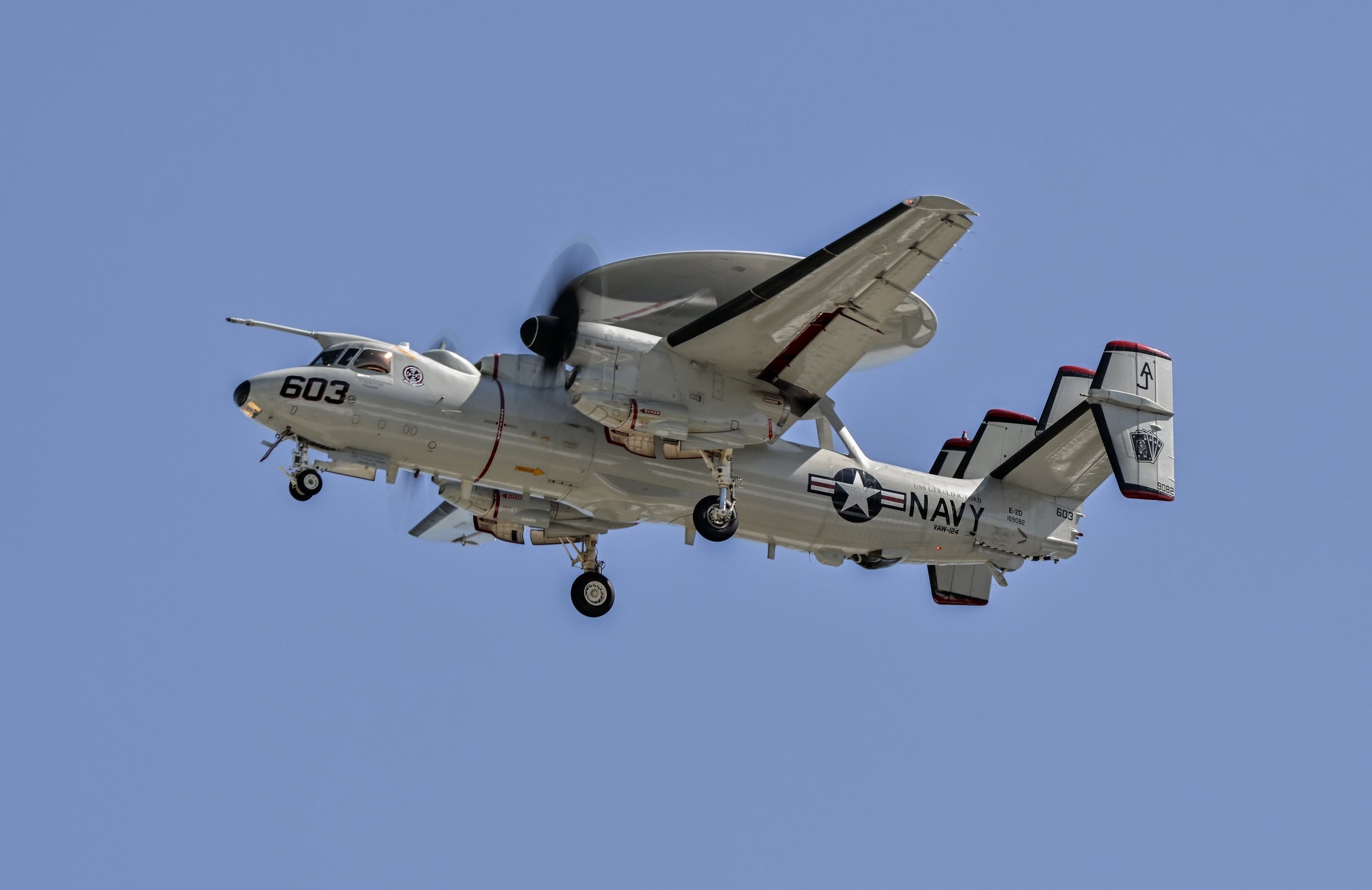
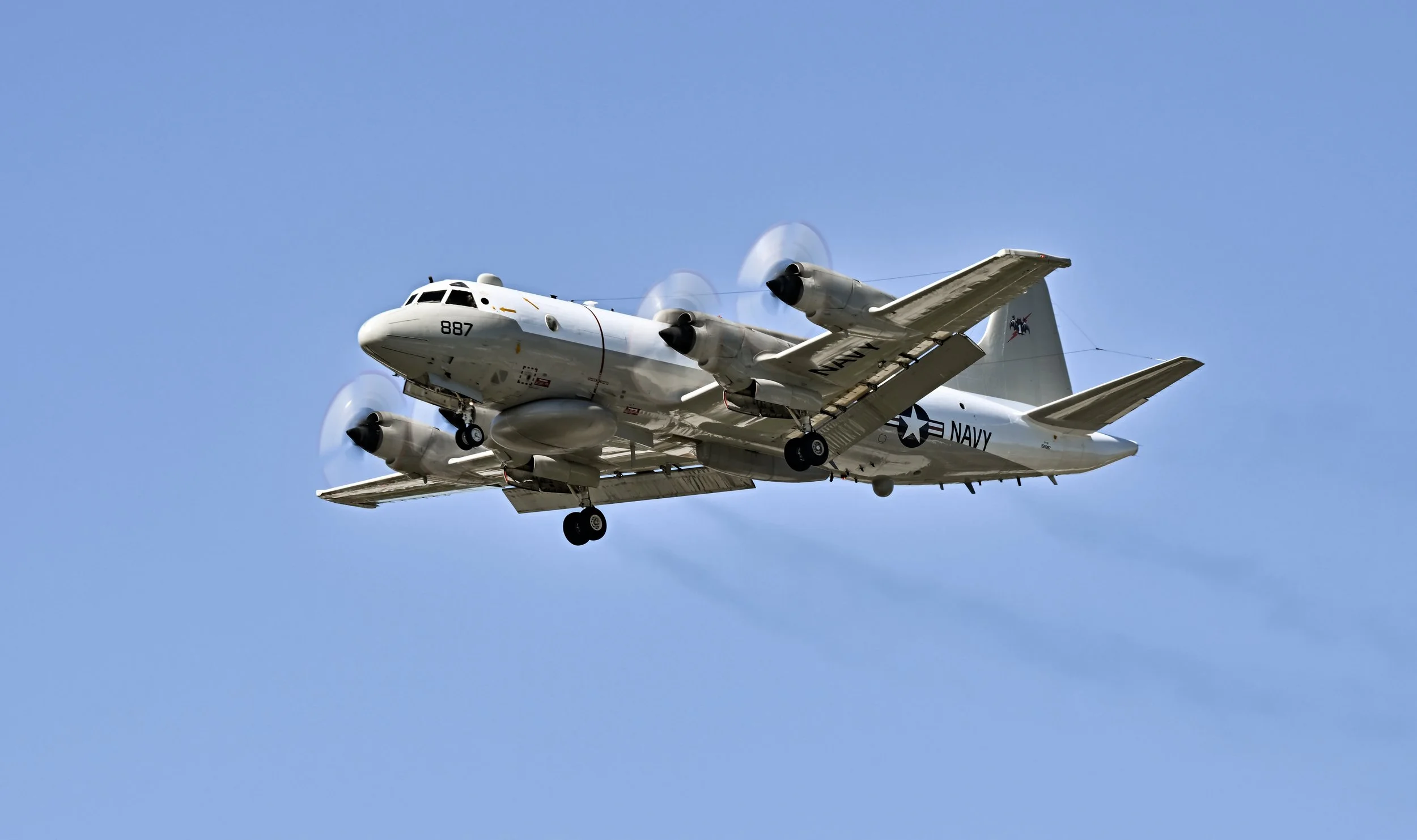
128th Air Refueling Wing Open House Returns to Milwaukee
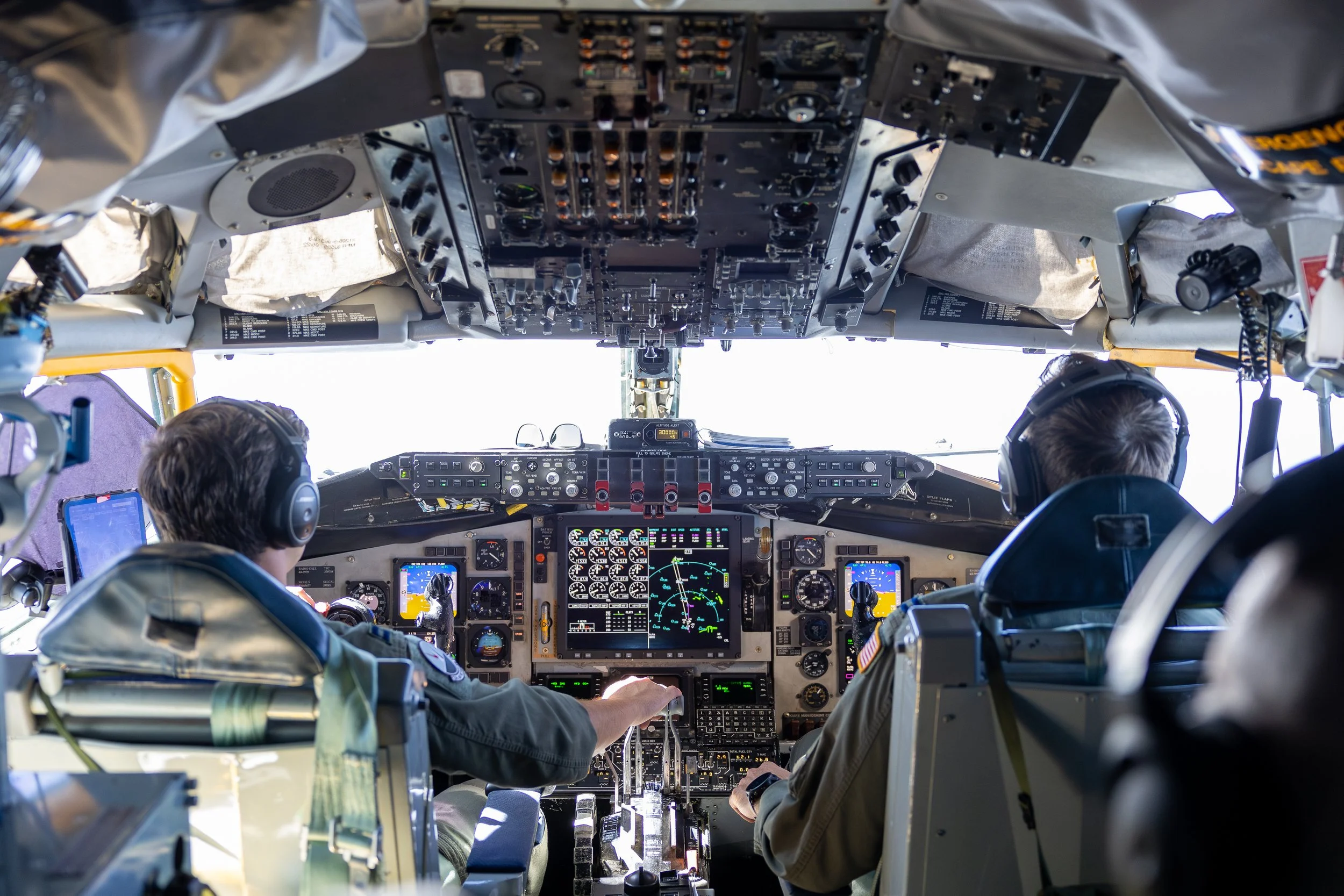
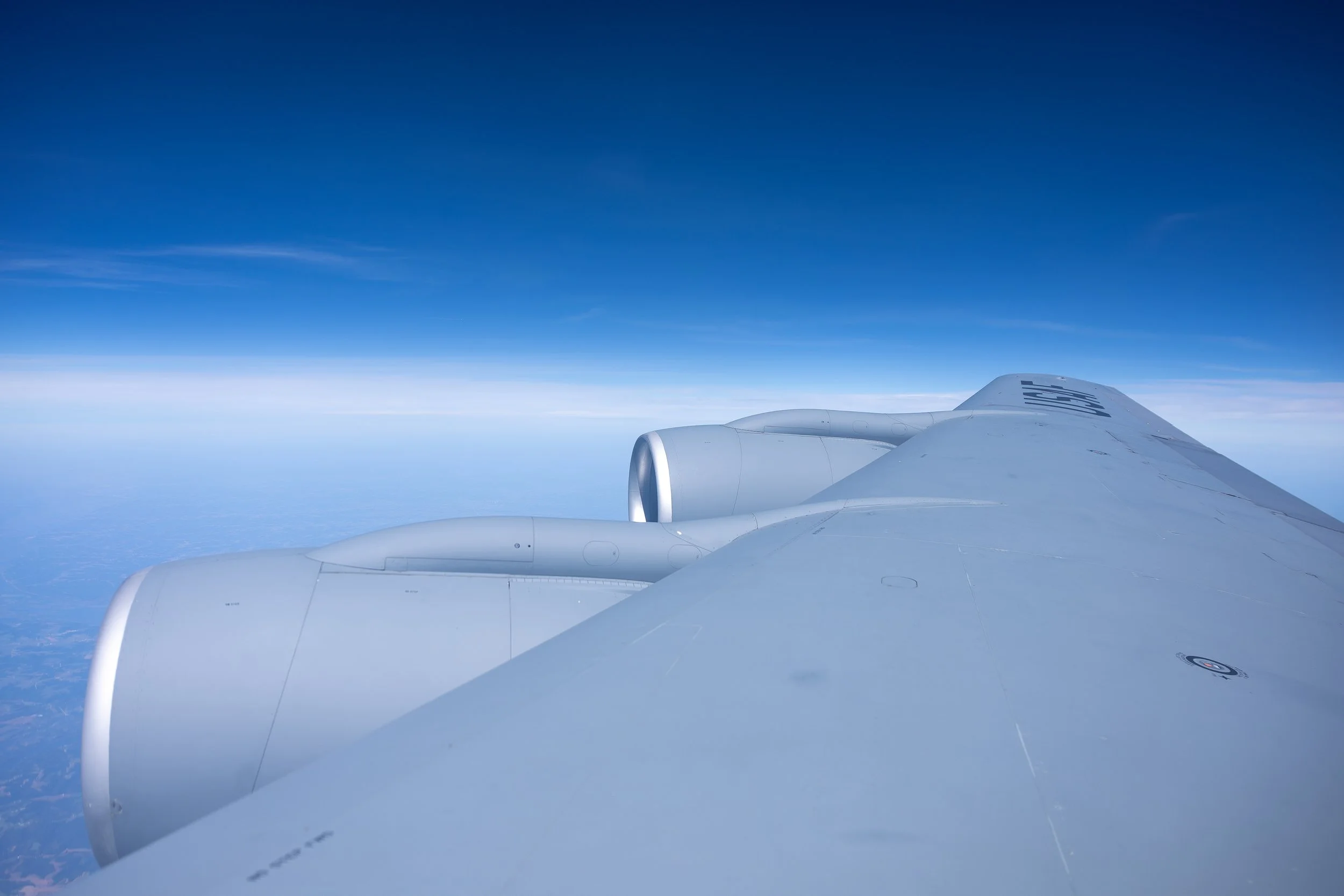
Milwaukee, Wisconsin - The 128th Air Refueling Wing opened the gates at General Mitchell Air National Guard Base on September 13–14, 2025, for its first public open house since 2012. The event gave the public an opportunity to see the unit’s aircraft, talk with Airmen, and learn what the wing does on a daily basis. Located on the east side of Milwaukee Mitchell International Airport, the 128th operates the KC-135 Stratotanker and supports air refueling missions around the world. The open house focused on showing visitors how the unit works rather than hosting a traditional flying airshow. Static aircraft displays, equipment demonstrations, and recruiting booths were set up across the ramp. The weekend followed a media day on Friday, September 12, where local media were invited to observe a training air-to- air mission.
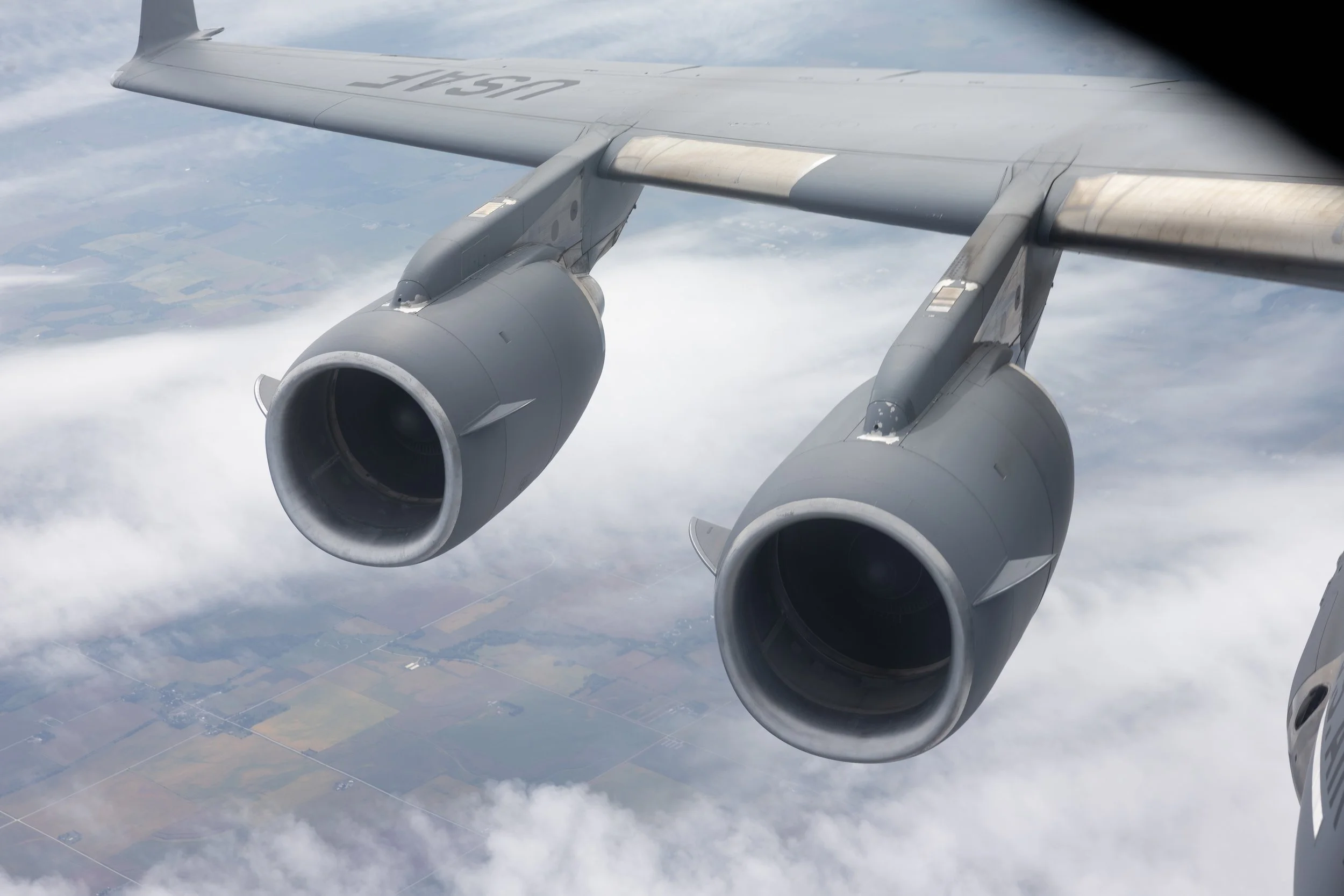
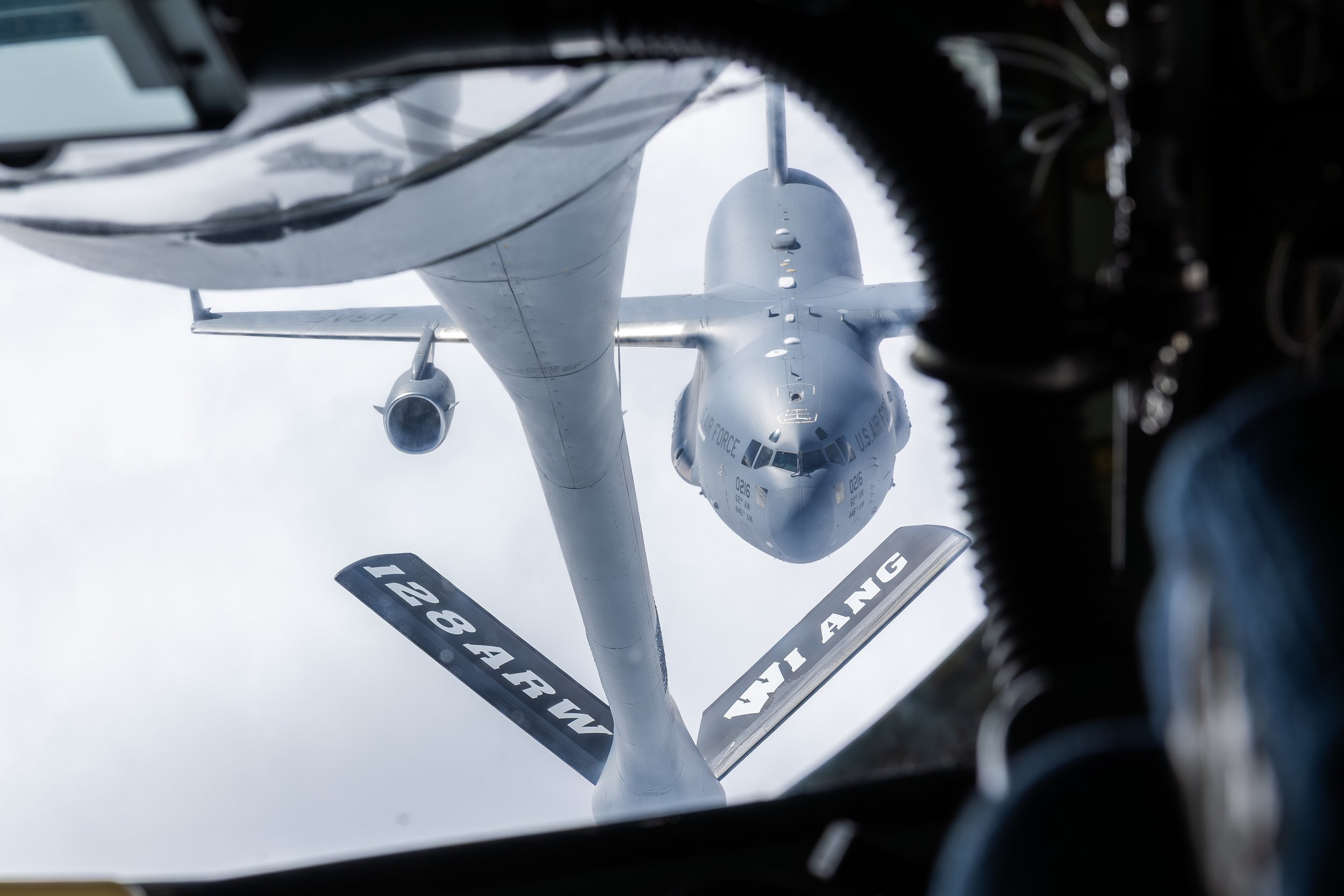
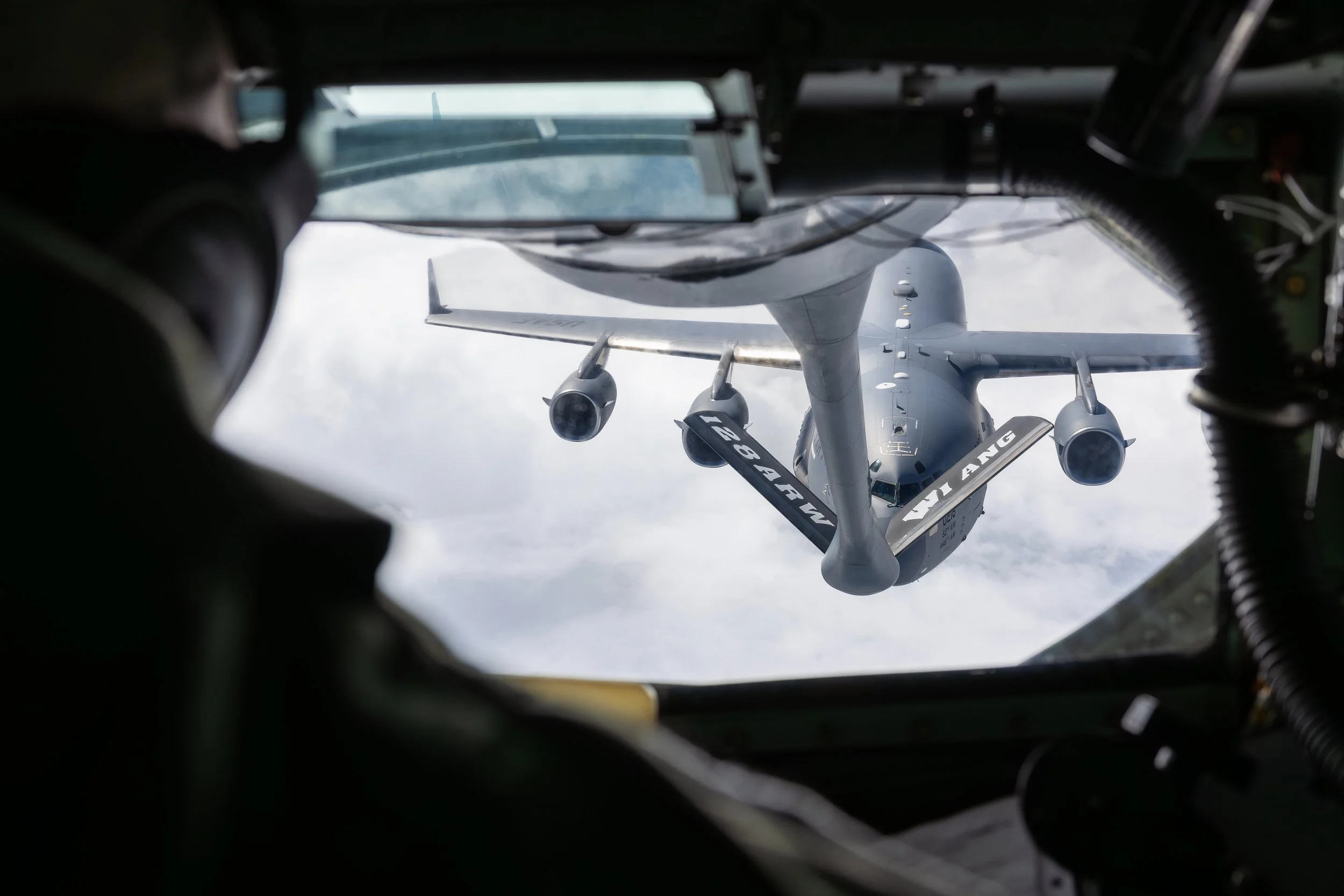
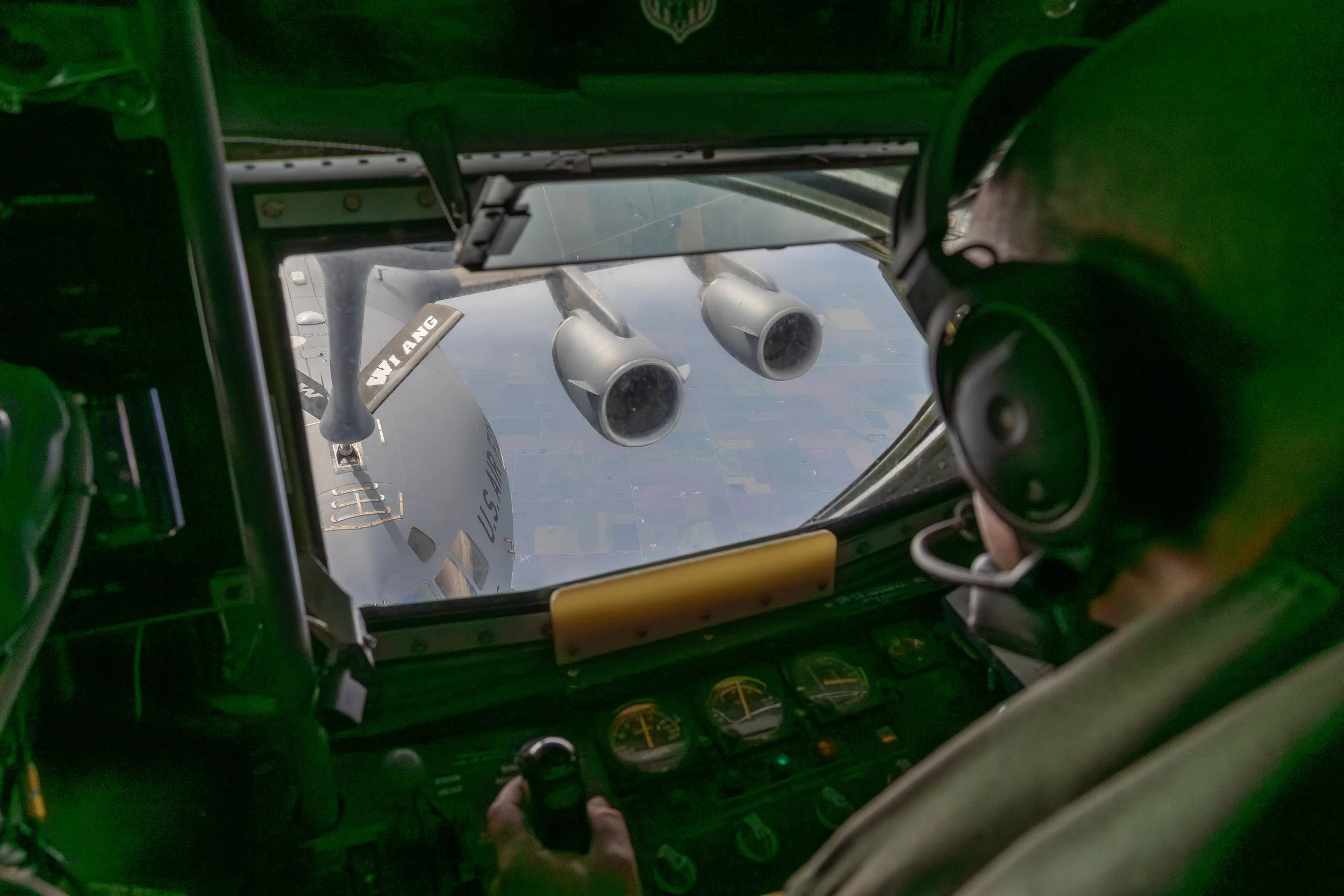
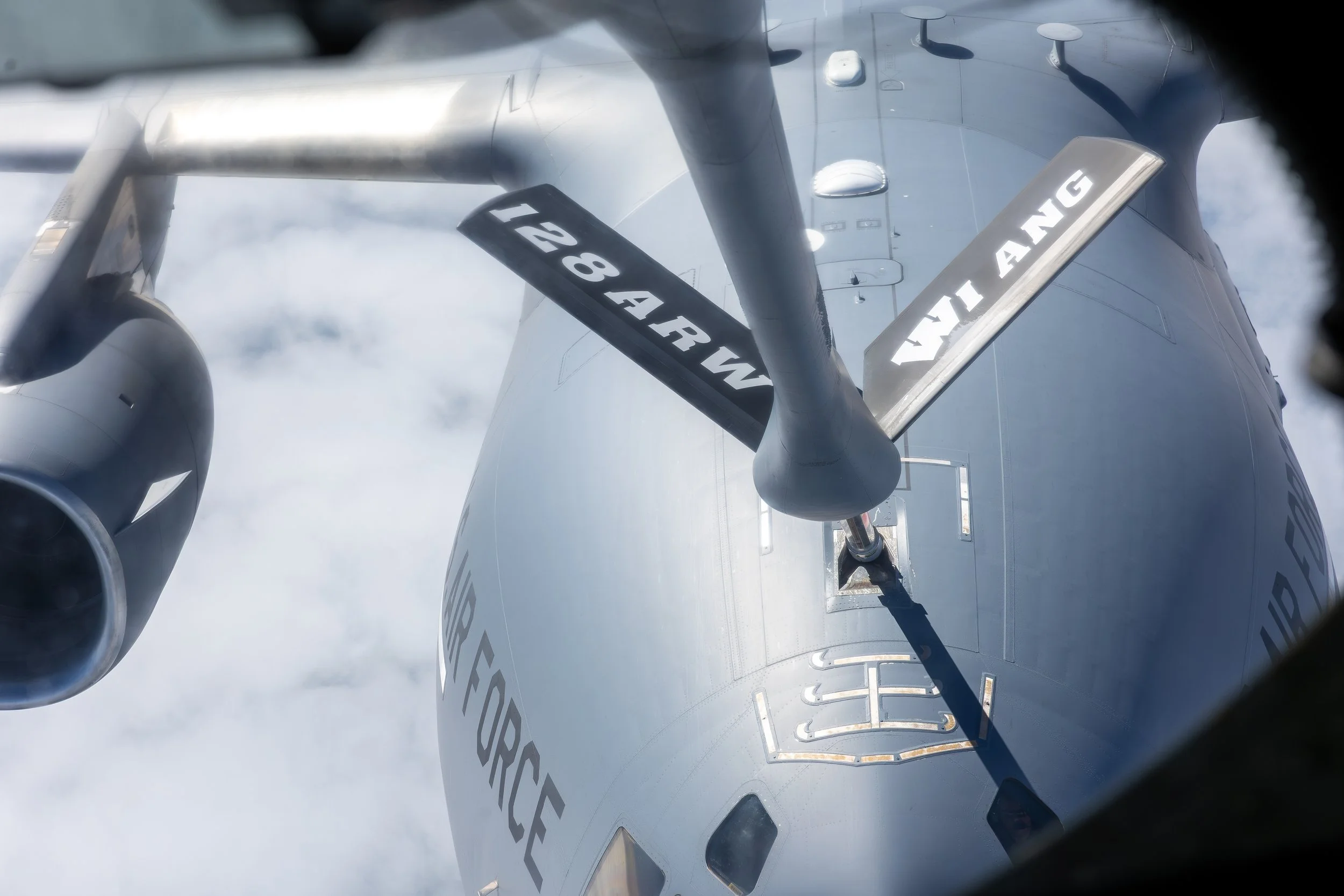
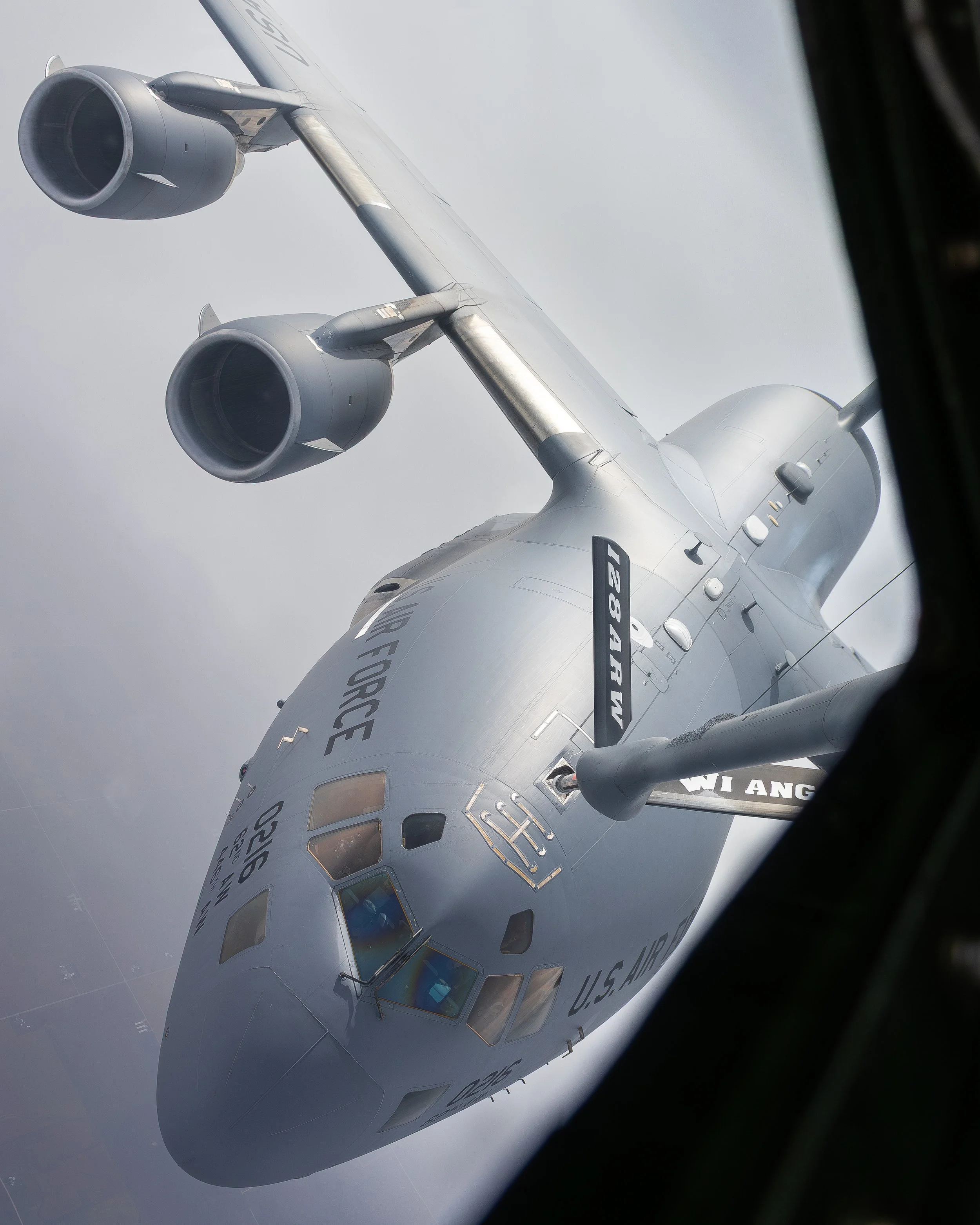
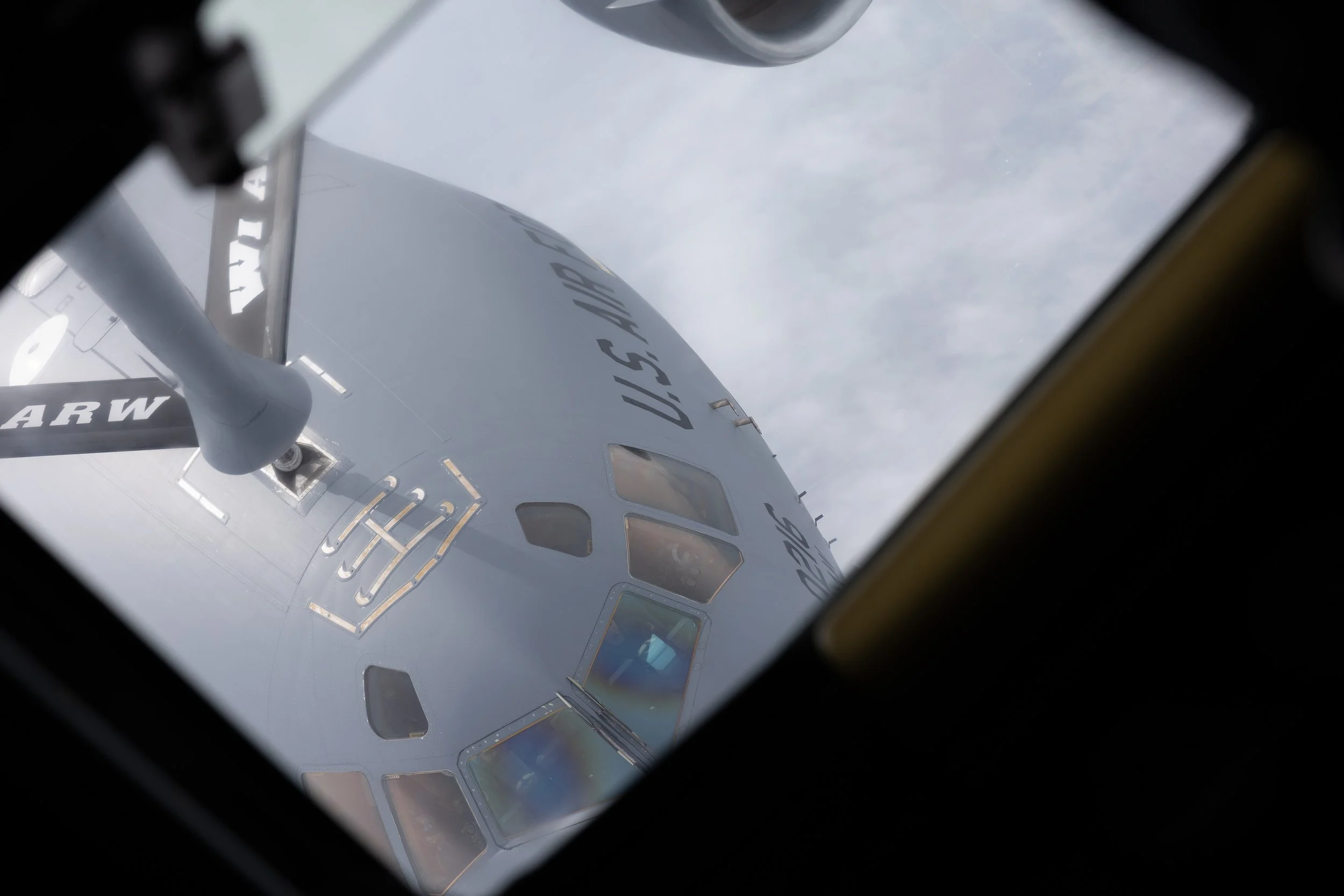
During the media flight, the KC-135 conducted an air-to-air refueling with a C-17 Globemaster III. The flight demonstrated the wing’s primary mission, extending the range and endurance of other military aircraft. After rendezvous, the receiving aircraft stabilized behind the tanker while the boom operator guided the refueling boom into the receptacle on the top of the C-17. Once connected, fuel transfer began while both aircraft maintained formation. The process is routine for tanker crews but requires precise coordination between pilots and the boom operator. Small corrections in position are constantly made to keep the aircraft aligned during fuel transfer. The C-17 is commonly refueled by KC-135 aircraft because it supports long-range airlift missions, including troop transport, cargo delivery, and humanitarian operations. Air refueling allows these aircraft to travel farther distances without landing.
One of the main goals of the open house was to show how many people are involved beyond the flight crew. Maintenance teams, fuels specialists, and support personnel were present to explain their roles to visitors. Aircraft on display were opened for walk-through tours, including the KC-46 Pegasus, C-17 Globemaster III, and the base tenants - KC-135. Airmen stood with them answering questions about inspections, servicing, and daily operations. The event also included participation from other military and civilian agencies, along with recruiting representatives and family support groups.
Because the base sits next to a commercial airport, most Milwaukee residents see the KC-135 regularly but rarely interact with the unit. The open house allowed the public to meet the people responsible for operating and maintaining the aircraft. Visitors were able to get close to multiple aircraft, view support equipment, and talk directly with crews. The atmosphere was informal and educational rather than performance-based. According to wing members, events like this help explain the purpose of the Air National Guard and its role in both national defense and local emergency response.
The 128th Air Refueling Wing’s primary mission is aerial refueling, which supports fighters, bombers, cargo aircraft, and allied aircraft worldwide. By providing fuel in flight, tankers reduce the need for forward bases and allow aircraft to remain airborne longer. While the tanker itself is not a combat aircraft, nearly all long-range operations depend on it. The wing routinely supports overseas deployments, training exercises, and contingency operations. For many visitors, the weekend provided their first look inside the installation. For the Airmen of the 128th, it was a chance to show the work they perform every day just beyond the airport fence.
By Brett Johnsen
The Legendary DC-3 and C-47 Skytrain
By Jacob Herb
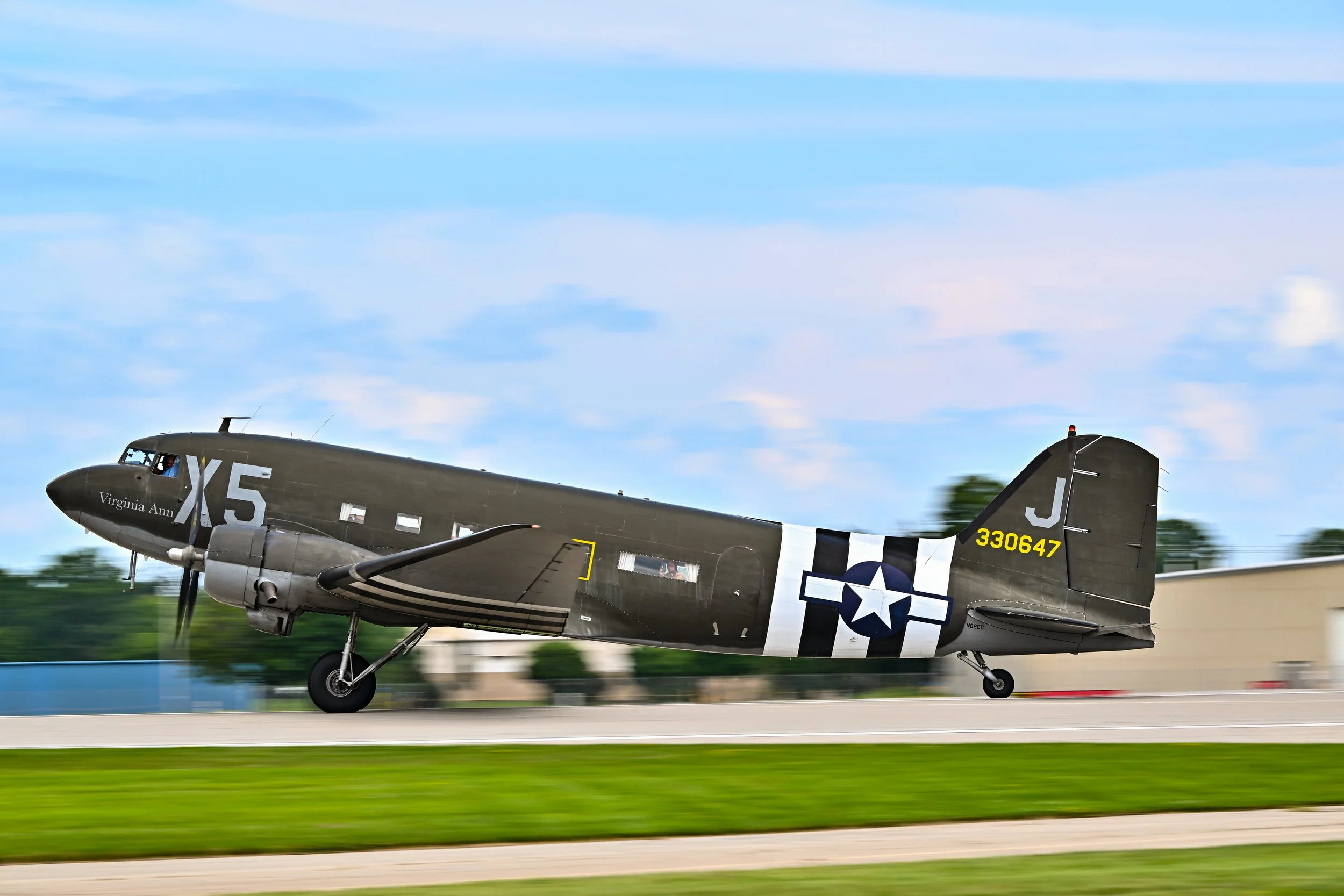
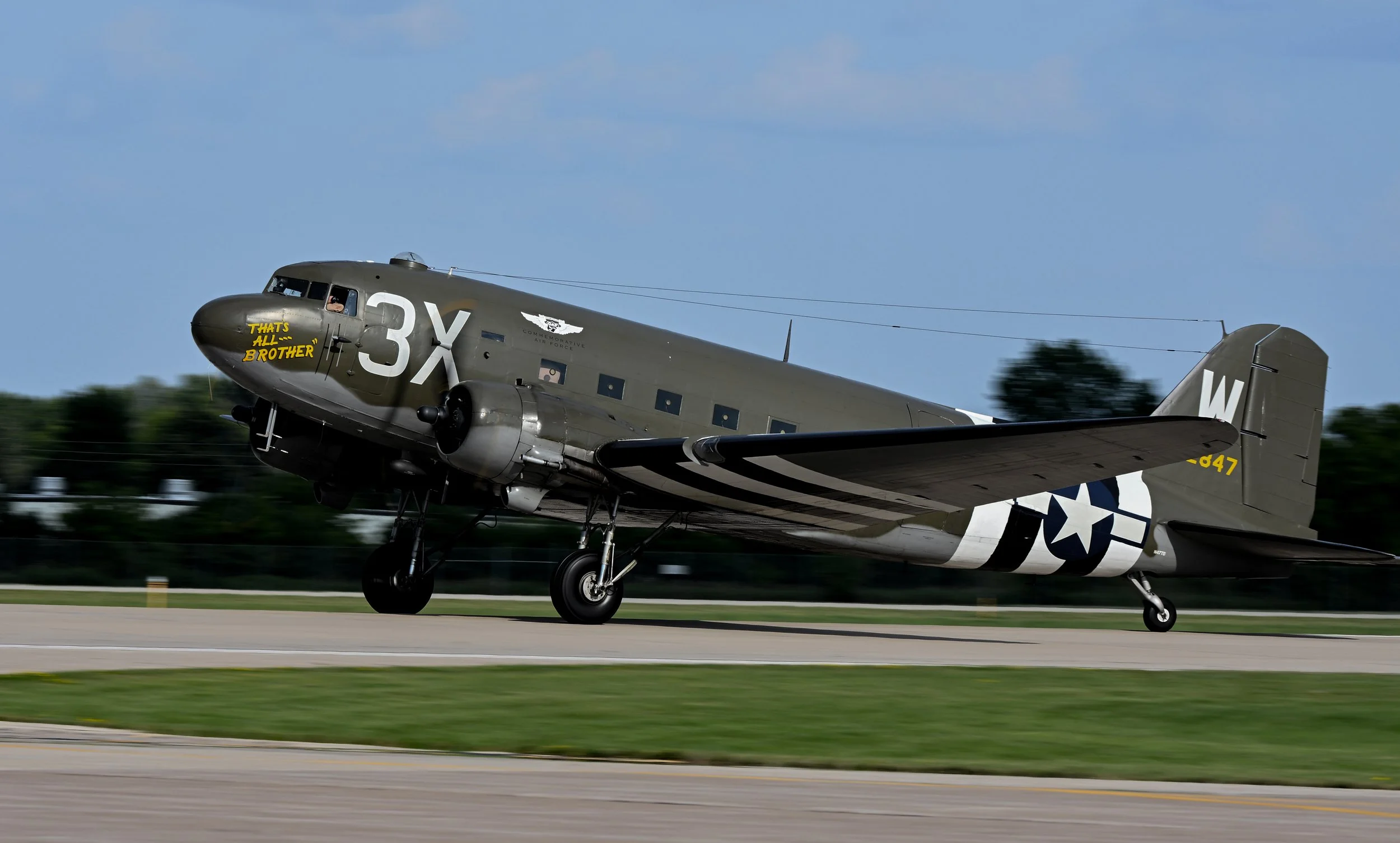
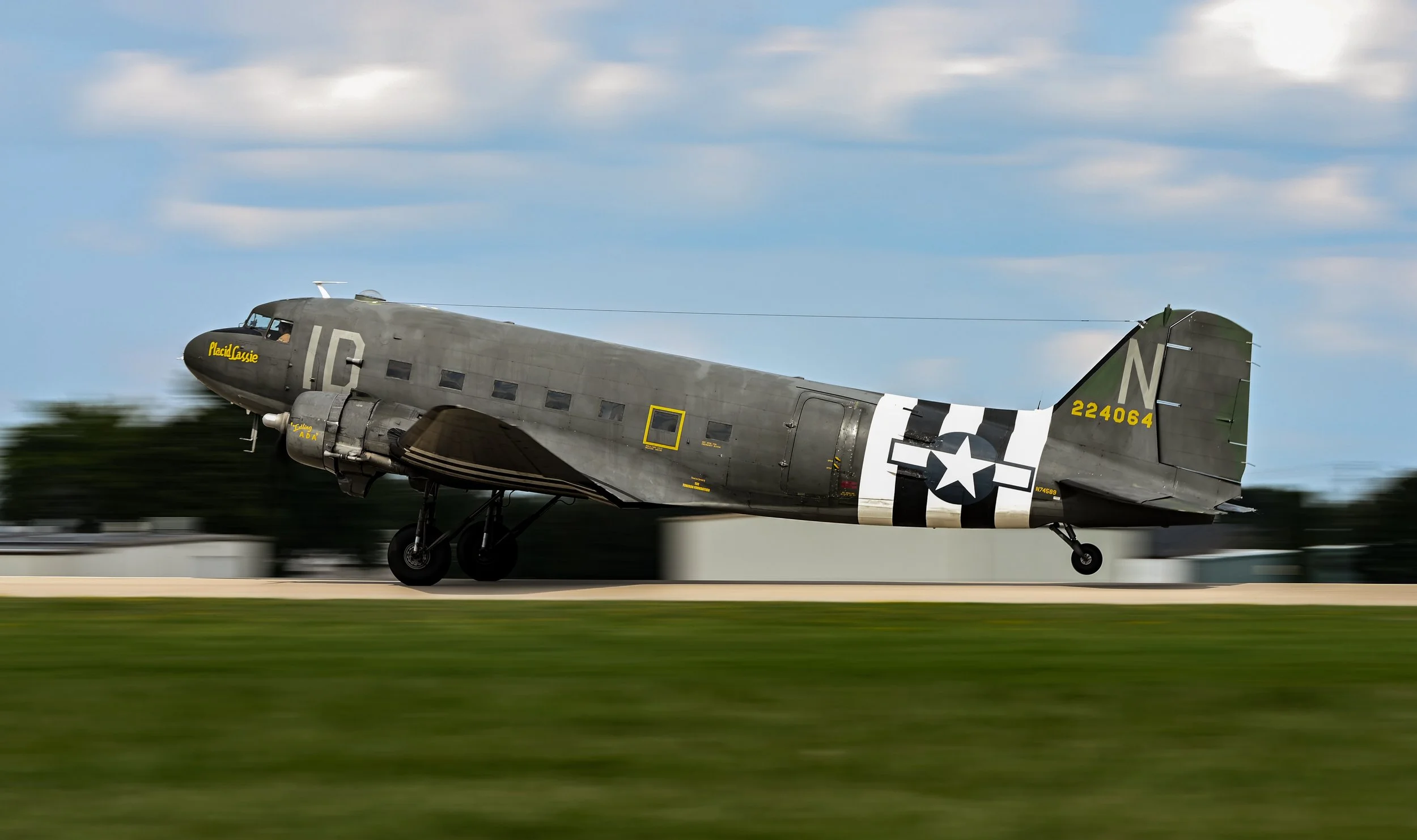
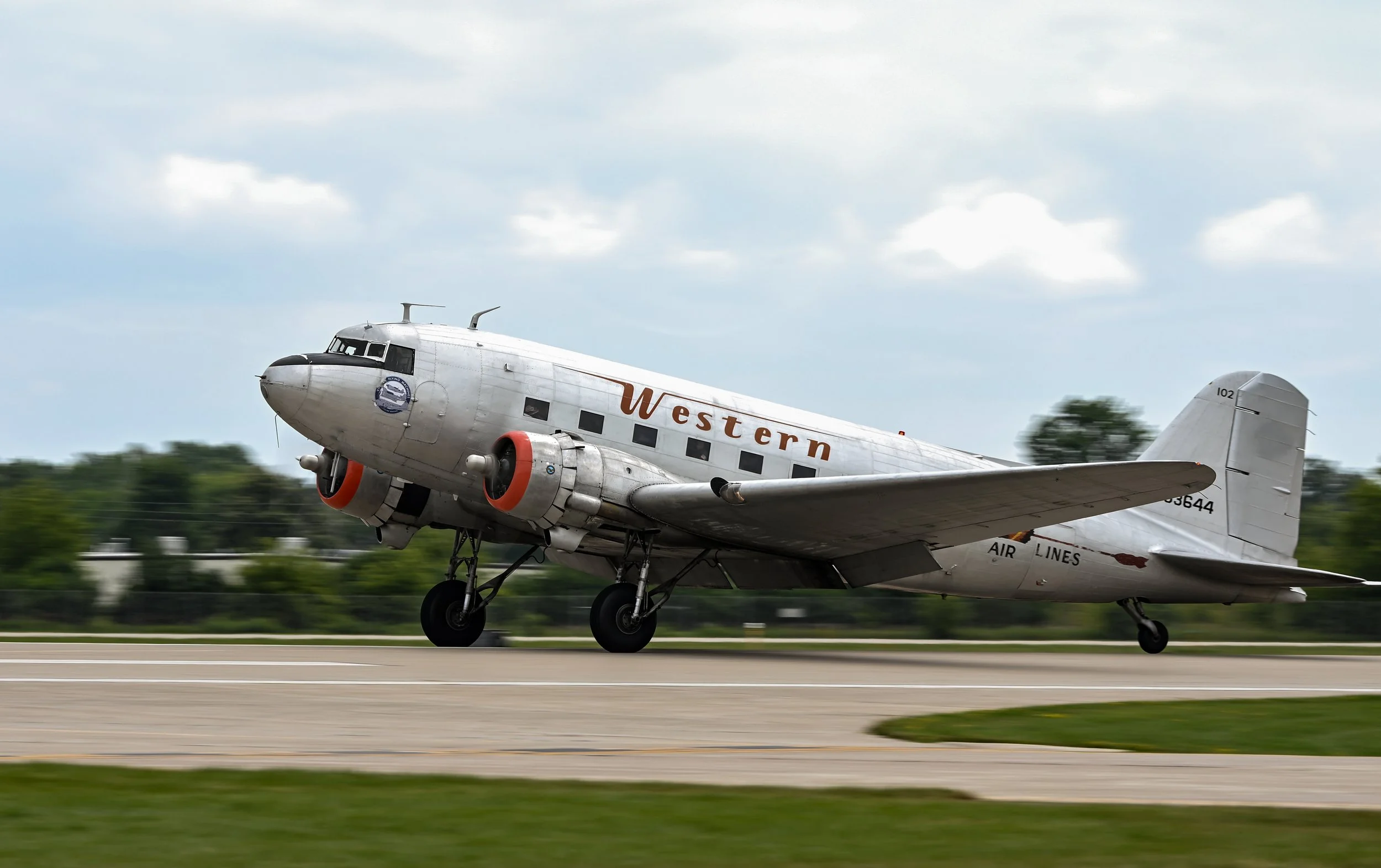
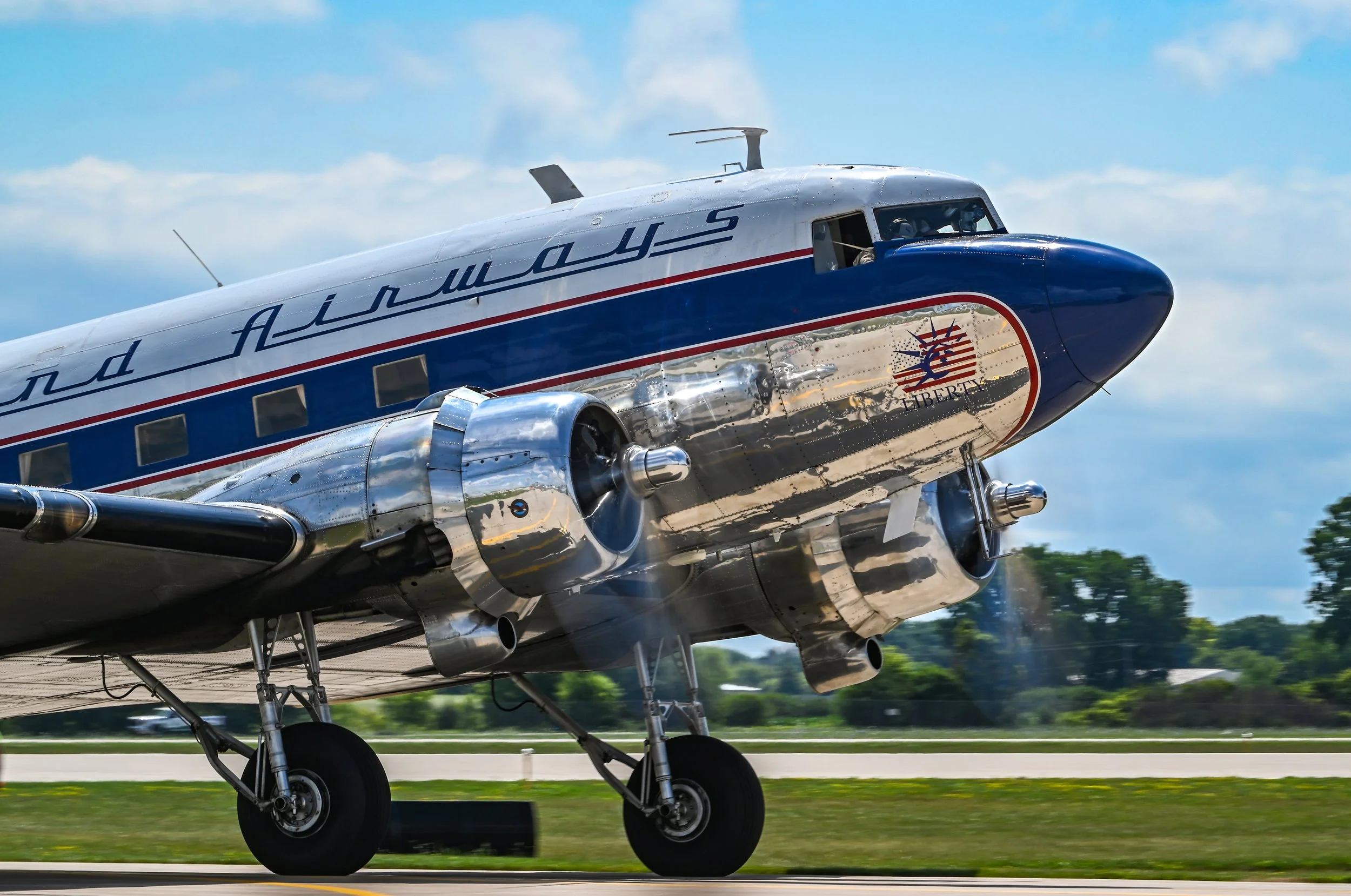
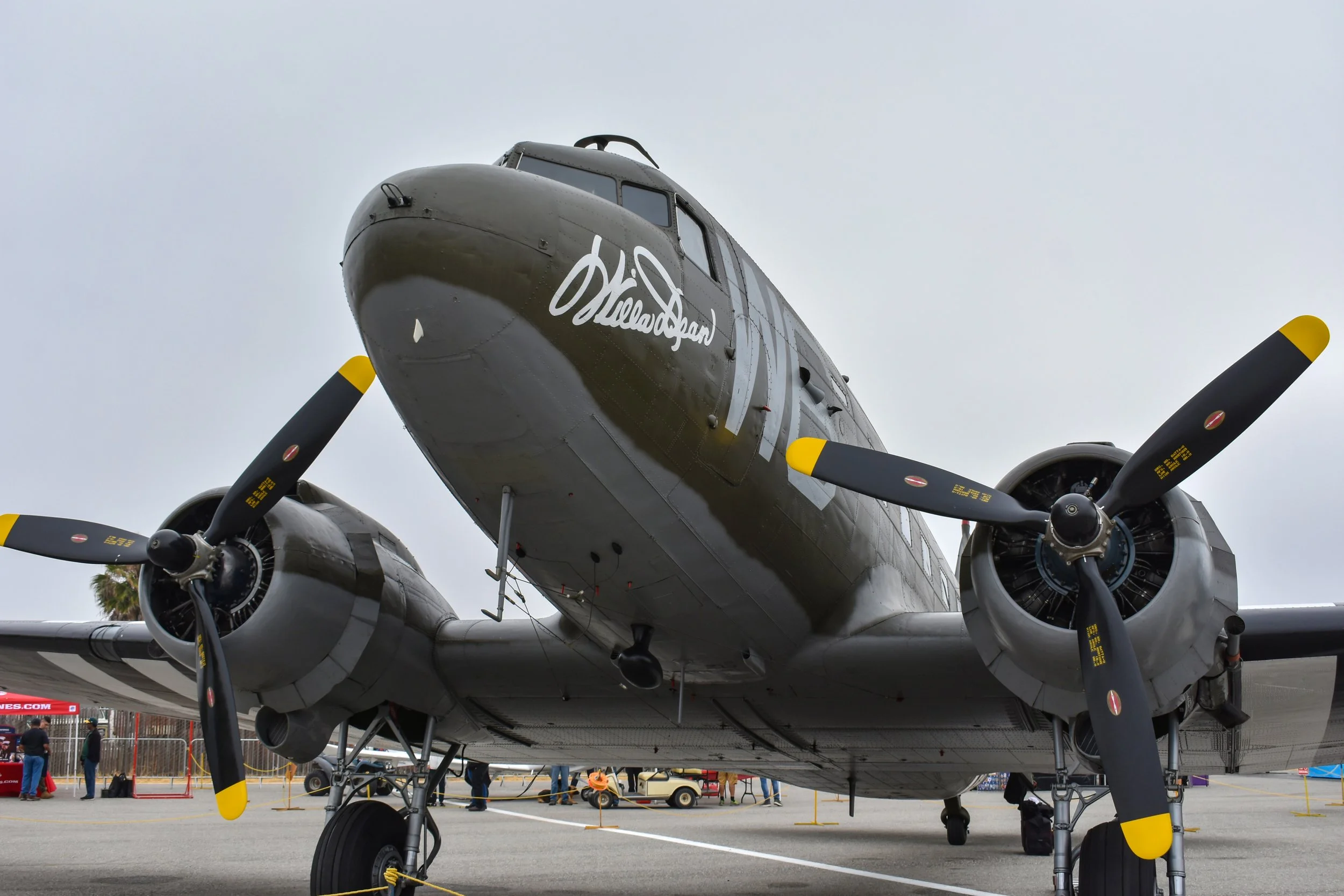
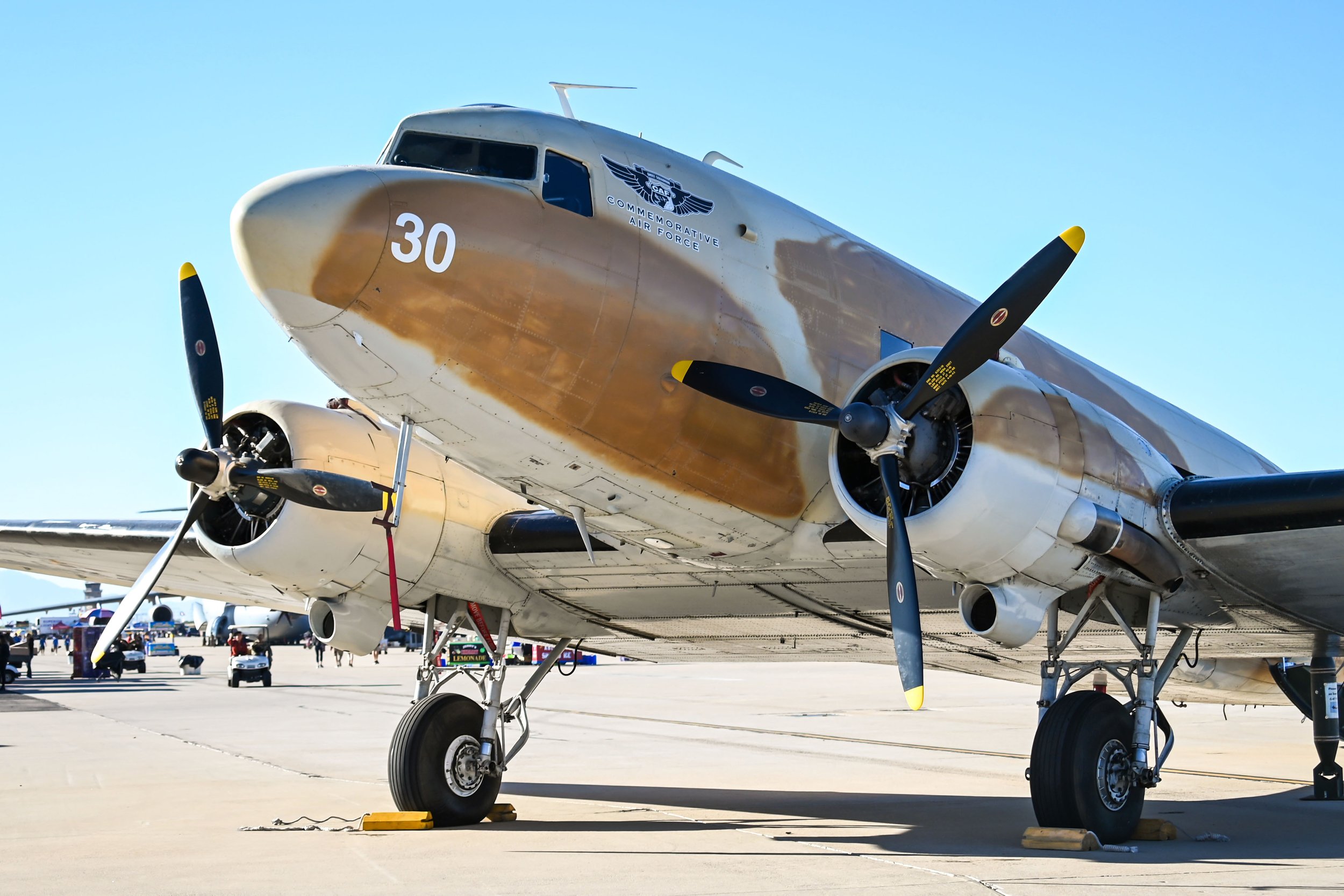
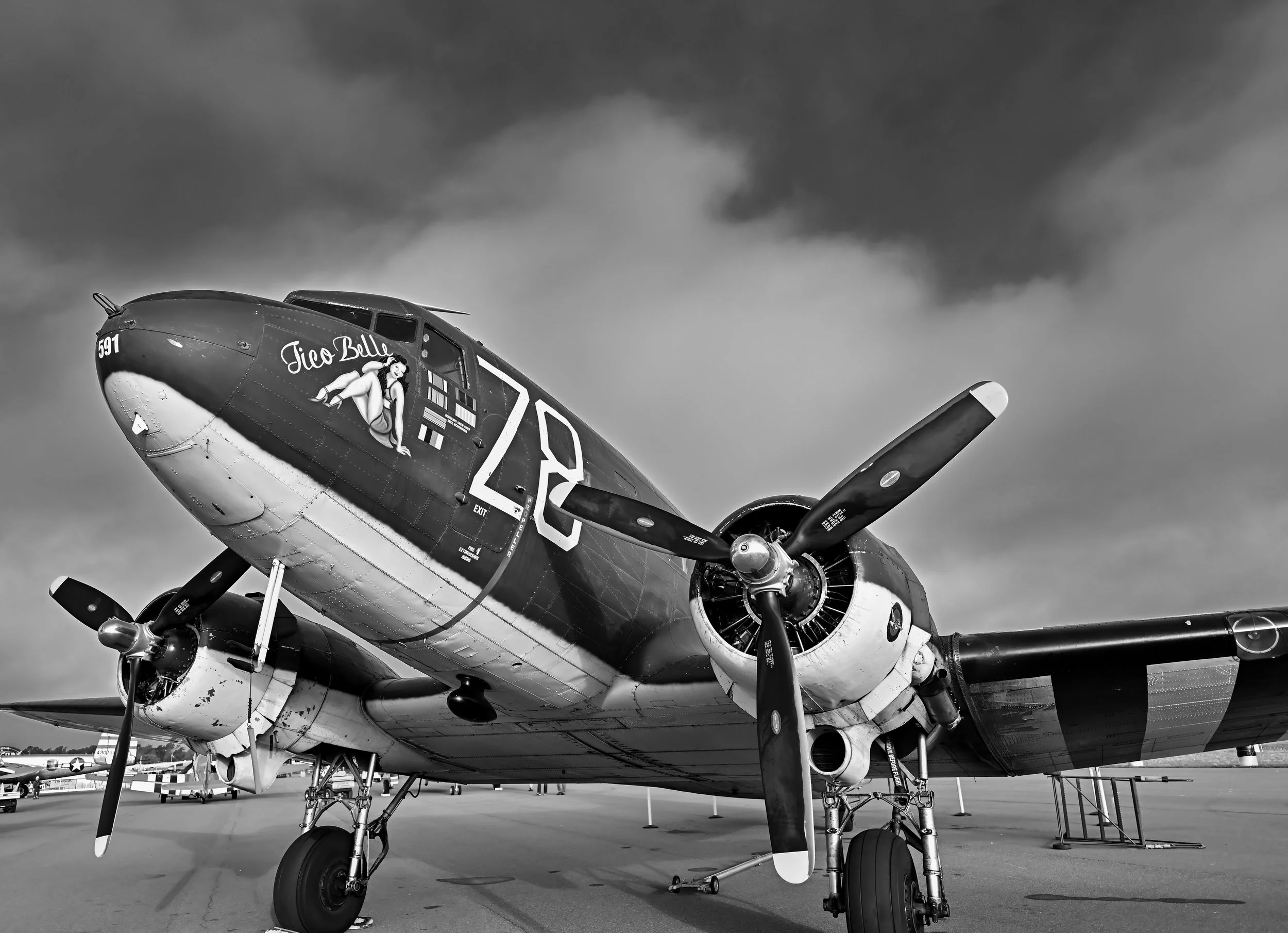
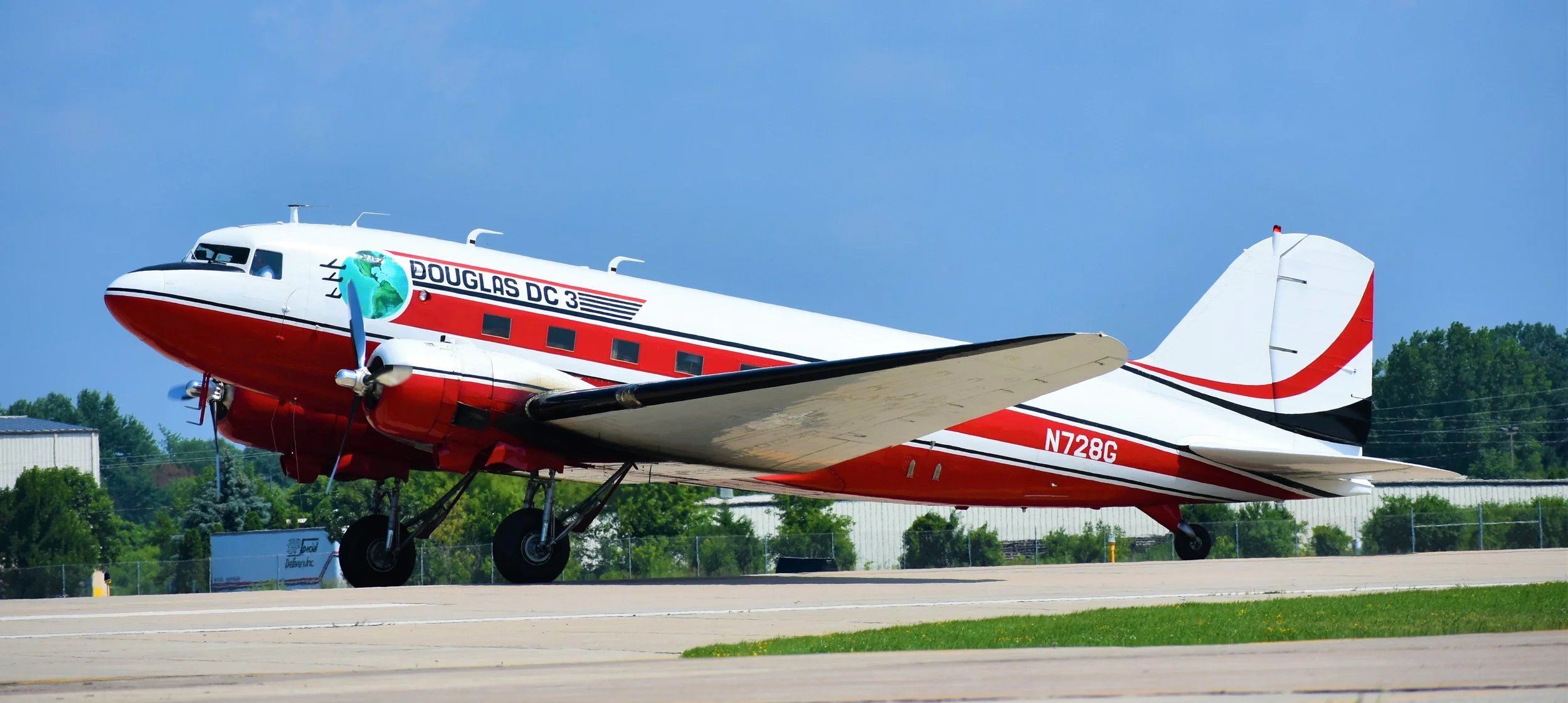
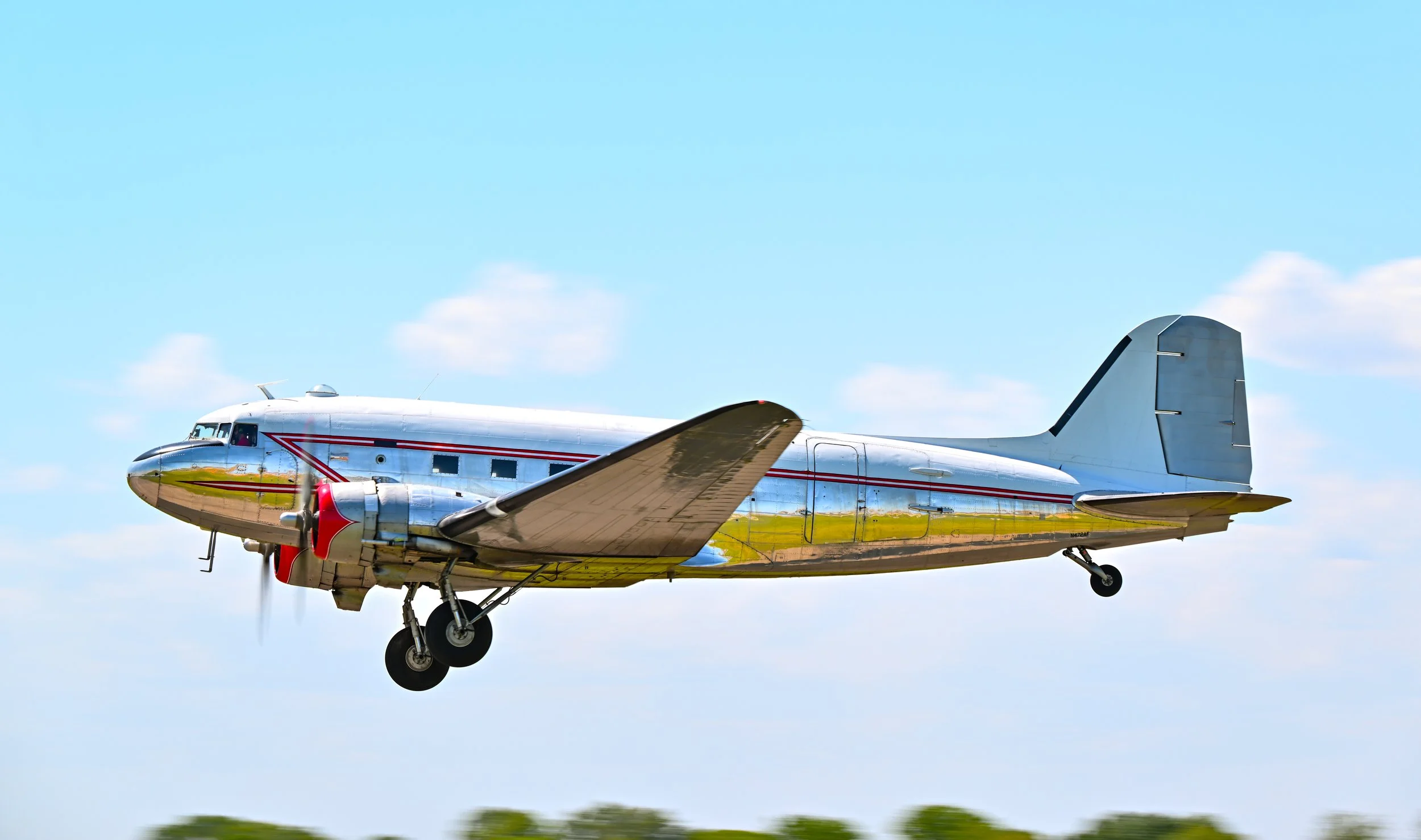
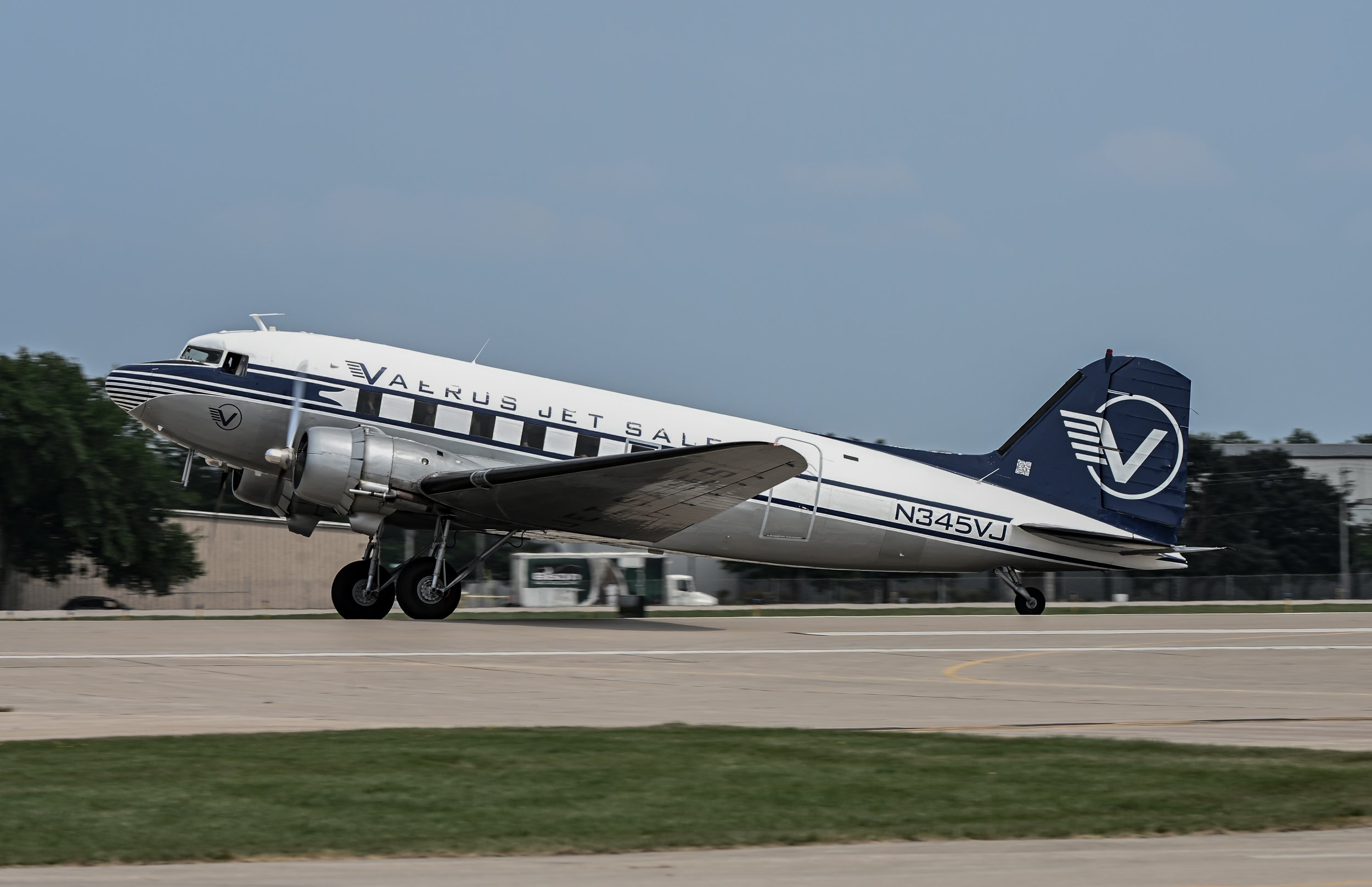
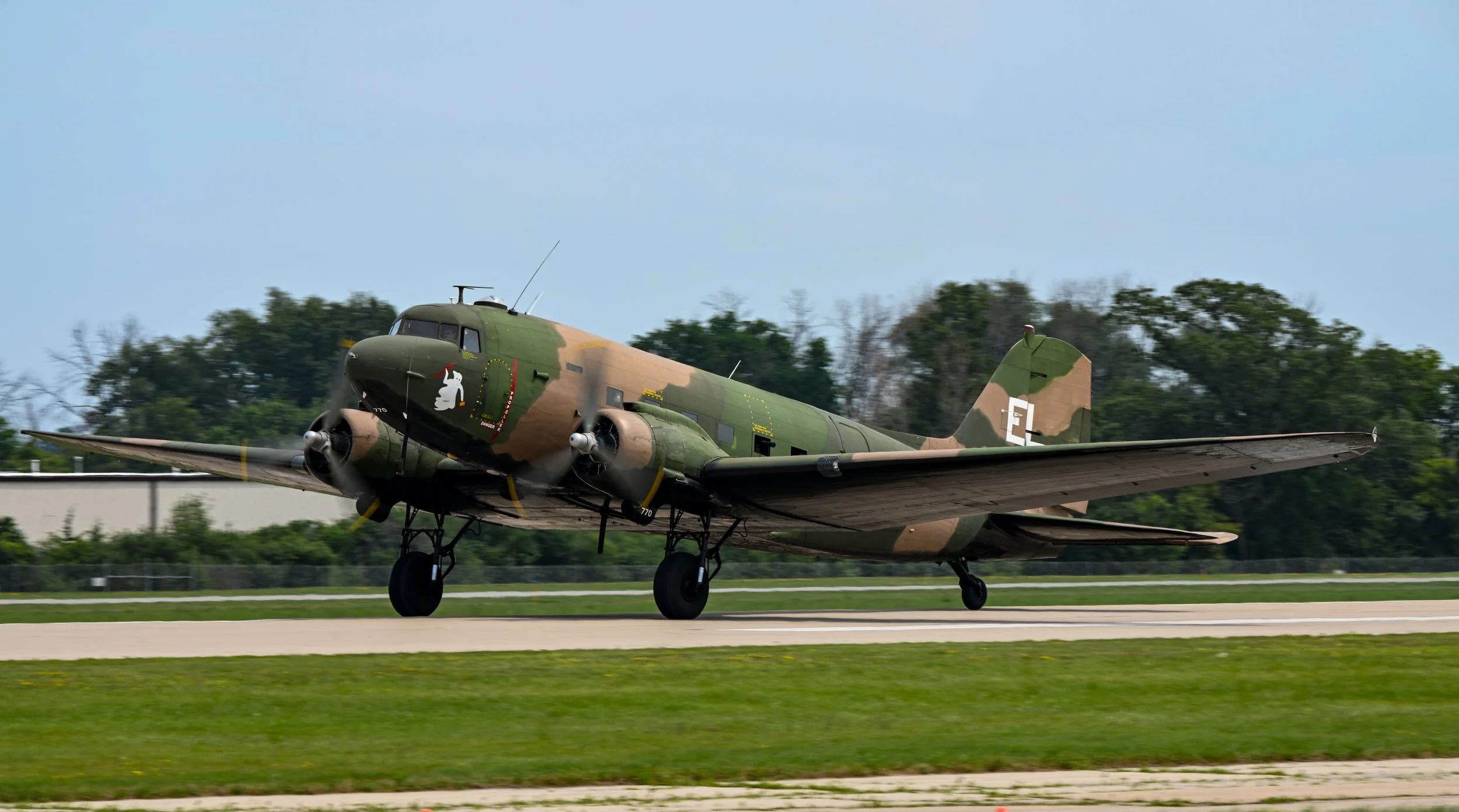
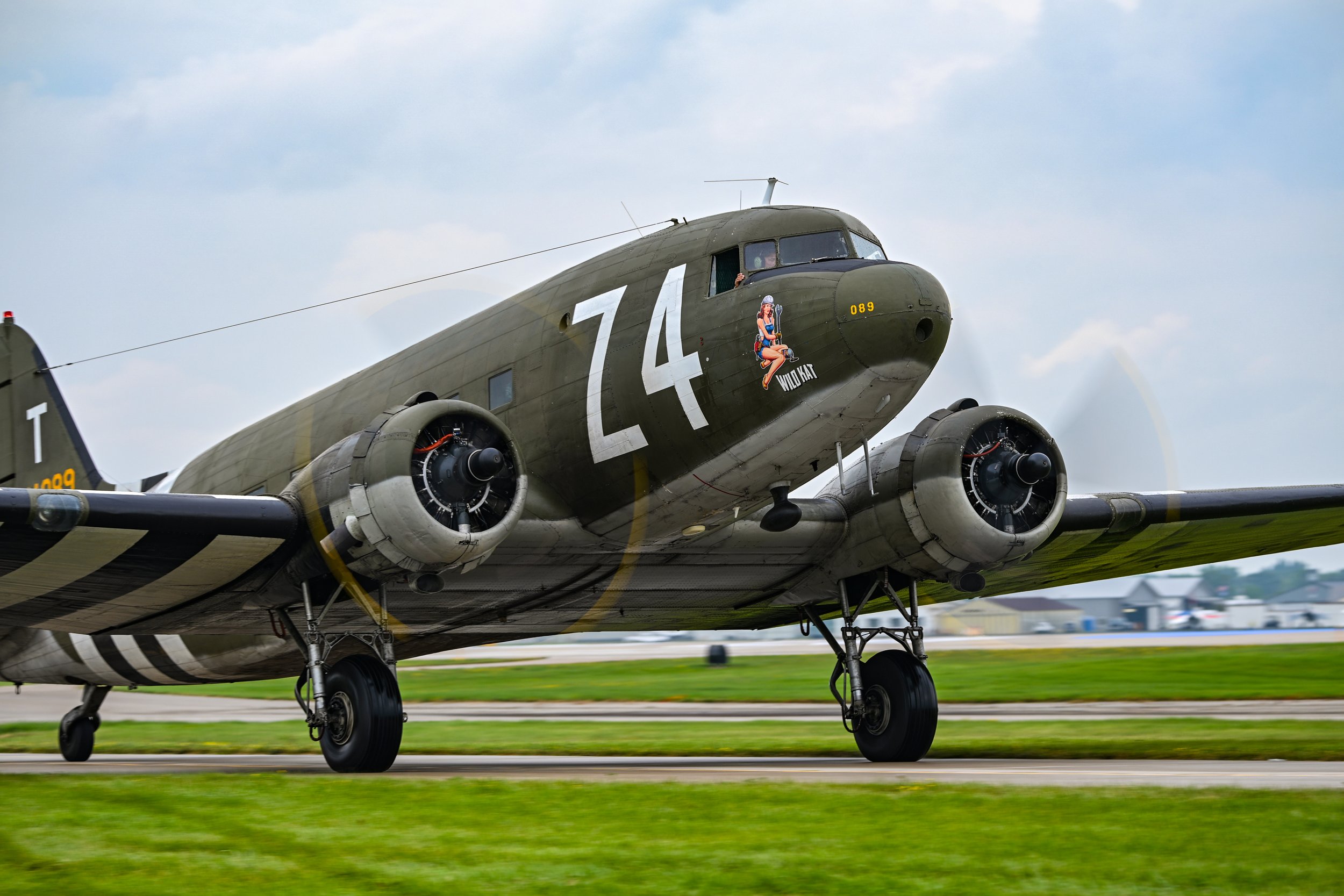
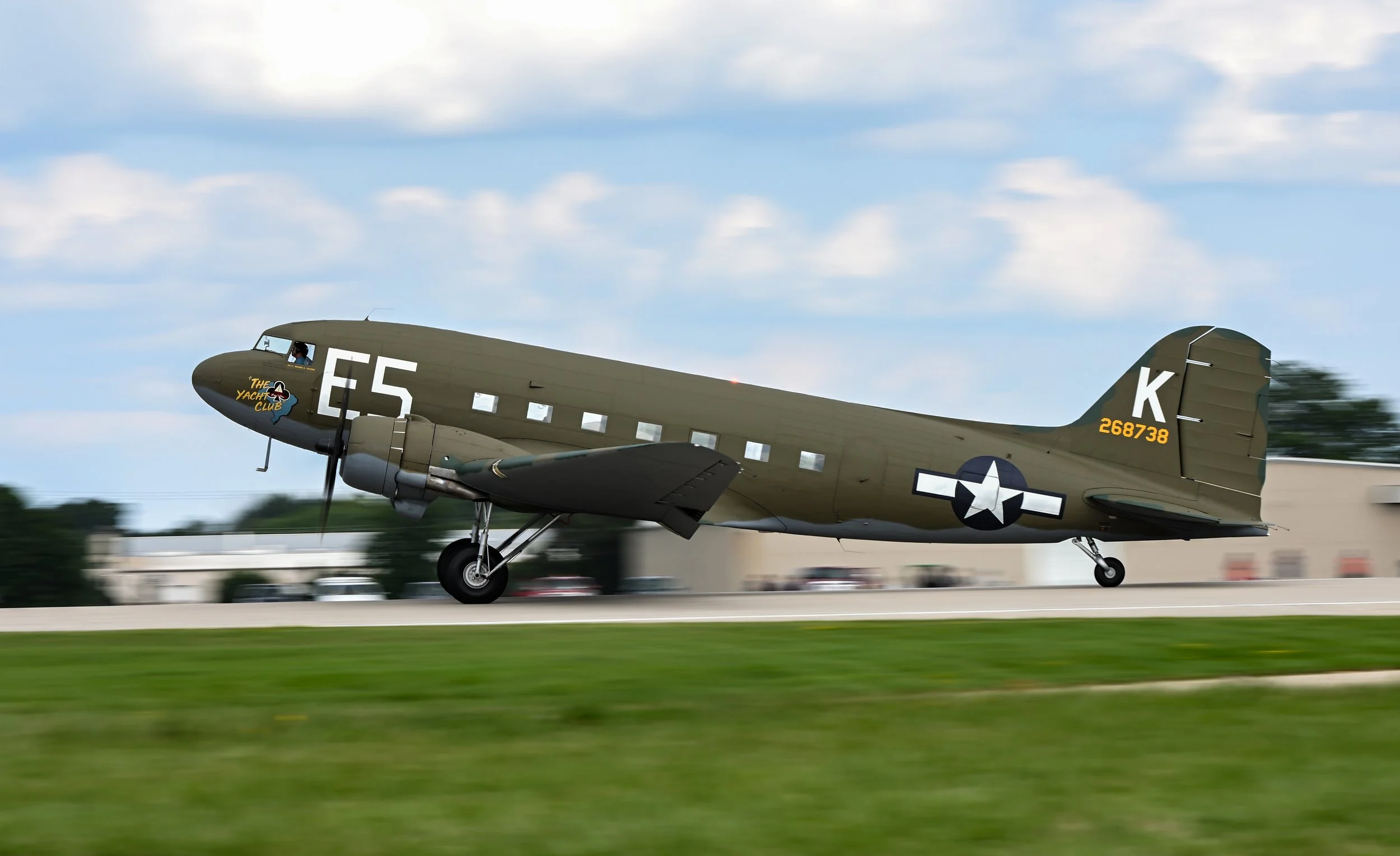
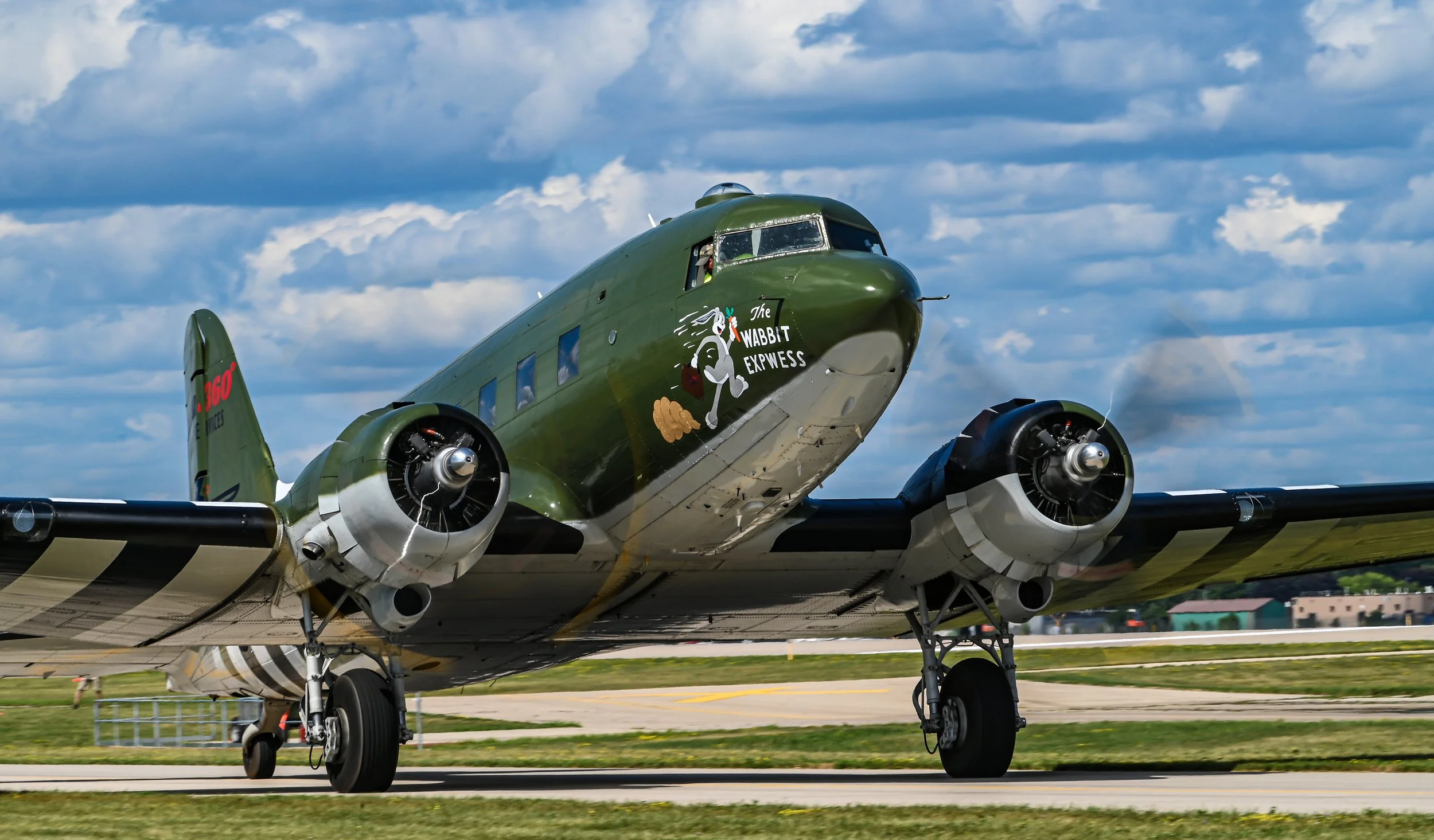
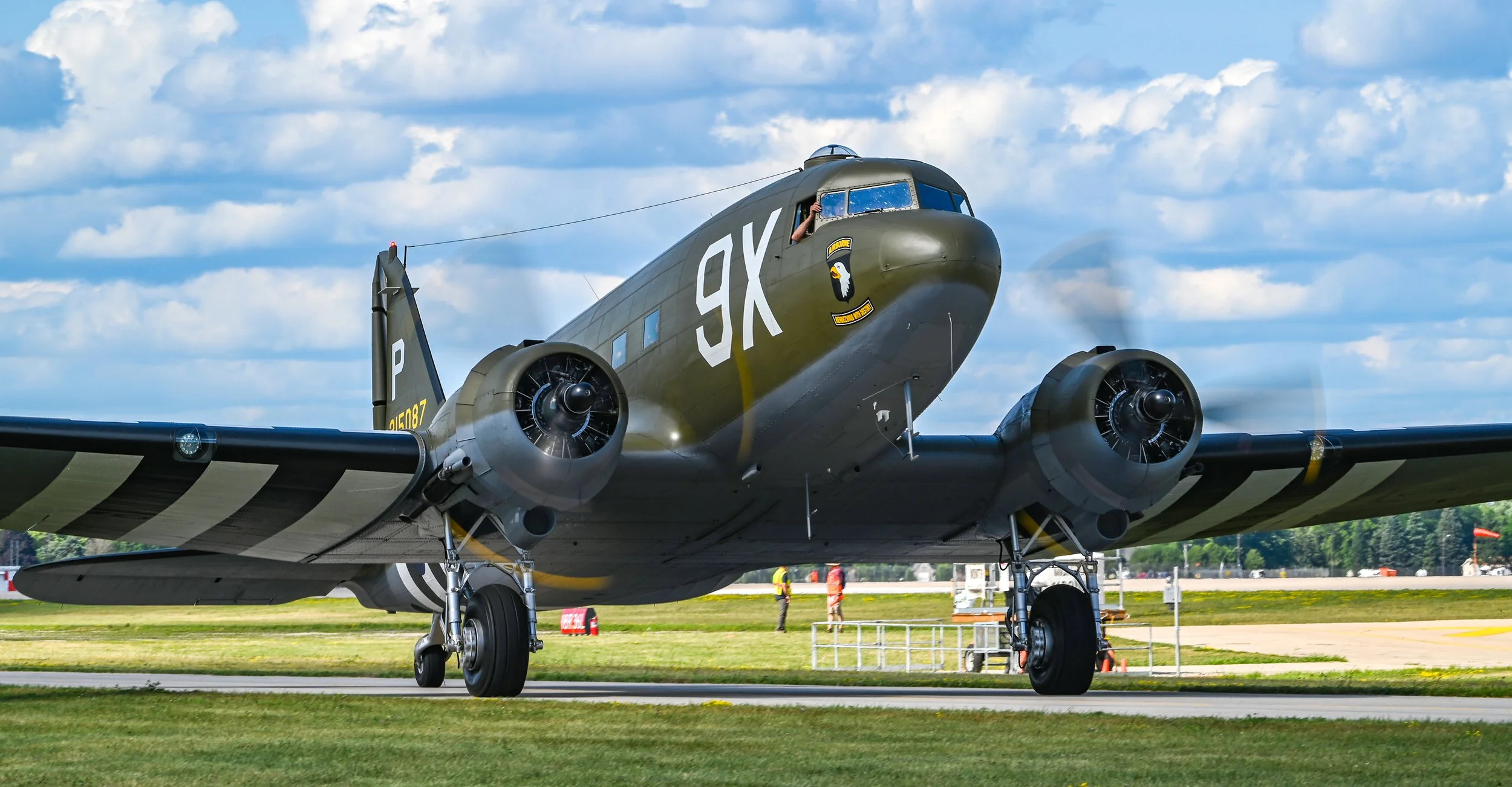
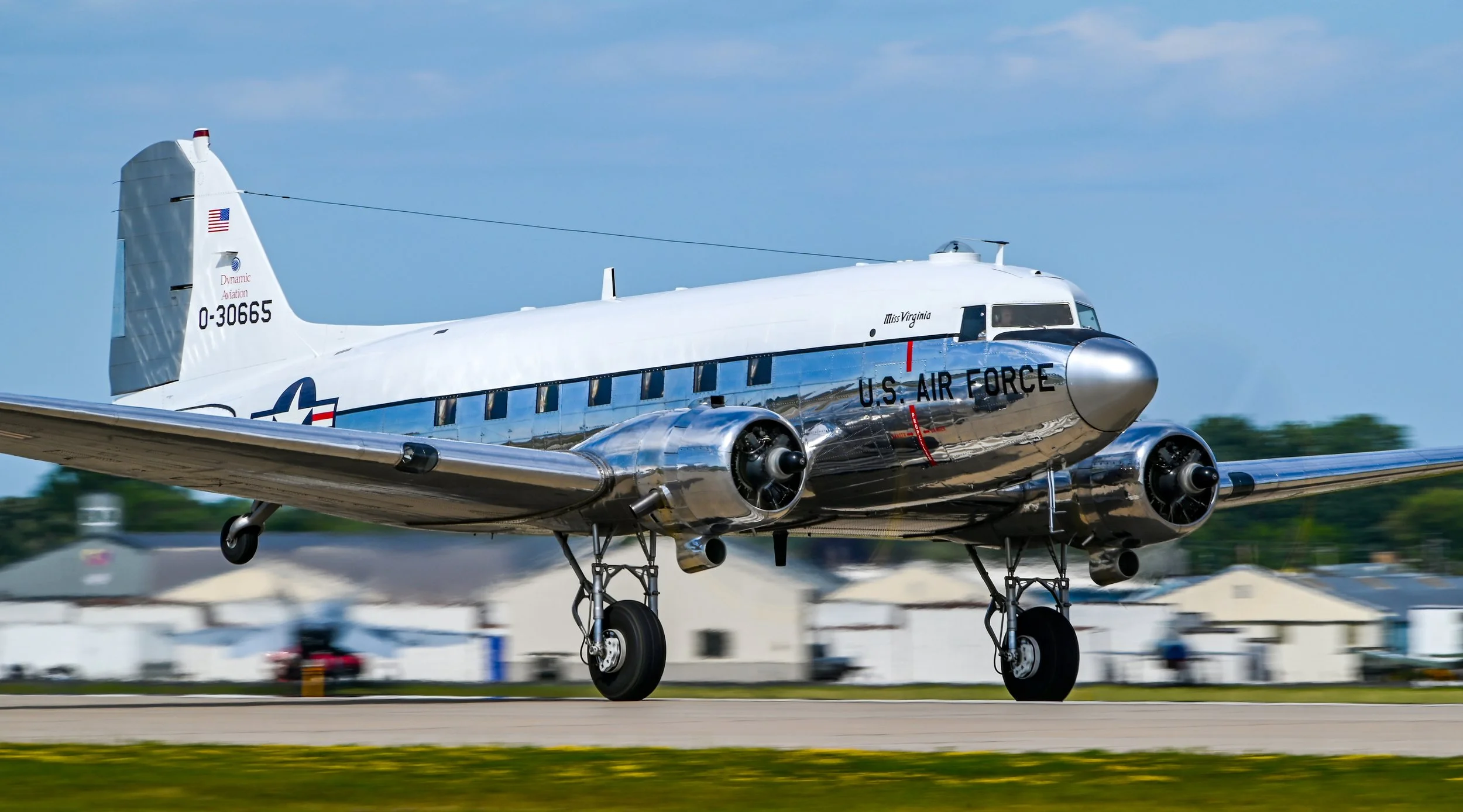
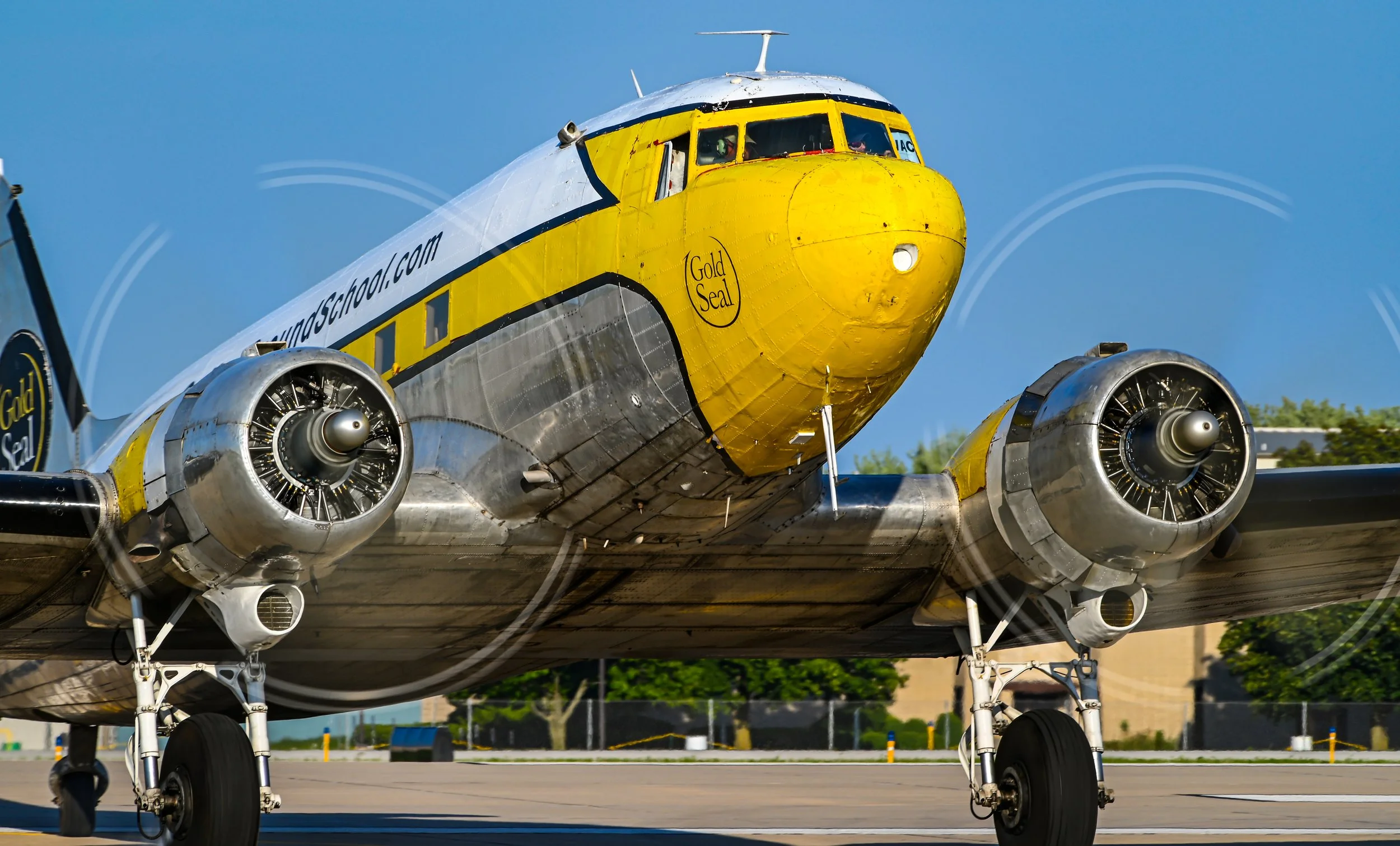
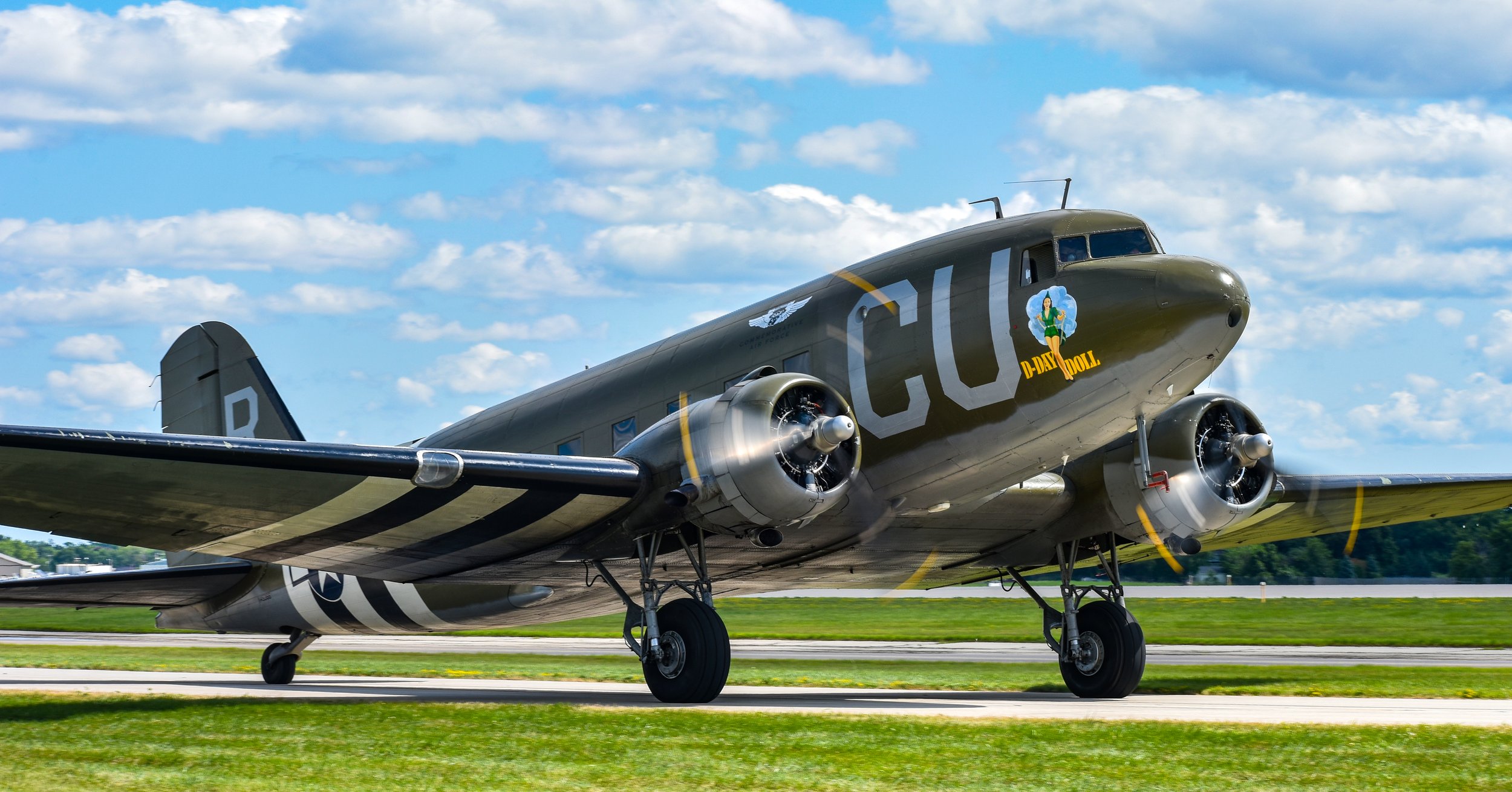
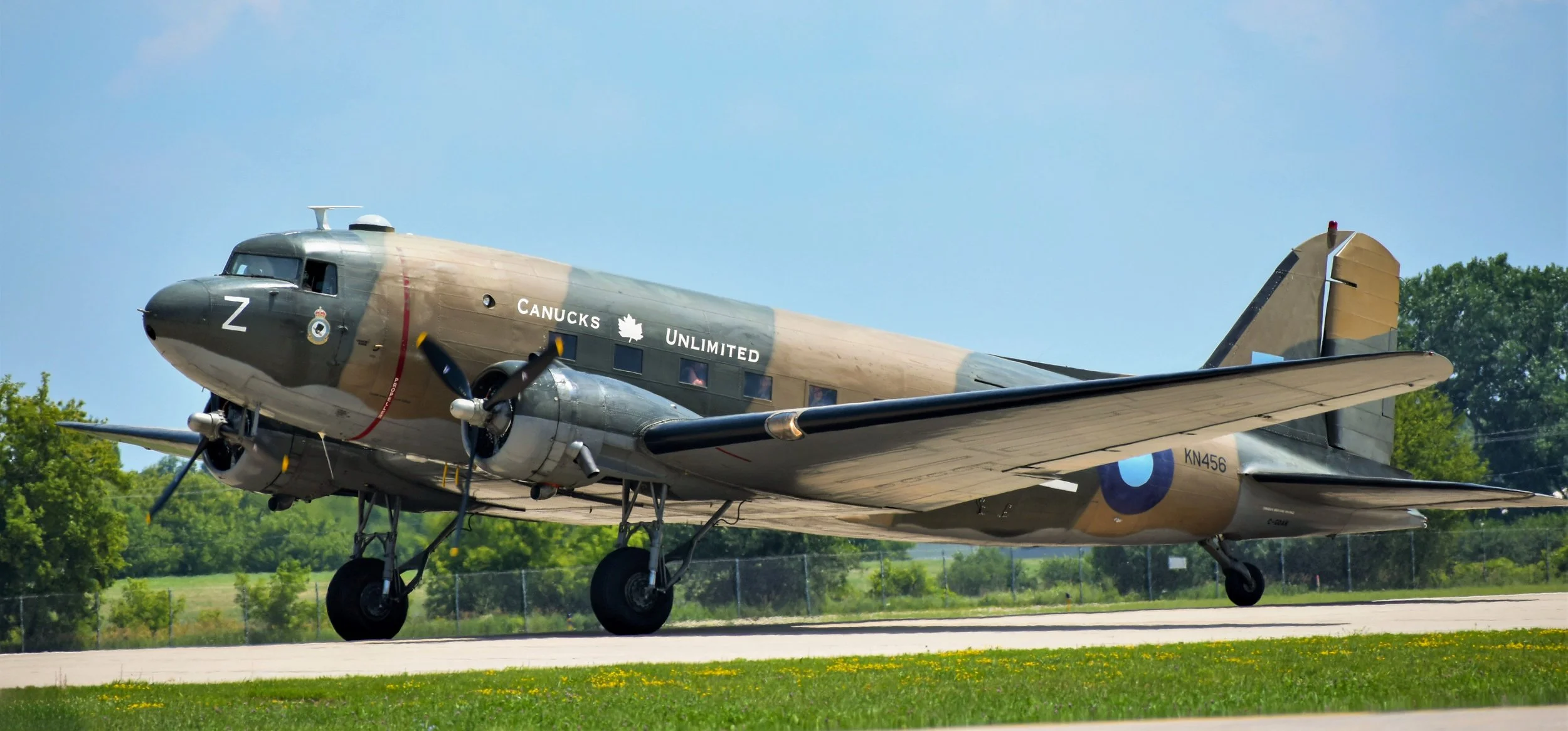
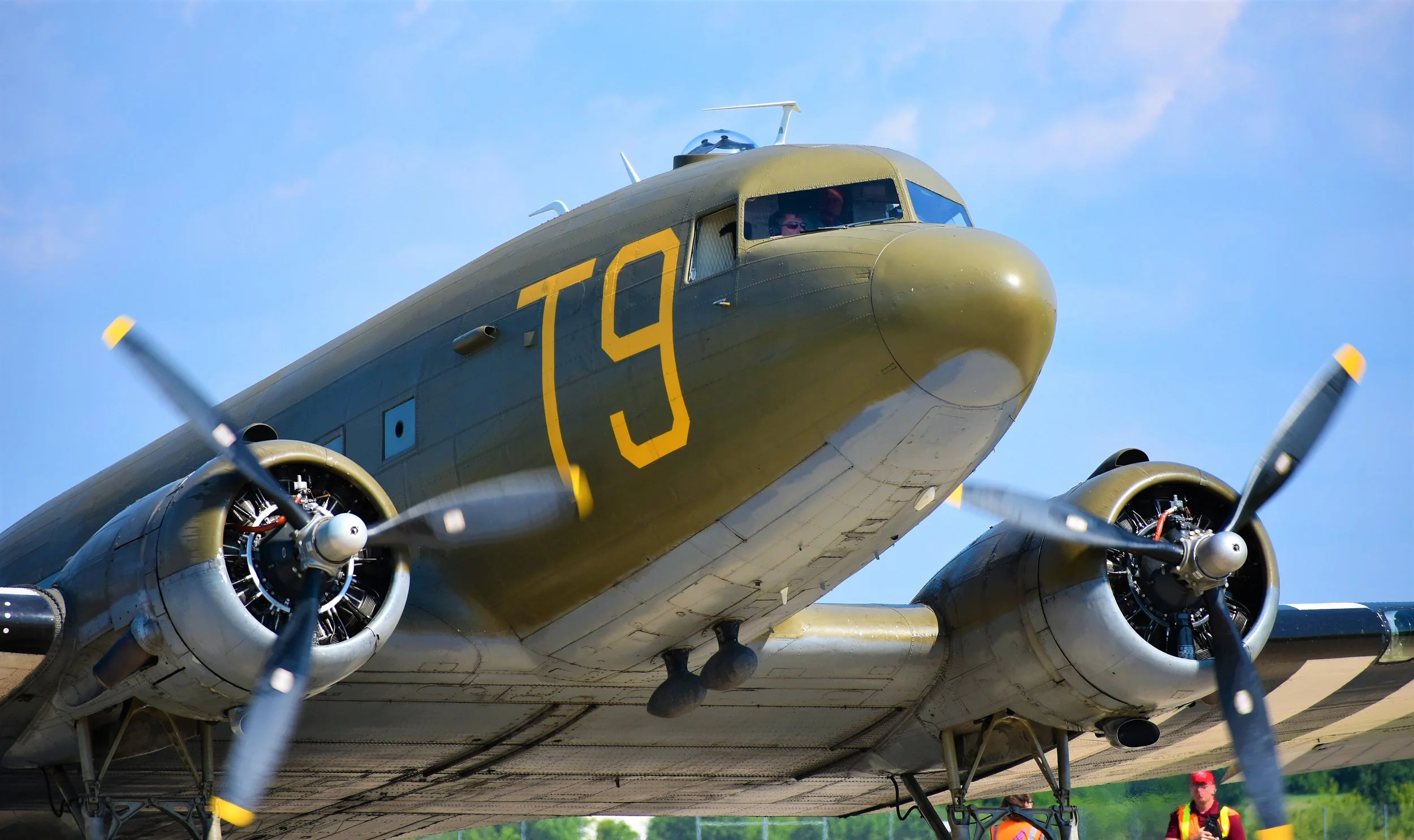
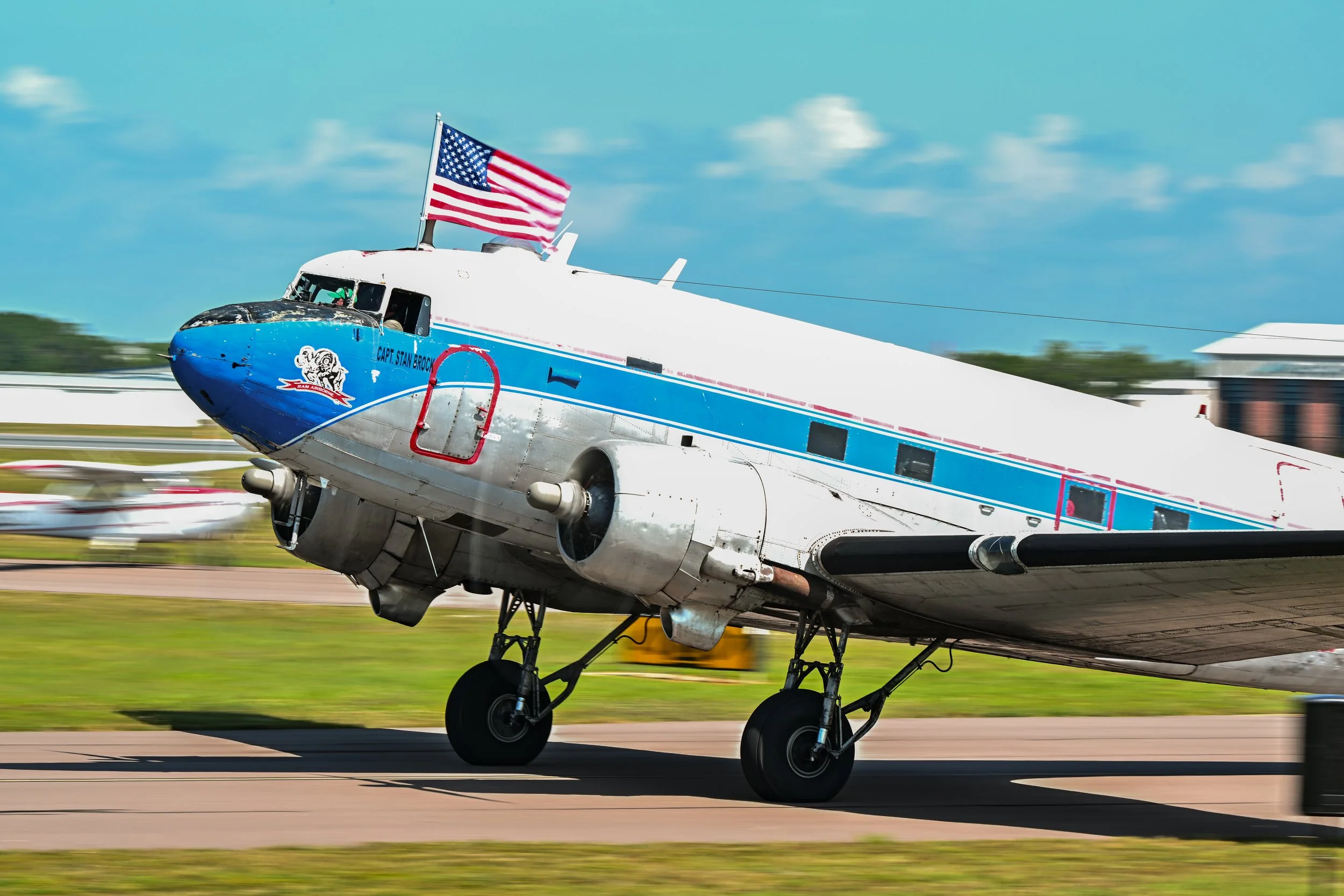
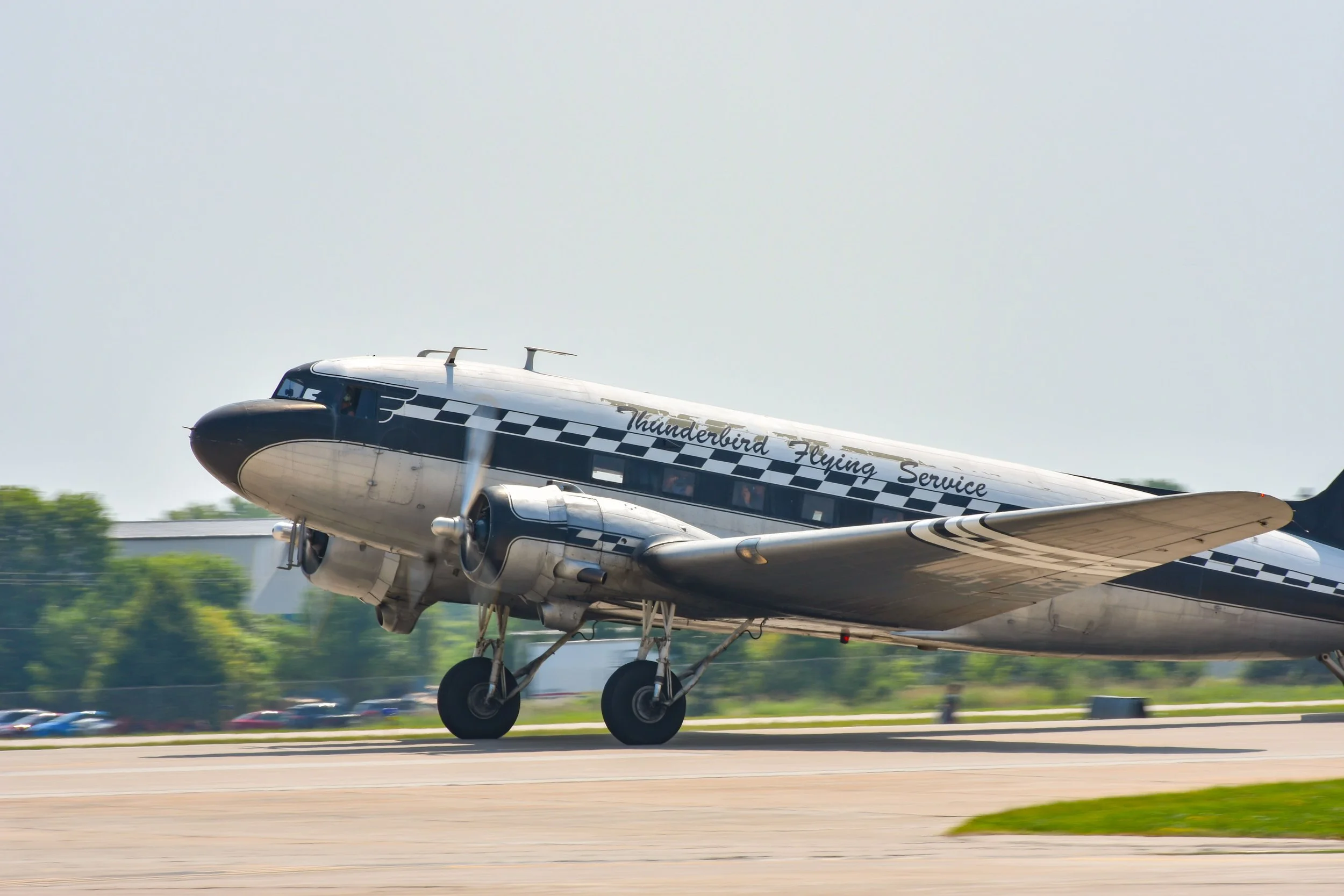
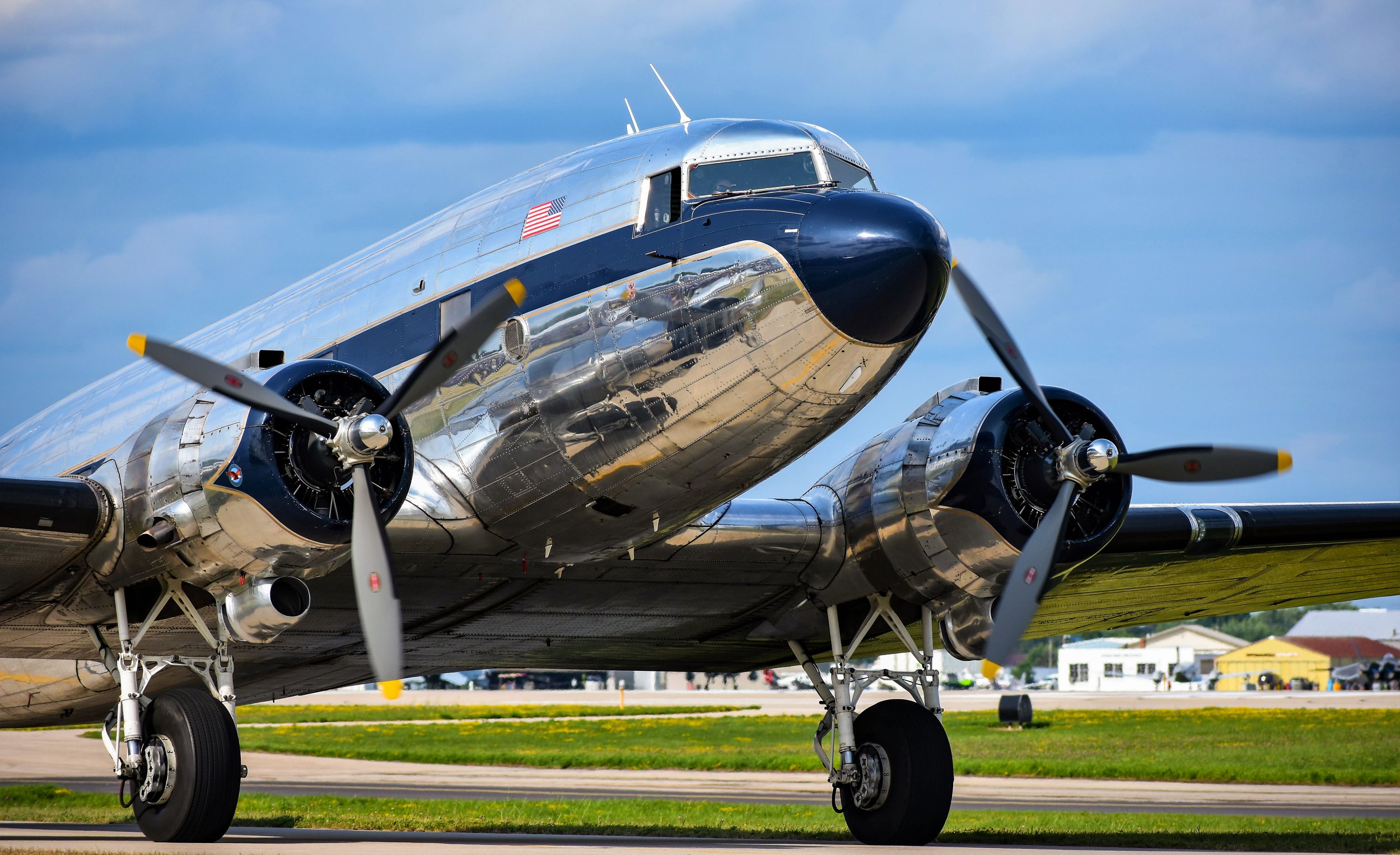
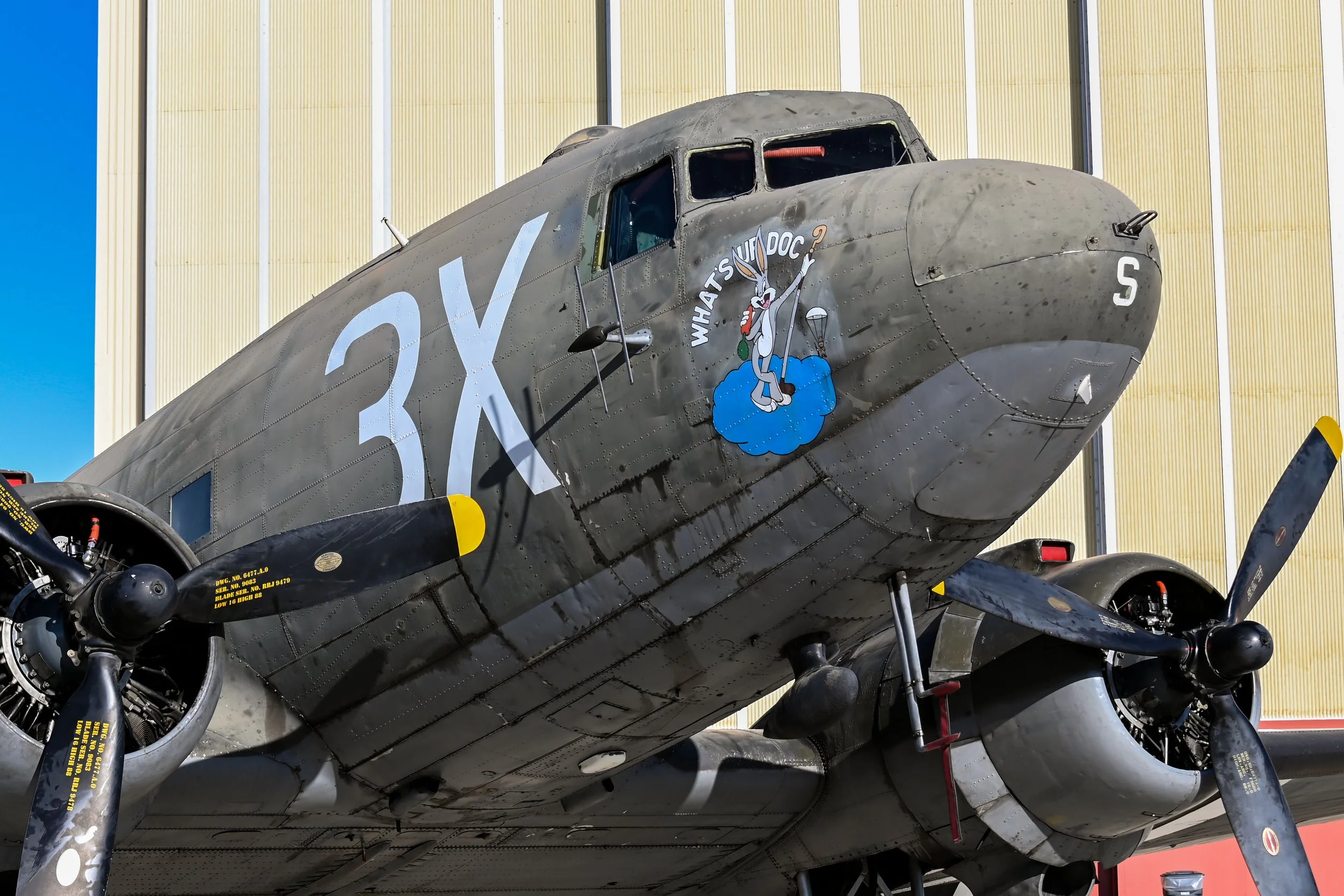
The Douglas Aircraft company DC-3 had it’s first flight 90 years ago on 17 December 1935. It was brought after American Airlines had asked Donald Douglas to create a variant of the DC-2 that could accommodate sleeper berths for passengers on proposed longer routes for American. American had the first flight with the DC-3 on 26 June 1936 with service from Newark, NJ to Chicago and vise versa. Airlines like United, TWA (Transcontinental and Western Airlines), Eastern, and Delta all had orders with Douglas for the DC-3. In total, 607 DC-3 aircraft were produced and main production shifted to the military C-47 and later C-53 variants of the DC-3.
The C-47 Skytrain (or Dakota for the RAF ) first came into service on 23 December 1941 and quickly became a logistical juggernaut during WWII. It had the ability to carry up to 6,000 pounds of cargo or 28 troops and could transport them to virtually anywhere on the battlefield. They also had the ability to tow a glider (mainly the Waco CG-4A glider) full of additional cargo. The Skytrain played a vital role in every facet of the war, including the D-Day Invasion, air-drooping aid for troops during the Battle of Bastogne, the invasion of Sicily, supplying the Chinese efforts by flying what is called “The Hump” from Italy to China, and post-war efforts during in the Berlin Airlift. In total, over 10,000 aircraft were produced for the war effort.
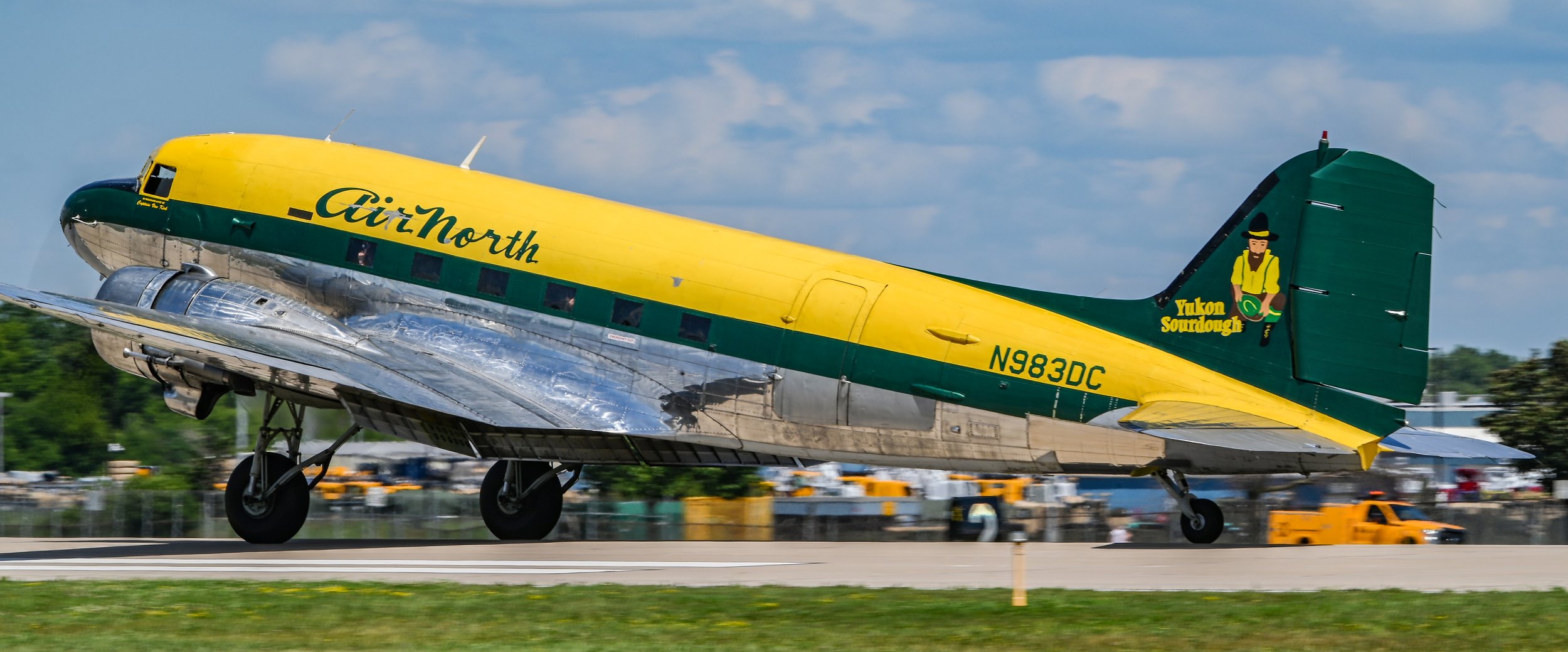
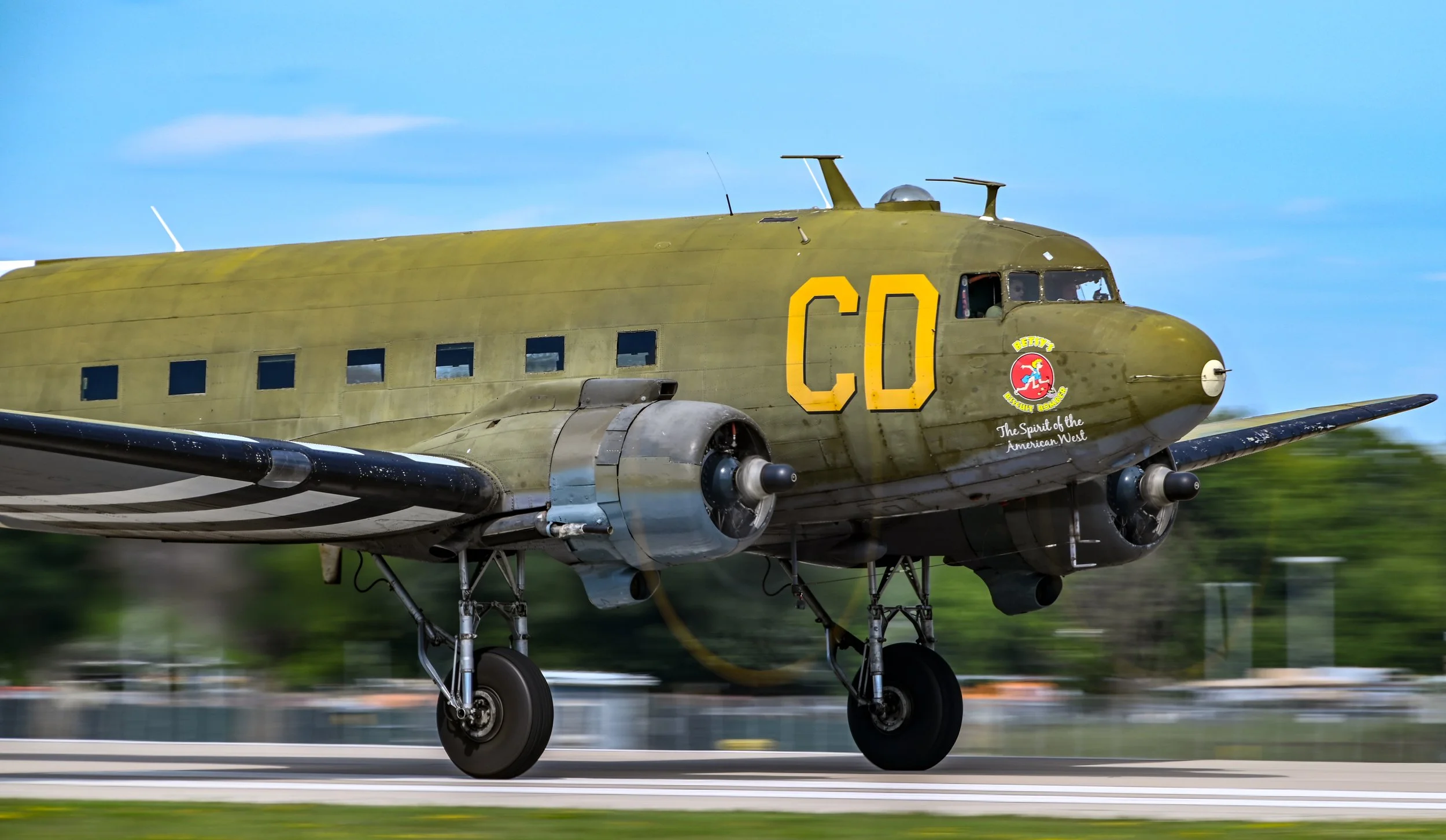
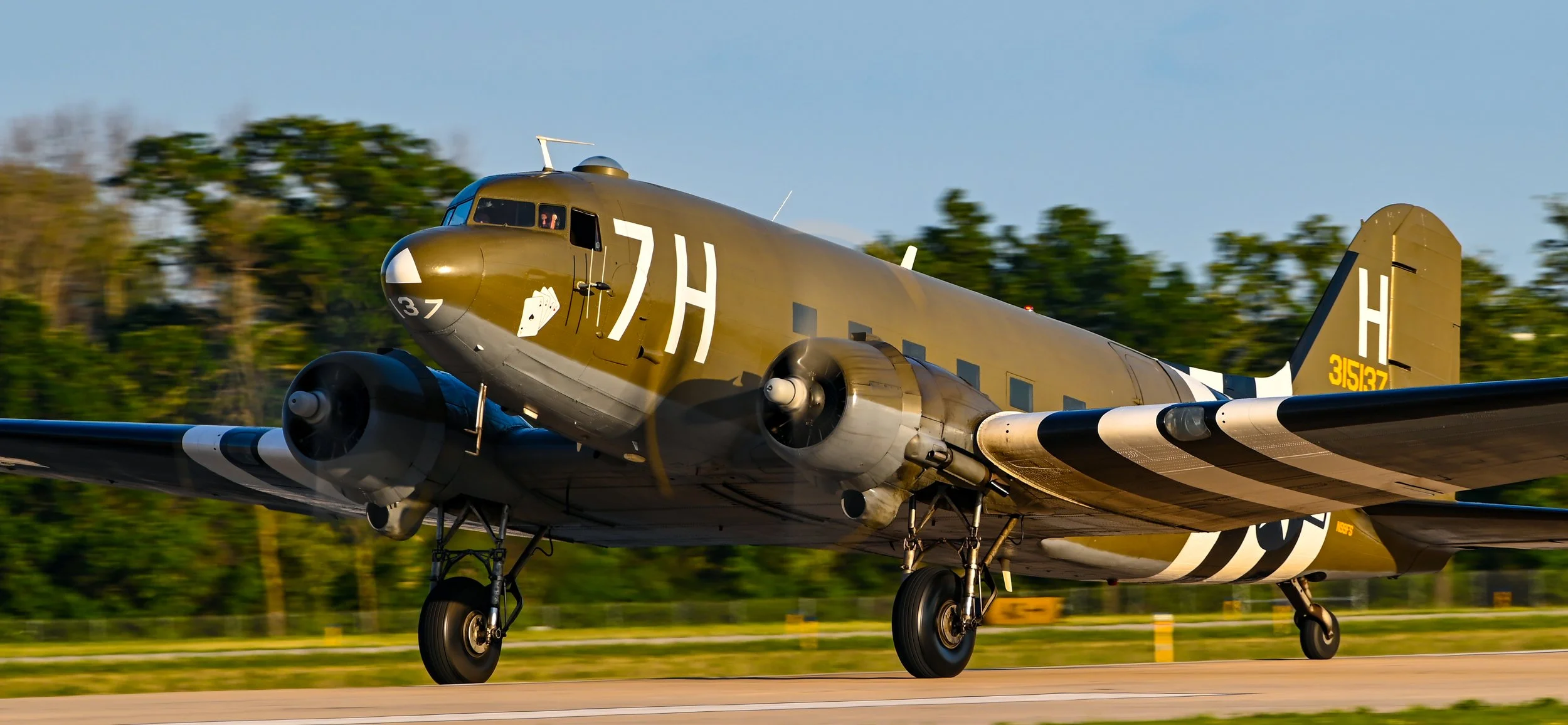
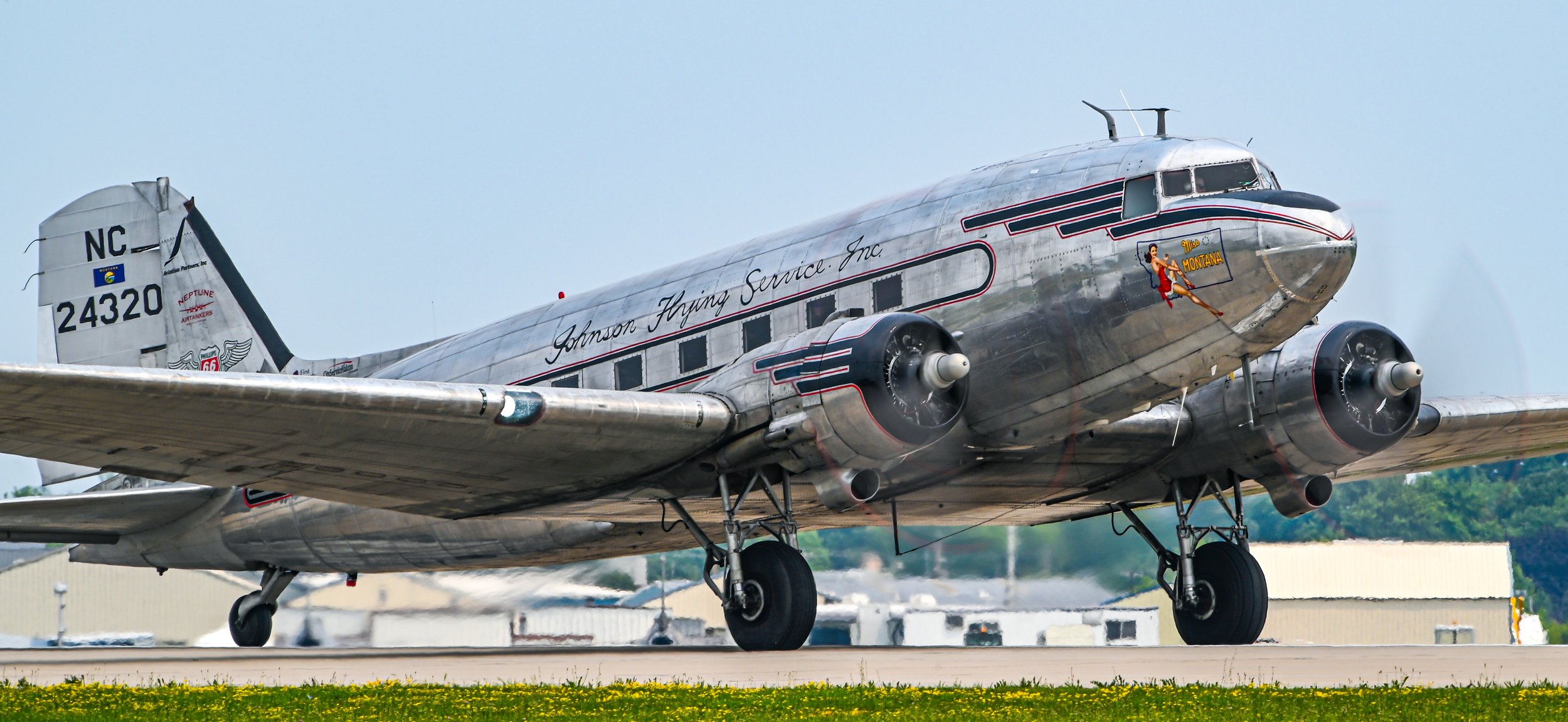
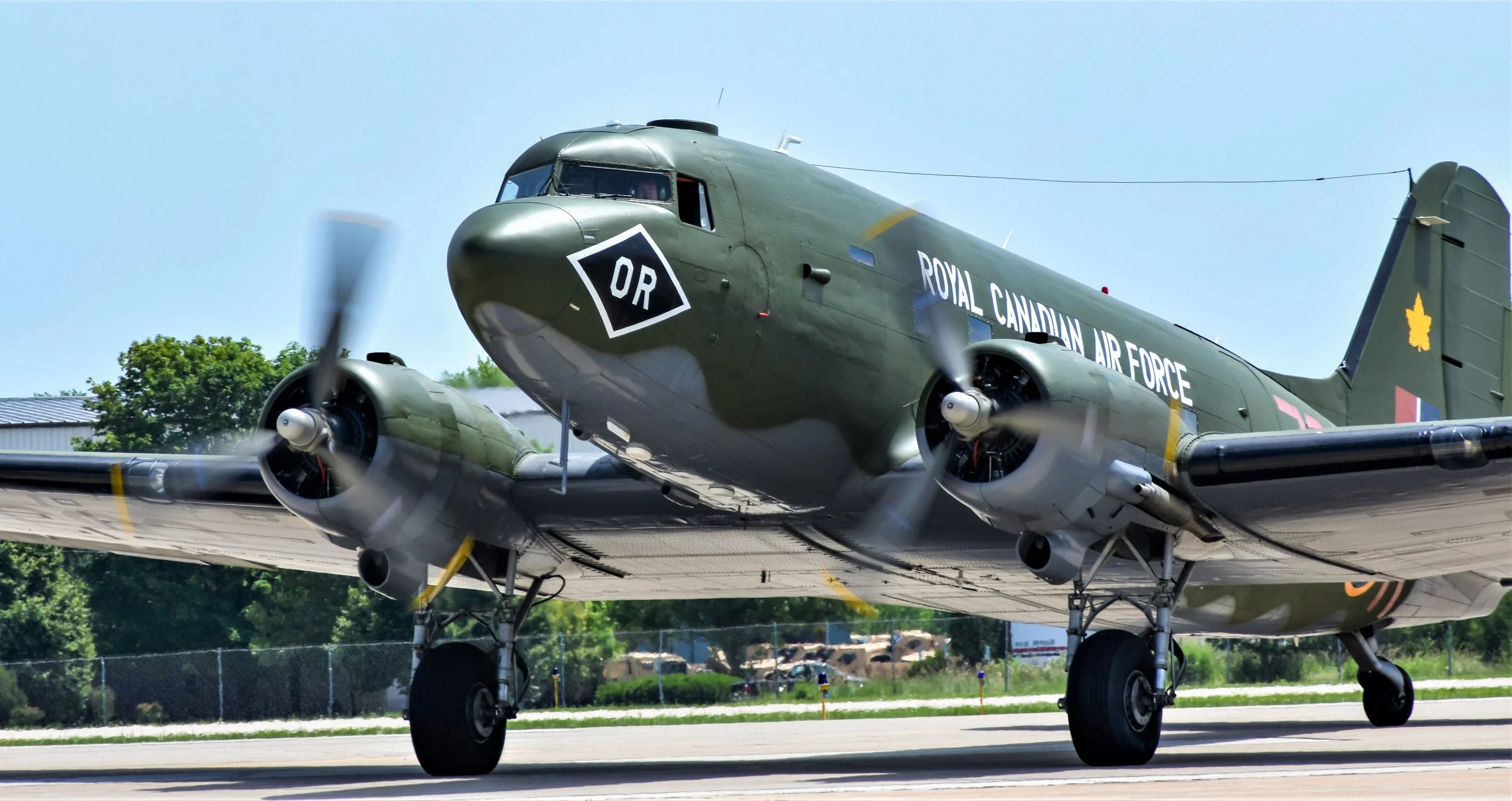
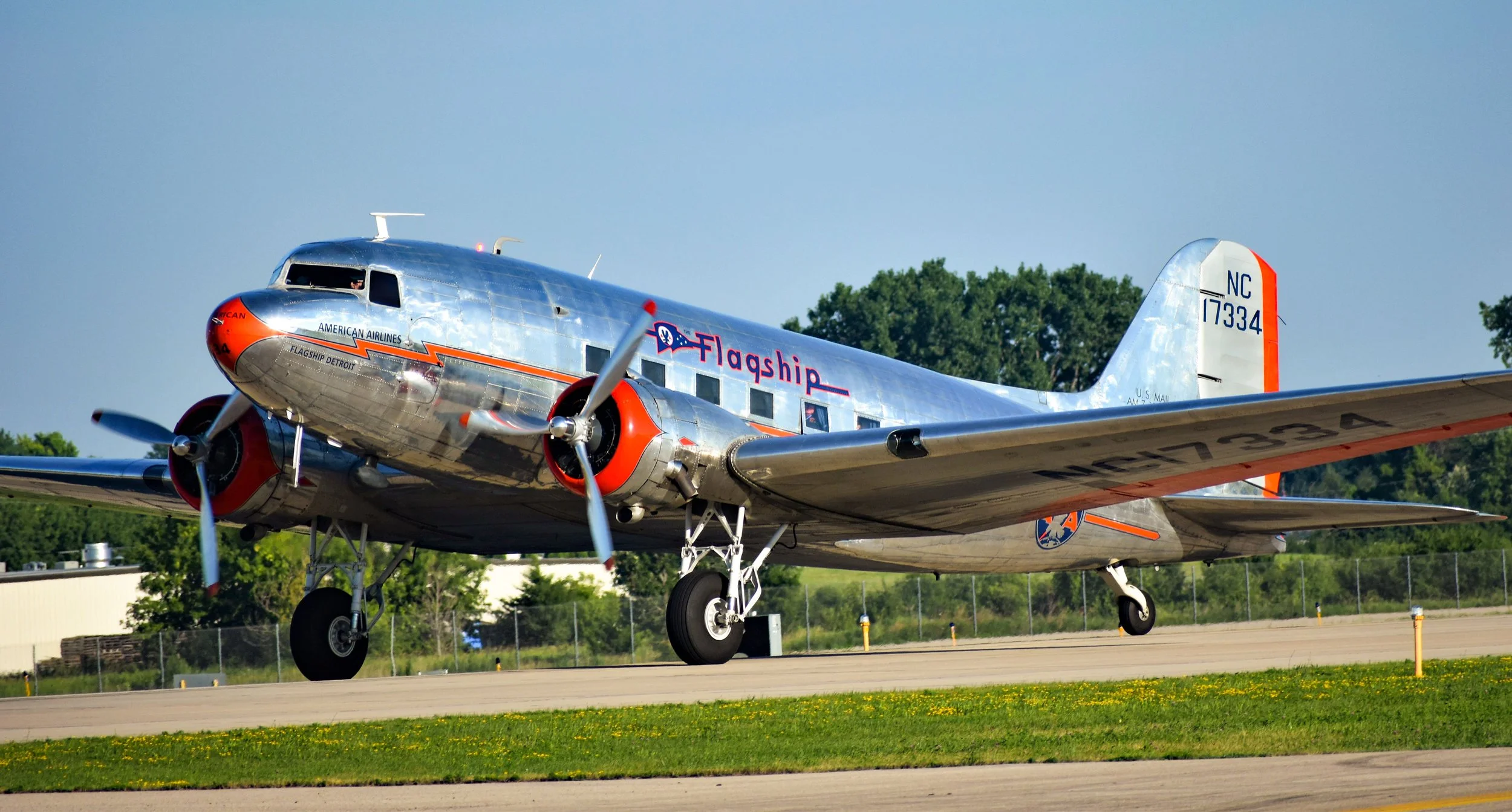
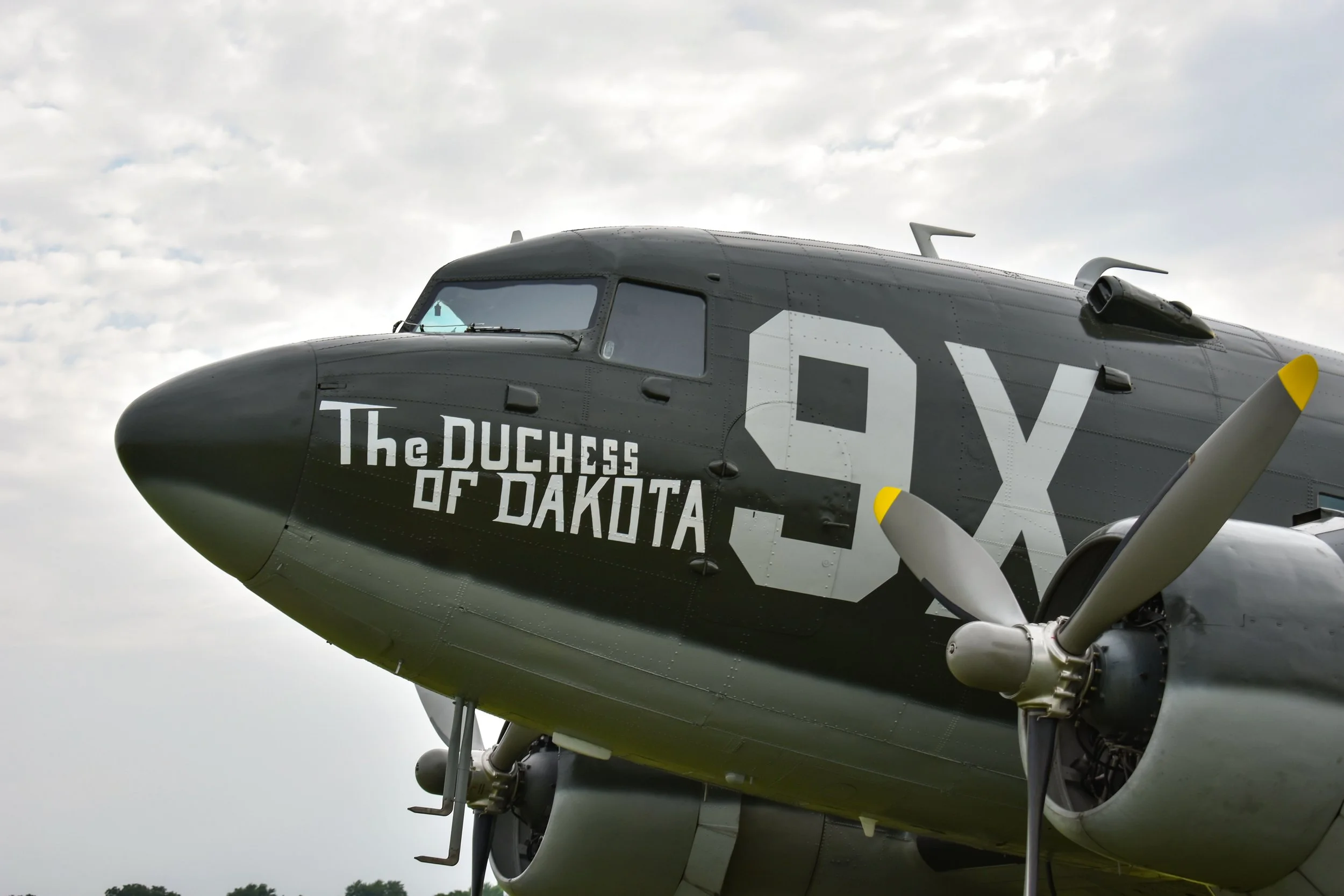
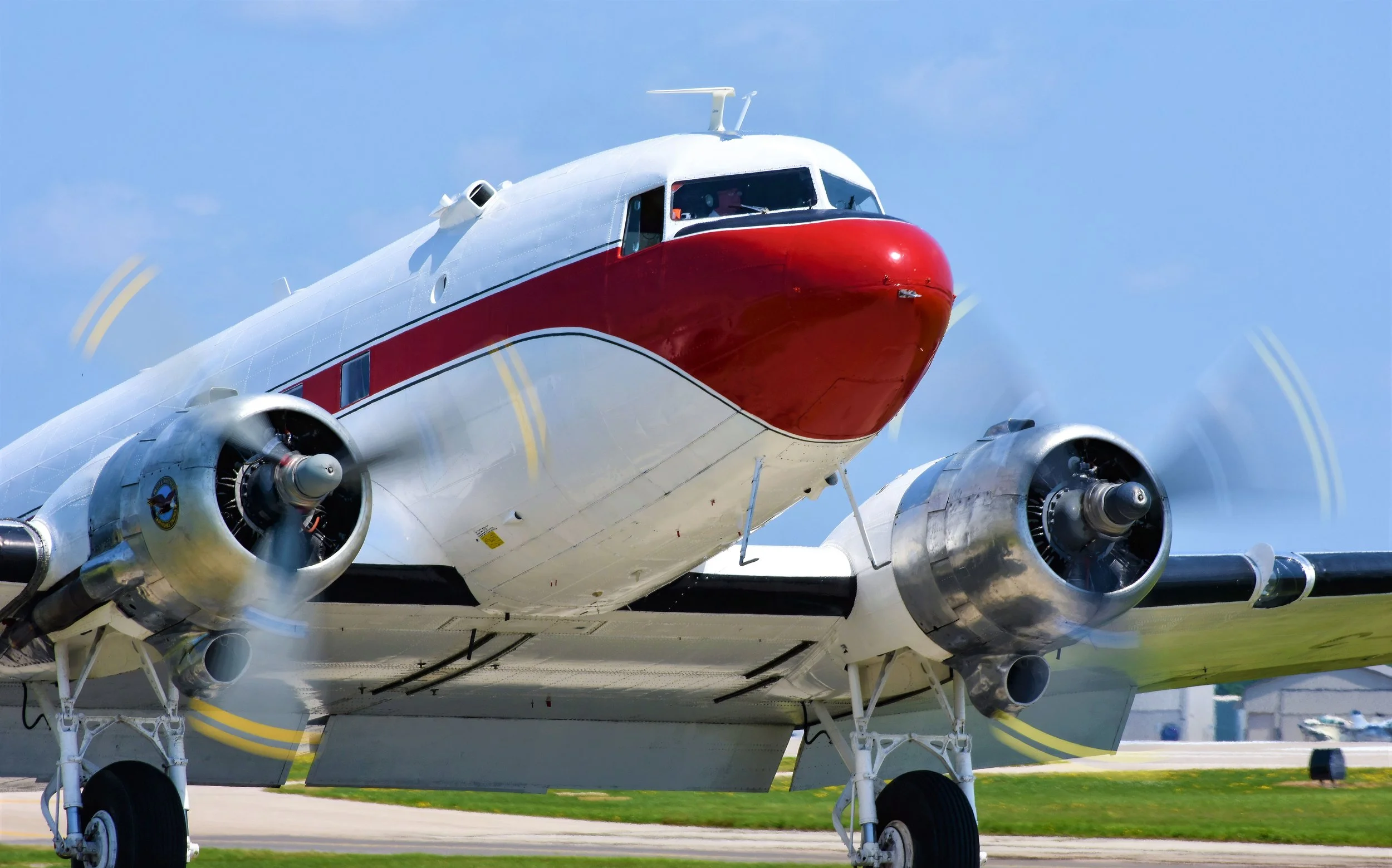
Today, this legendary aircraft is still flying strong with numerous warbird operators and even still in revenue service hauling freight just like it did 85-90 years ago. Douglas Aircraft built a workhorse that was vital to the first mainstay aircraft in the commercial travel sector, military powerhouse during WWII and now providing a rare glimpse into the legacy this aircraft has left and continues to forge. Shown below are several examples of both DC-3 and C-47/53 aircraft over the years at various airshows across the country. Long live the DAK!
RAF E-7 Wedgetail Debuts in Spectacular Flypast at RIAT 2025
By Michael Williams
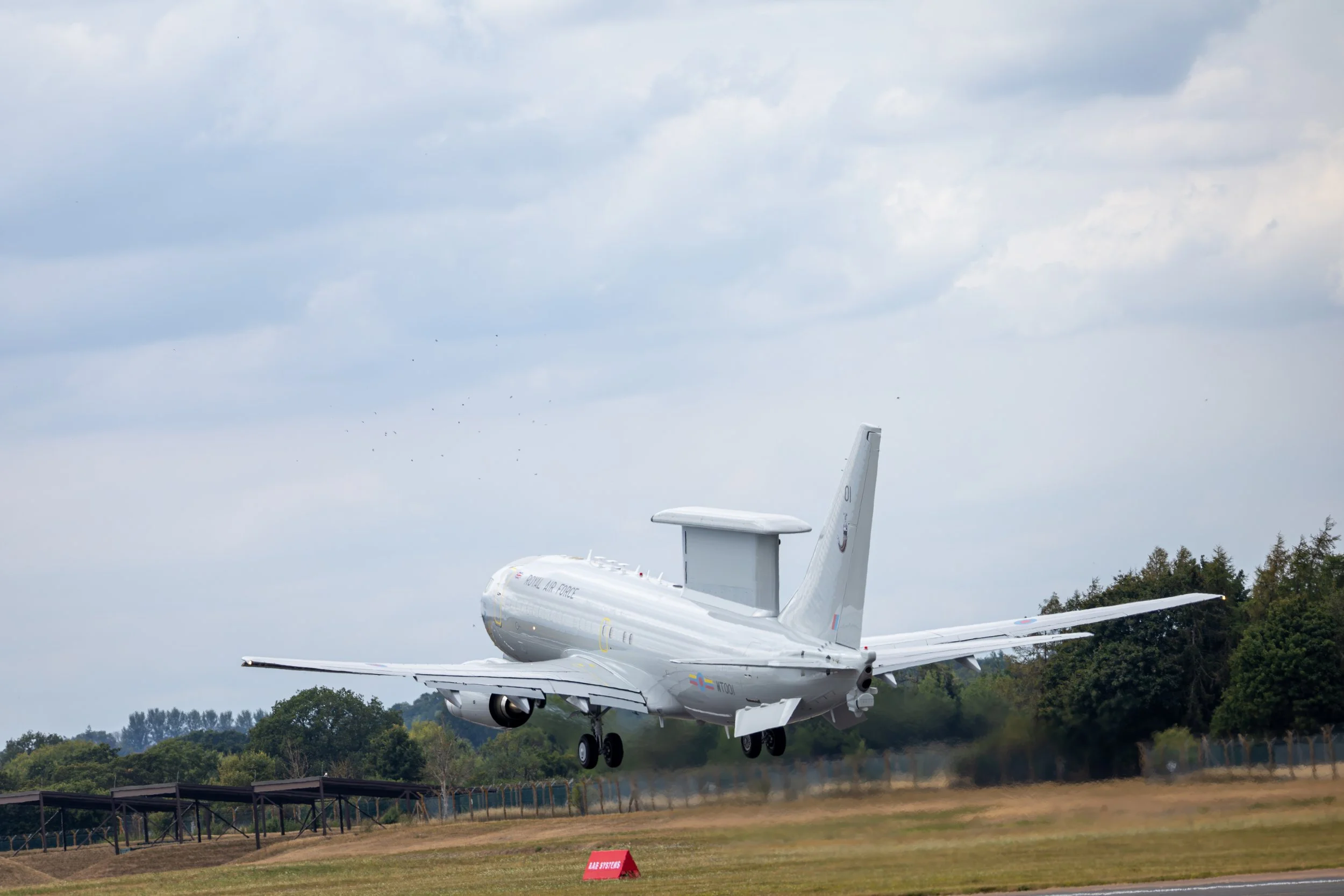
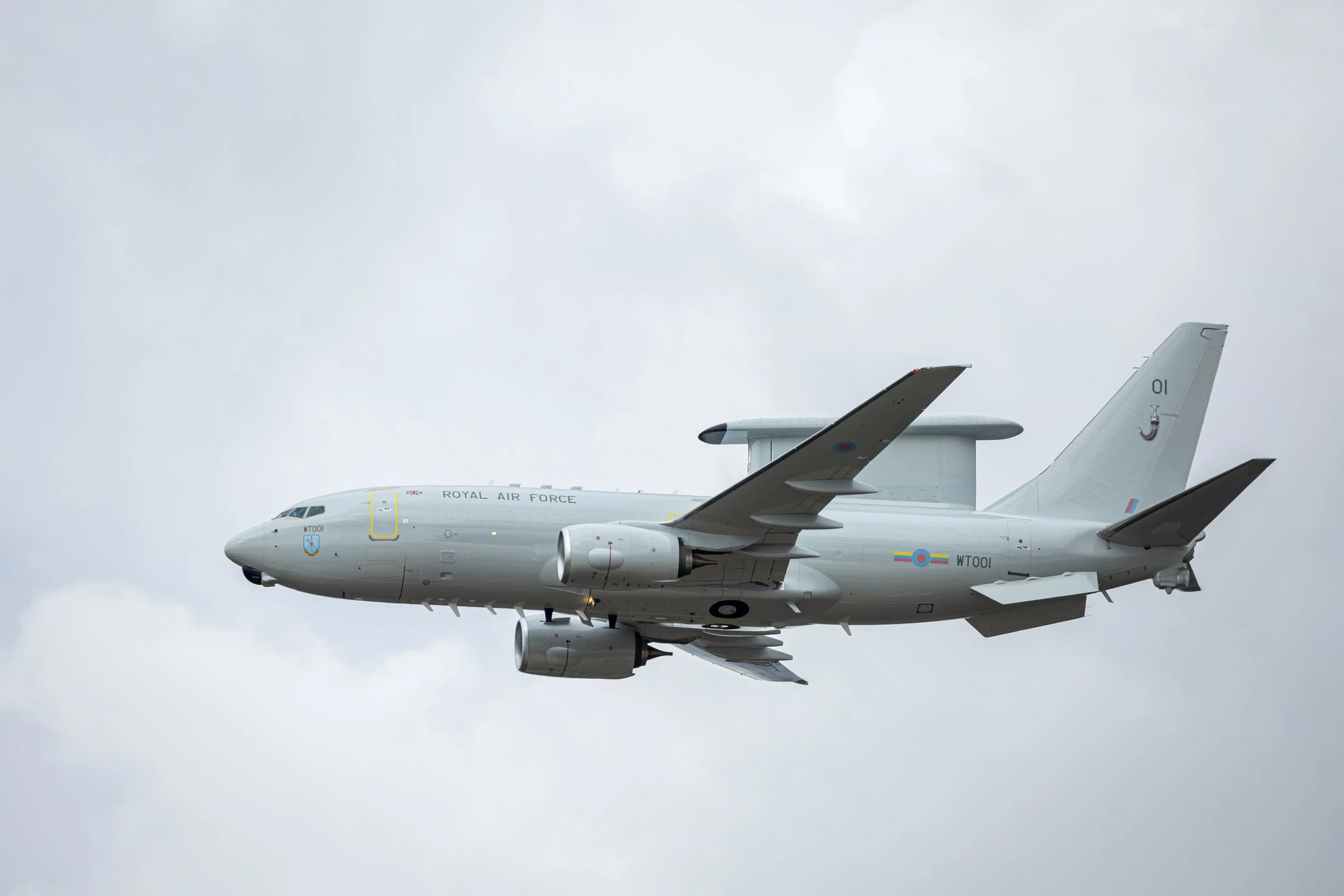
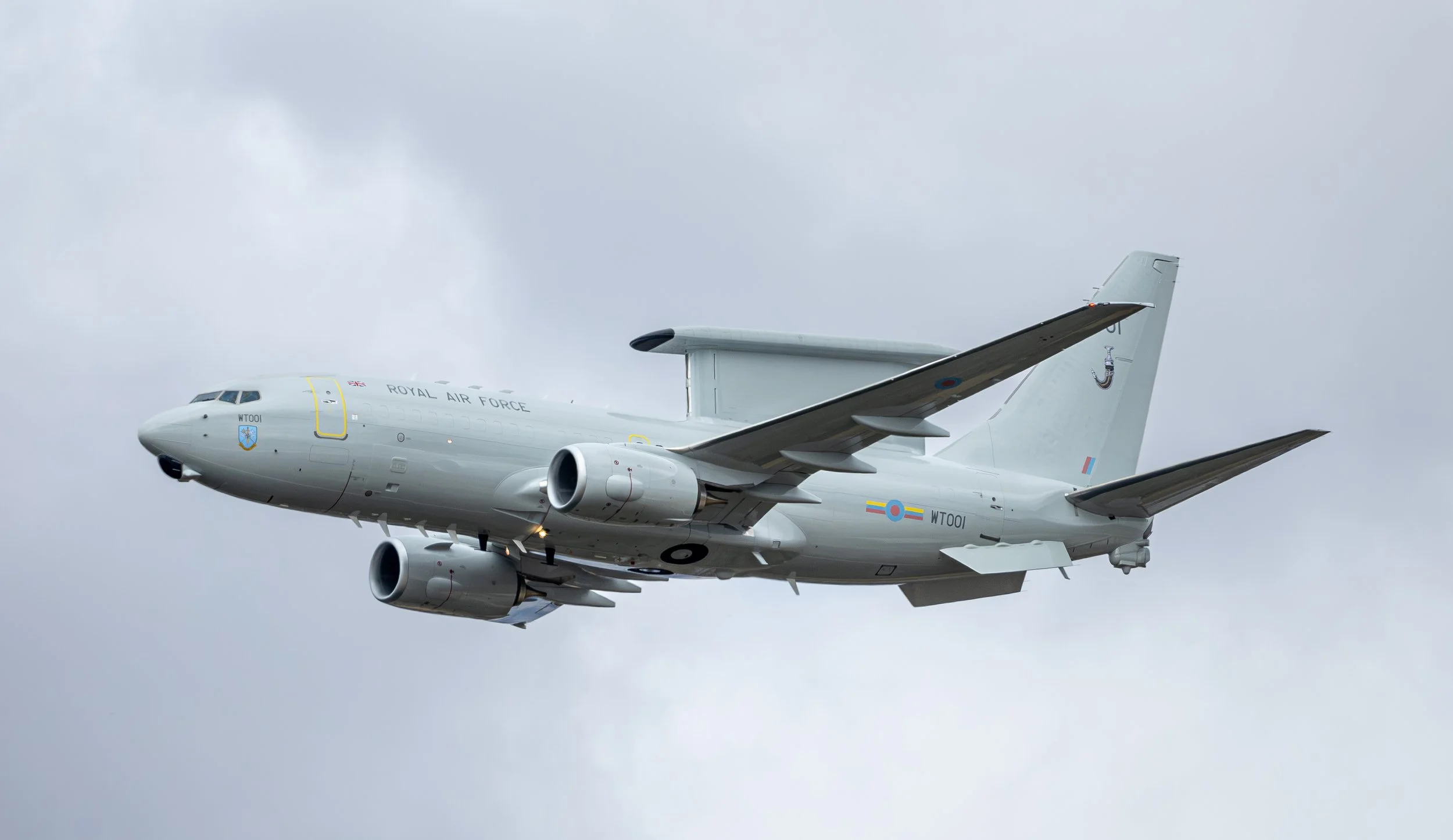
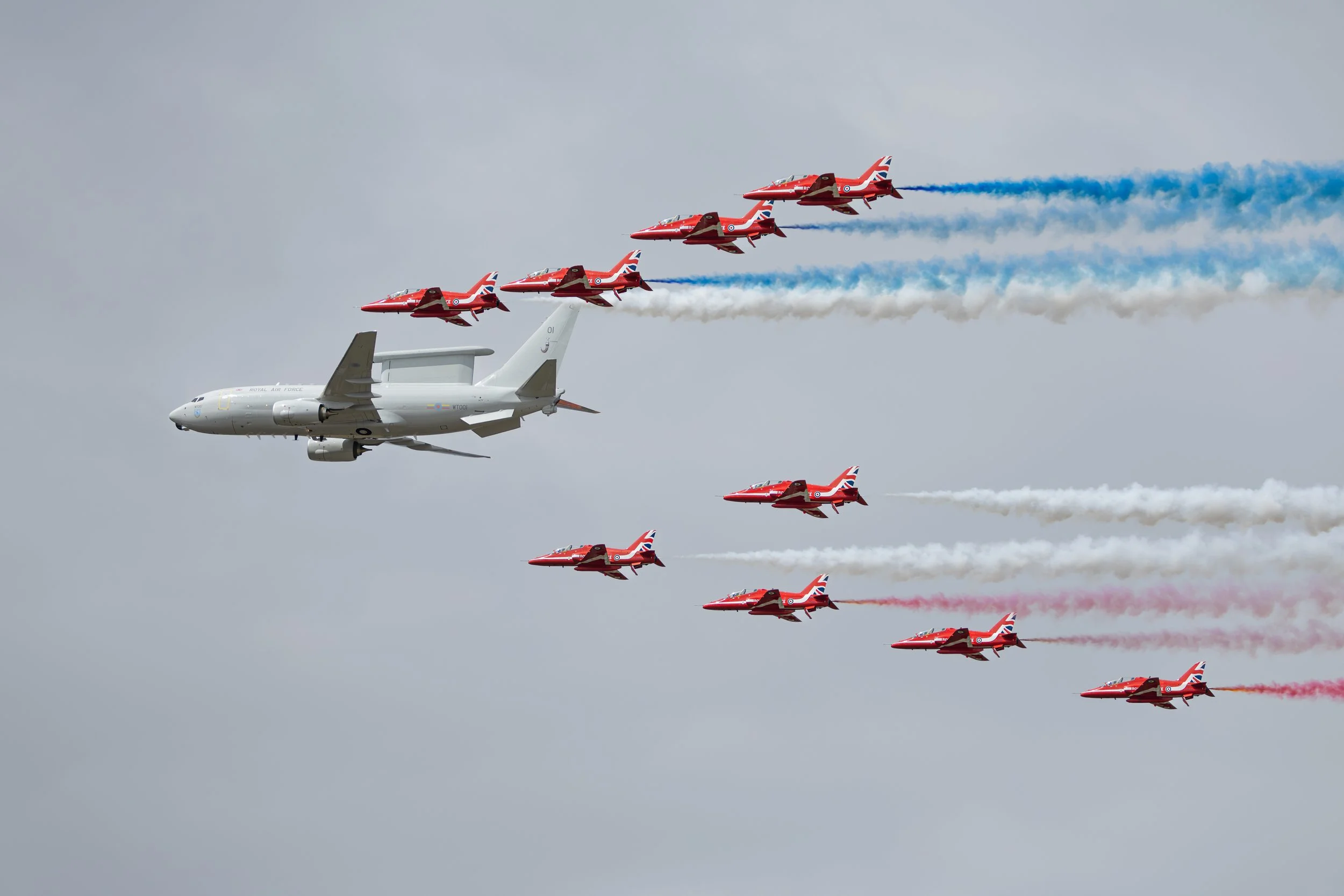
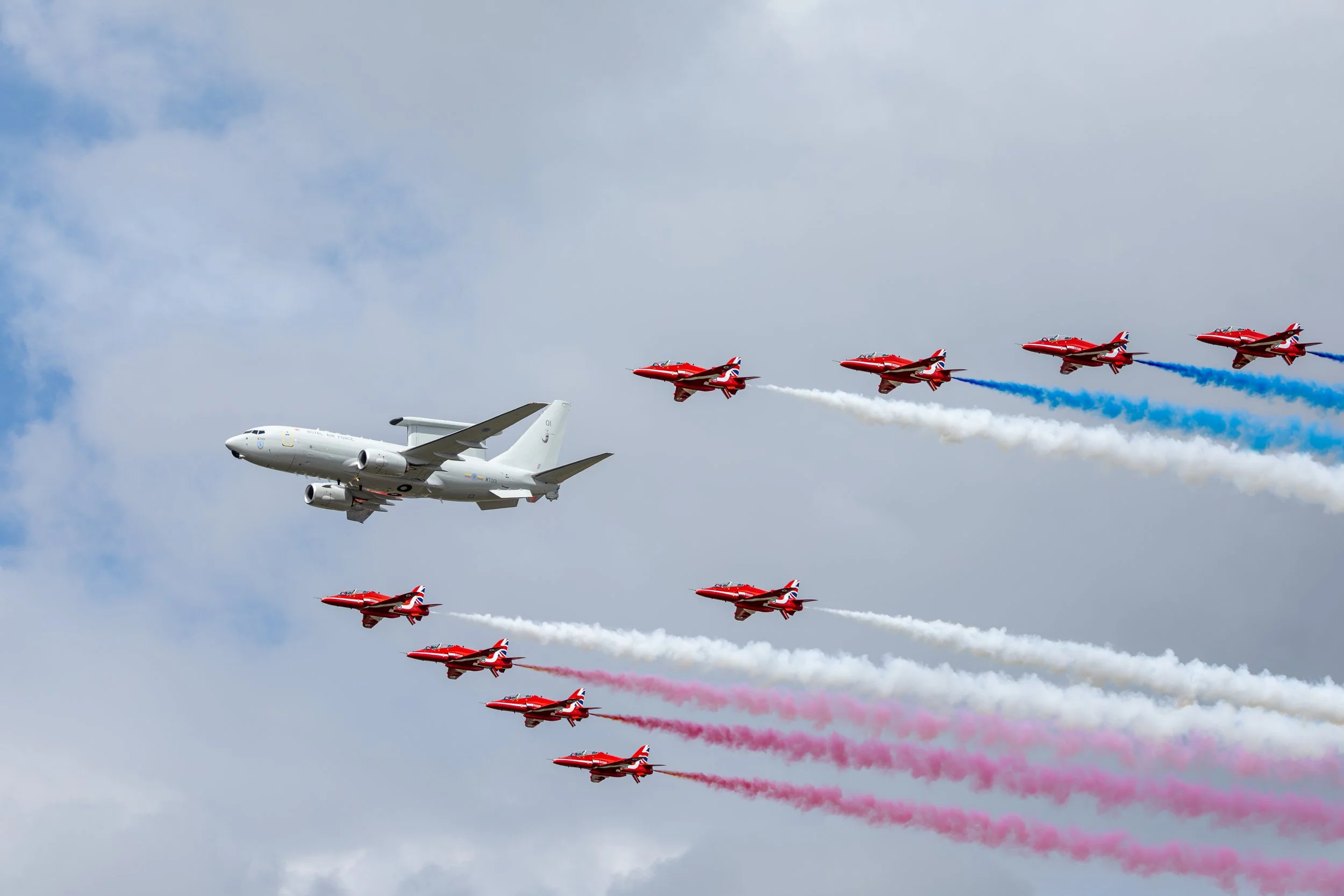
RAF Fairford – The Royal Air Force’s next-generation surveillance aircraft, the E-7 Wedgetail AEW Mk1, made its public flying debut at the Royal International Air Tattoo (RIAT) 2025, marking a major milestone in the transformation of the UK’s airborne command and control capabilities.
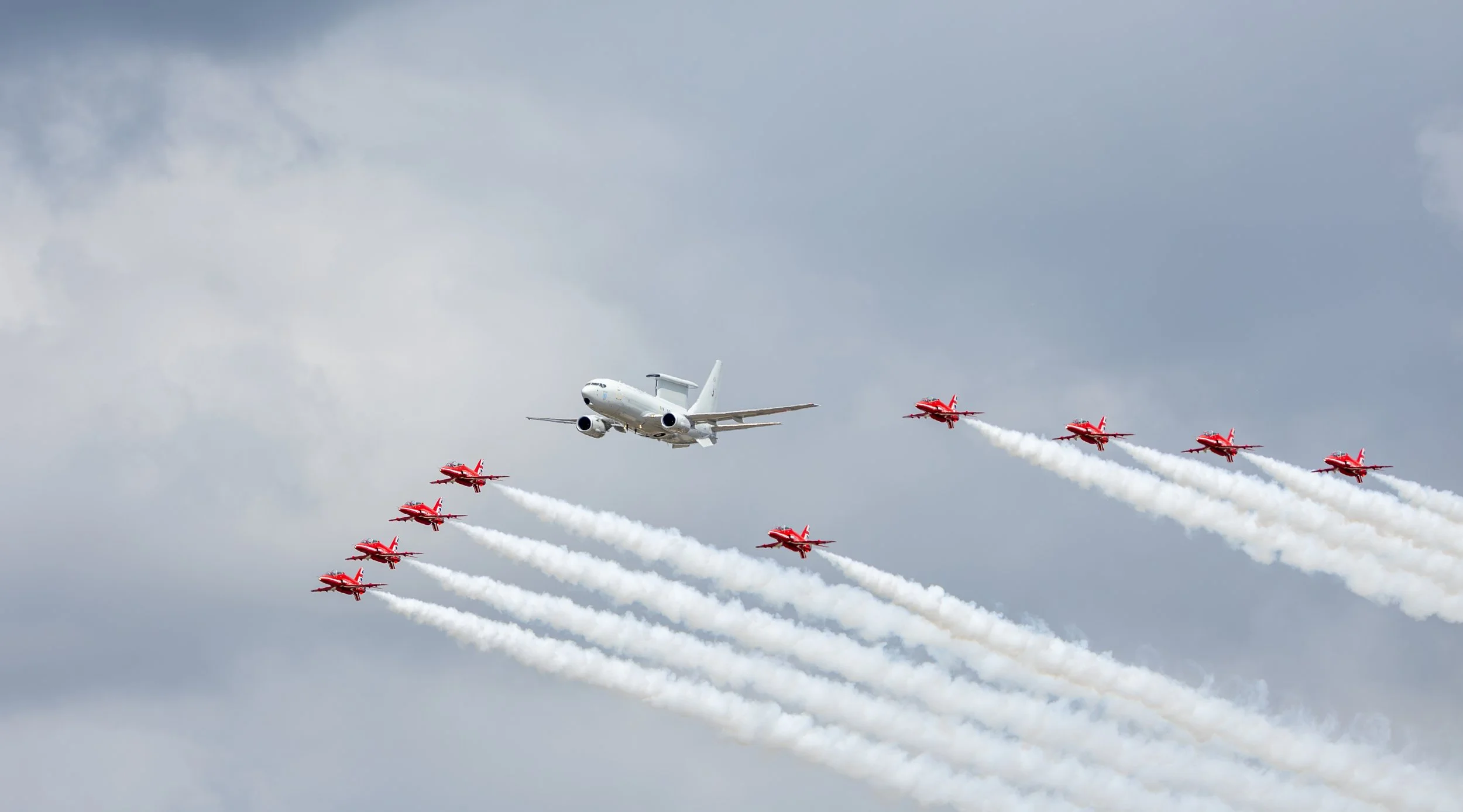
In a powerful symbol of the RAF’s future direction, the Wedgetail joined the iconic Red Arrows in a dramatic formation flypast, offering the public a first look at the aircraft that will soon serve as the “eyes and ears” of British airspace.
A New Era in Airborne Surveillance
The E-7 Wedgetail is a state-of-the-art Airborne Early Warning and Control (AEW&C) aircraft, designed to provide real-time surveillance, threat detection, and battle management in the air and at sea. Built on the Boeing 737-700 platform, the aircraft features a distinctive Northrop Grumman Multi-role Electronically Scanned Array (MESA) radar mounted atop its fuselage, delivering 360-degree radar coverage and long-range tracking of air and maritime targets.
Able to monitor thousands of miles of airspace and coordinate fast jet and maritime operations, the Wedgetail will serve as a critical node in both UK and NATO defense networks.
Group Captain Rob Osselton, head of the E-7 program, described the RIAT debut as "a proud moment for everyone involved," adding that the display "reflected the importance of delivering the next generation of airborne surveillance and control capabilities to the Royal Air Force."
A Strategic Home at RAF Lossiemouth
The Wedgetail fleet will be based at RAF Lossiemouth in Moray, on Scotland’s northeast coast. As one of the RAF’s most strategically vital airbases, Lossiemouth plays a leading role in the UK’s Quick Reaction Alert (QRA) force, as well as maritime patrol and NATO operations.
Already home to the Poseidon MRA1 maritime patrol aircraft and Typhoon fighter jets, the arrival of the Wedgetail will further strengthen the base’s position as a centre for UK and Allied air power in the North Atlantic region.
Positioning the Wedgetail at Lossiemouth ensures close integration with other key assets, streamlining maintenance, training, and operational coordination.
Replacing the E-3D Sentry
The E-7 is replacing the RAF’s retired E-3D Sentry, which was withdrawn from service in 2021 after decades of operation. In contrast to the aging Sentry, the Wedgetail offers significantly enhanced radar performance, faster response times, and superior connectivity with both air and ground forces.
While the original plan called for five aircraft, the RAF will operate a fleet of three Wedgetails, all of which are being converted from commercial Boeing 737-700 airliners at Birmingham Airport by STS Aviation Services, in partnership with Boeing Defense UK.
First Flight and Future Operations
During its appearance at RIAT 2025, the E-7 not only participated in the Red Arrows formation flypast but also executed a "touch and go" maneuvers—briefly landing before taking off again—highlighting the aircraft's agility and readiness as it continues UK-based trials.
The aircraft remains in its test and evaluation phase, with the RAF expecting to reach Initial Operational Capability (IOC) in 2026, followed by Full Operational Capability (FOC) by 2028.
Once fully operational, the Wedgetail will be integral to UK and NATO missions, capable of supporting air policing, crisis response, and joint operations across Europe and beyond.
Looking Ahead
The debut of the E-7 Wedgetail at RIAT marks more than just an airshow spectacle—it signals a new chapter in the RAF’s ability to secure the skies and manage complex air operations with precision and speed.
Combining cutting-edge radar systems, proven airframe reliability, and strategic basing at RAF Lossiemouth, the Wedgetail will deliver unmatched situational awareness and command capability, ensuring the UK remains at the forefront of allied air power for decades to come.
Military Aviation Museum’s Messerschmitt Me-262 Schwalbe
By Jacob Herb
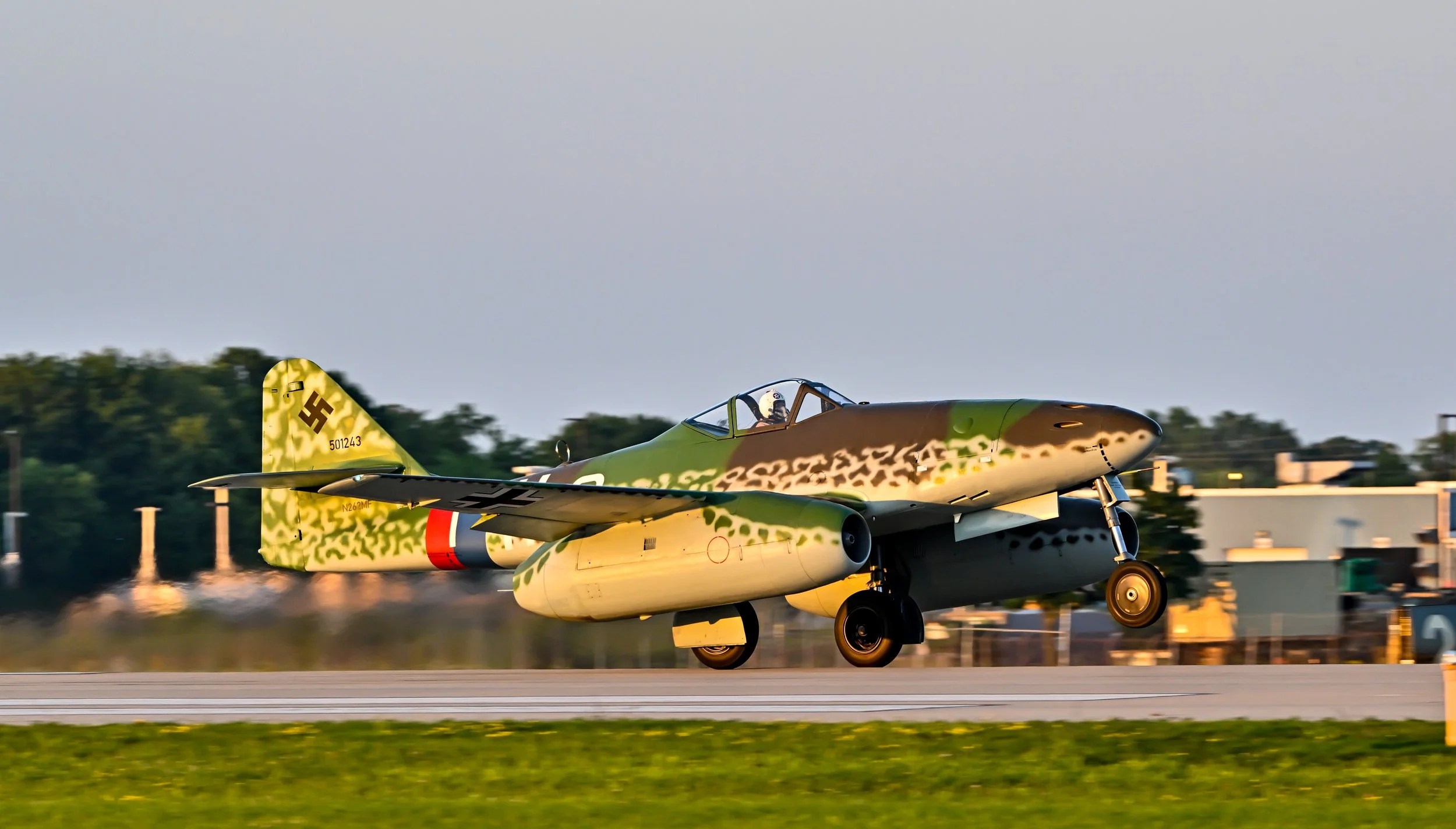
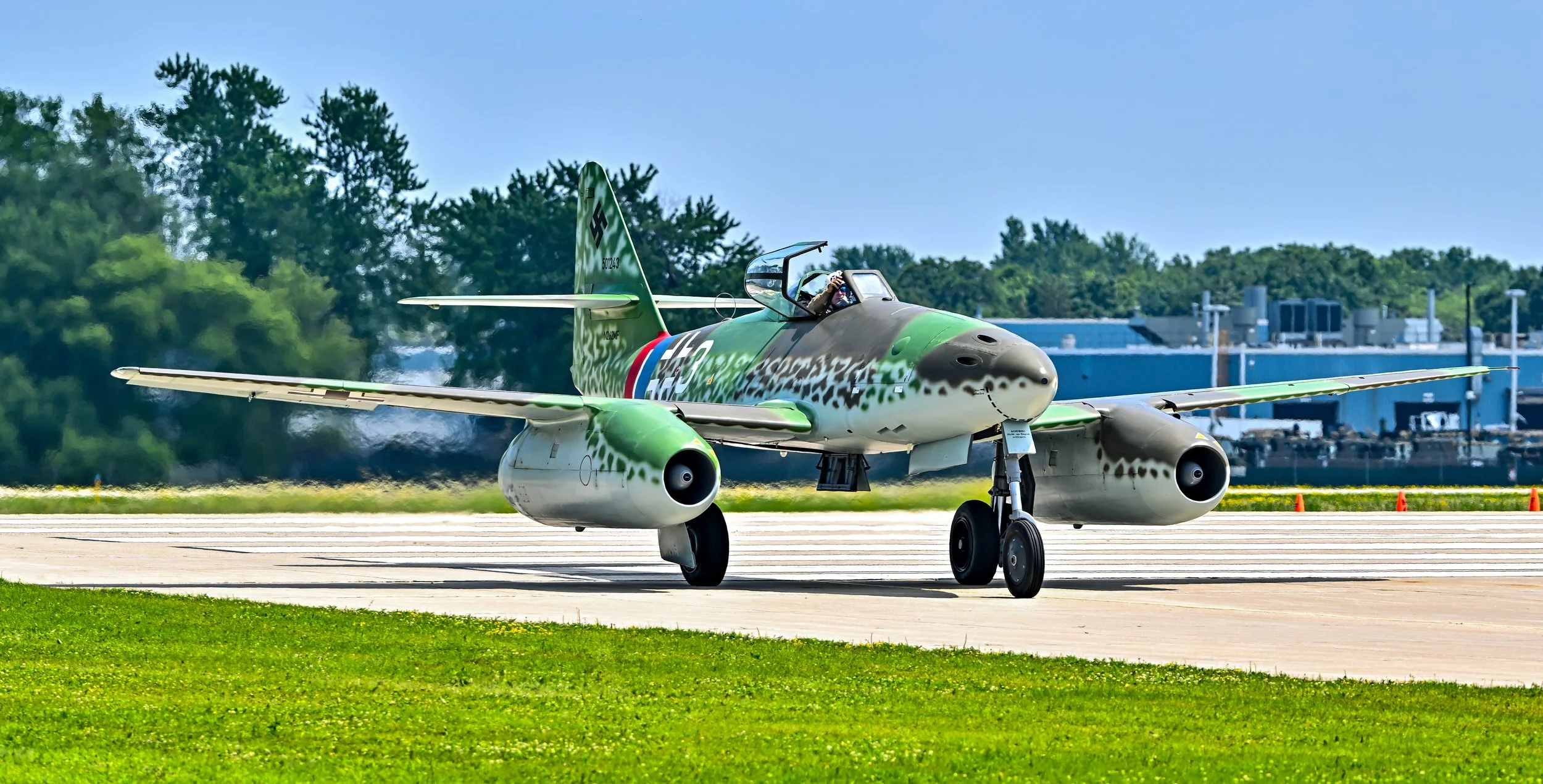
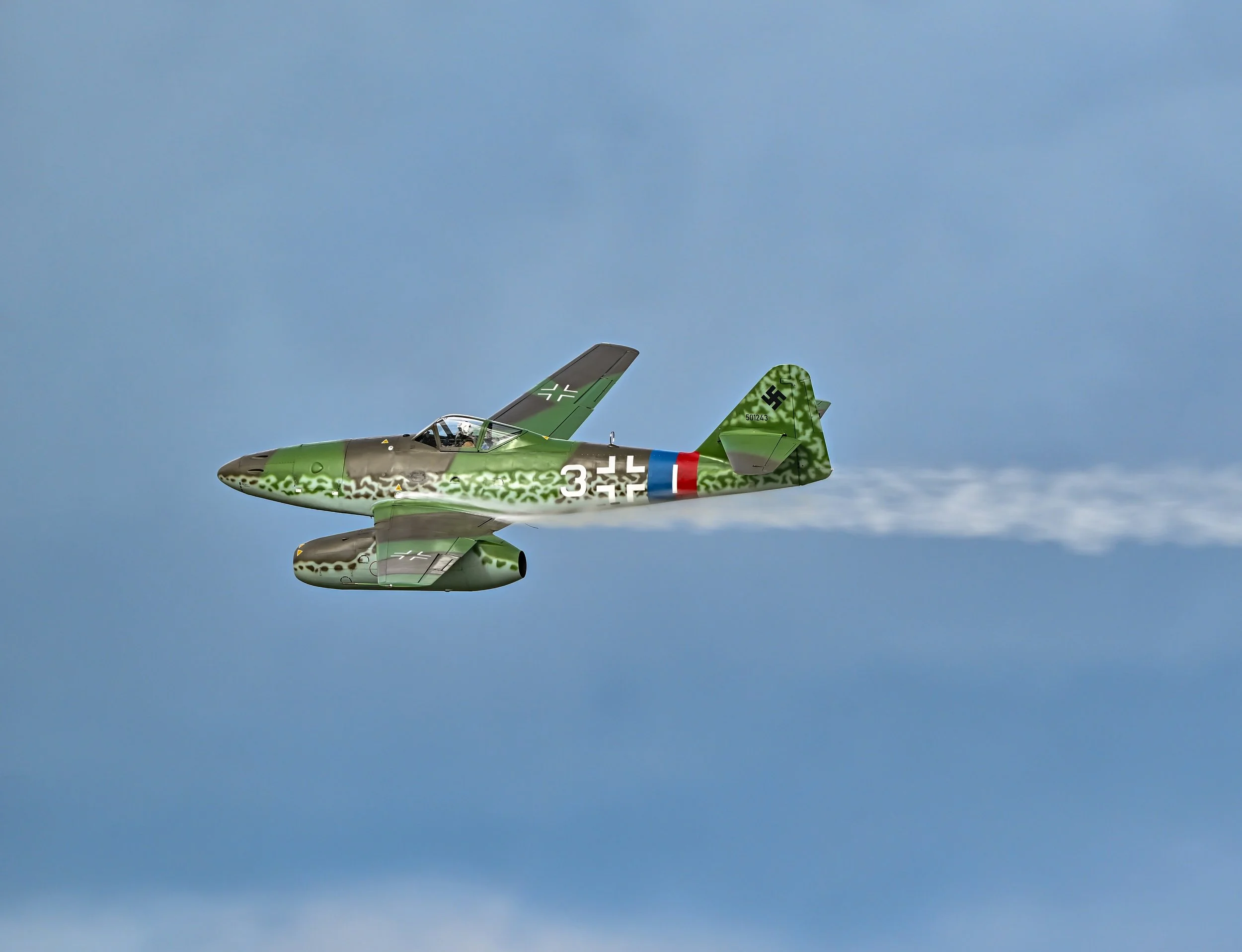
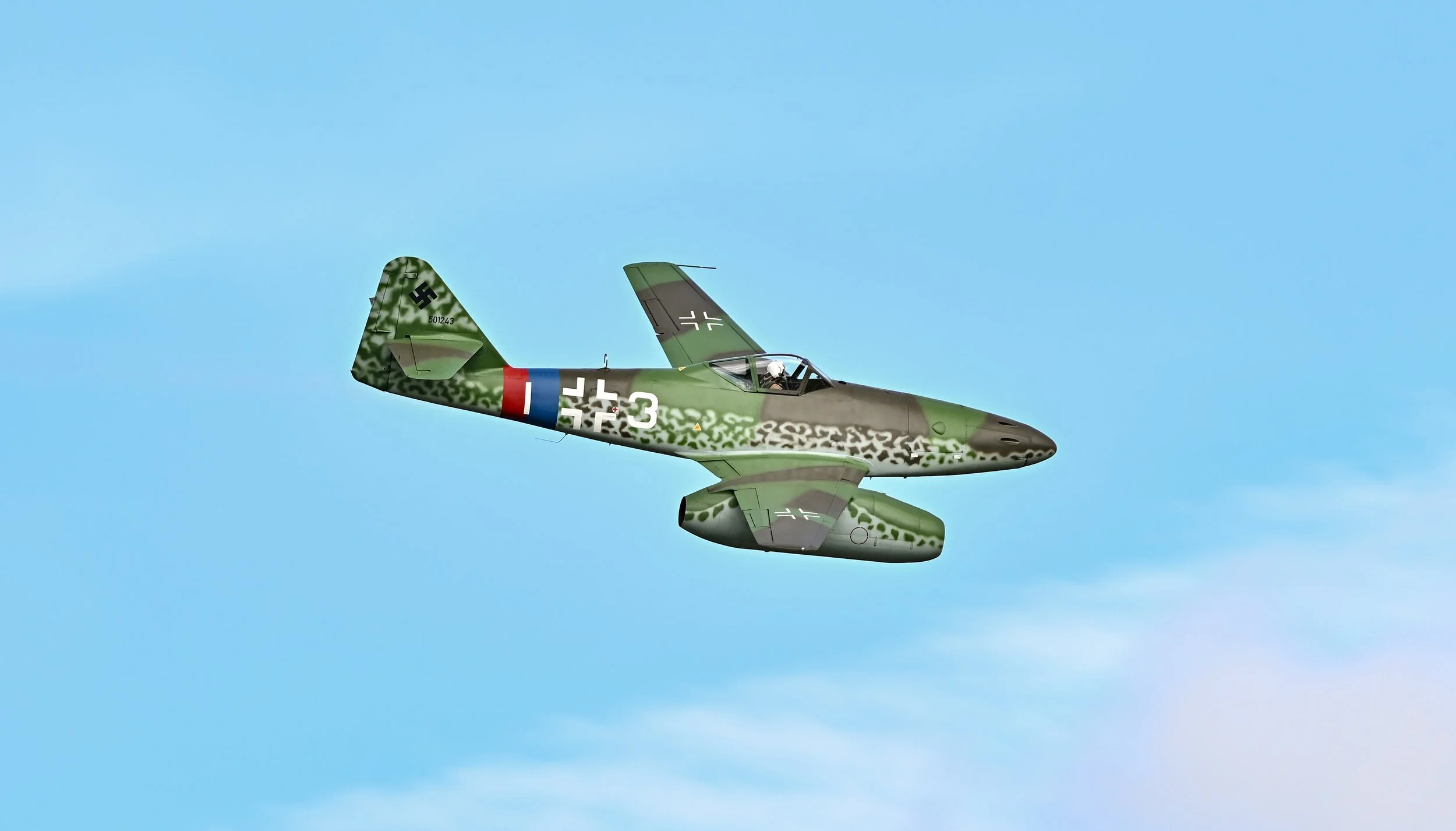
One of the most anticipated warbirds that attended the annual convention in Oshkosh was the Military Aviation Museum’s Me-262. After several years of dedicated work to get the aircraft ready for its venture to Oshkosh, the museum was able to overcome a tall task and did make it, albeit with a couple setbacks.
The ME-262 was one of Germany’s “Wonder Weapons” aimed at changing the outcome of WWII. While that did not transpire, the 262 was a marvel of engineering of its time. While many countries were developing jet powered aircraft towards the end of the war, the 262 was the first to see service in 1944. It was powered with 2 Junkers Jumo 004B-1 axial-flow turbojets, it had a top cruising speed of 490 knots with a ceiling of 37,000 feet and a range of 570 nmi. It was armed with four 30mm cannons and could carry north of 1000 pounds of bombs. There are no flying original 262 aircraft in the world, with only three 1-for-1 replicas that fly and a couple more in various stages of rebuild or stalled projects.
The MAM’s Me-262A/B-1c originated from a batch of five aircraft from the famed Me-262 Project. The replica is powered by 2 GE CJ610 turbojet engines with a cruising speed around 380 knots and a similar ceiling as the original with a much improved range of just over 900 nmi. The aircraft has no armament as it is a museum piece first and foremost.
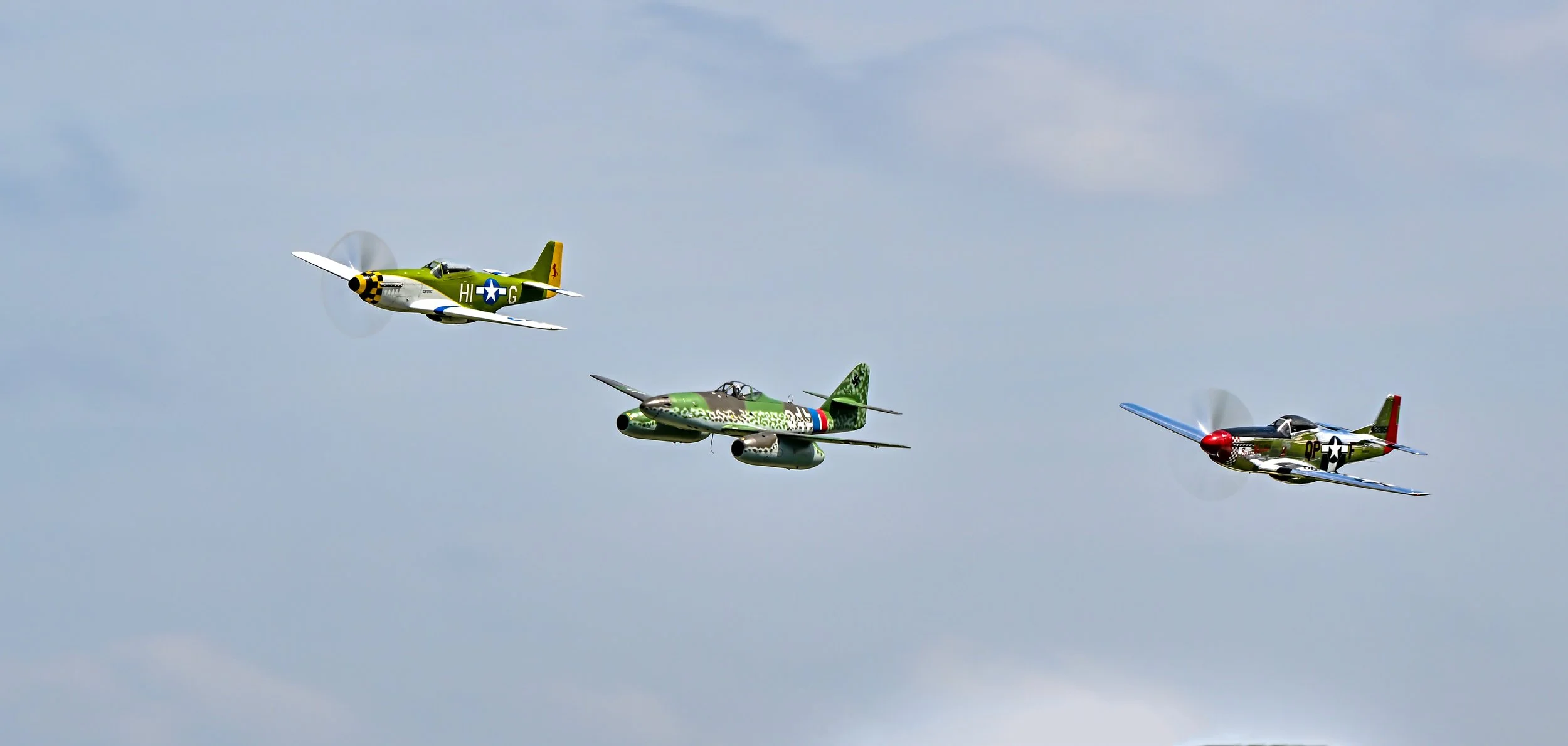
It was a true honor to see this aircraft grace Oshkosh as the only other flying examples reside with the Collings Foundation based in Houston, Texas and the Messerschmitt Foundation based in Germany. I always found the jet to be one of extreme elegance and beauty. (Yes, I understand that this aircraft was technically a foe during the war and it did find its place in history claiming victories against the allies). I do hope at some point, the two US based 262’s can come together and do some airshows in the coming years.
I want to congratulate the Miliary Aviation Museum for finishing this aircraft and bringing to AirVenture. I look forward to more opportunities to see this aircraft up close and in the skies again!
Warbirds in Black and White in 2025
By Jacob Herb
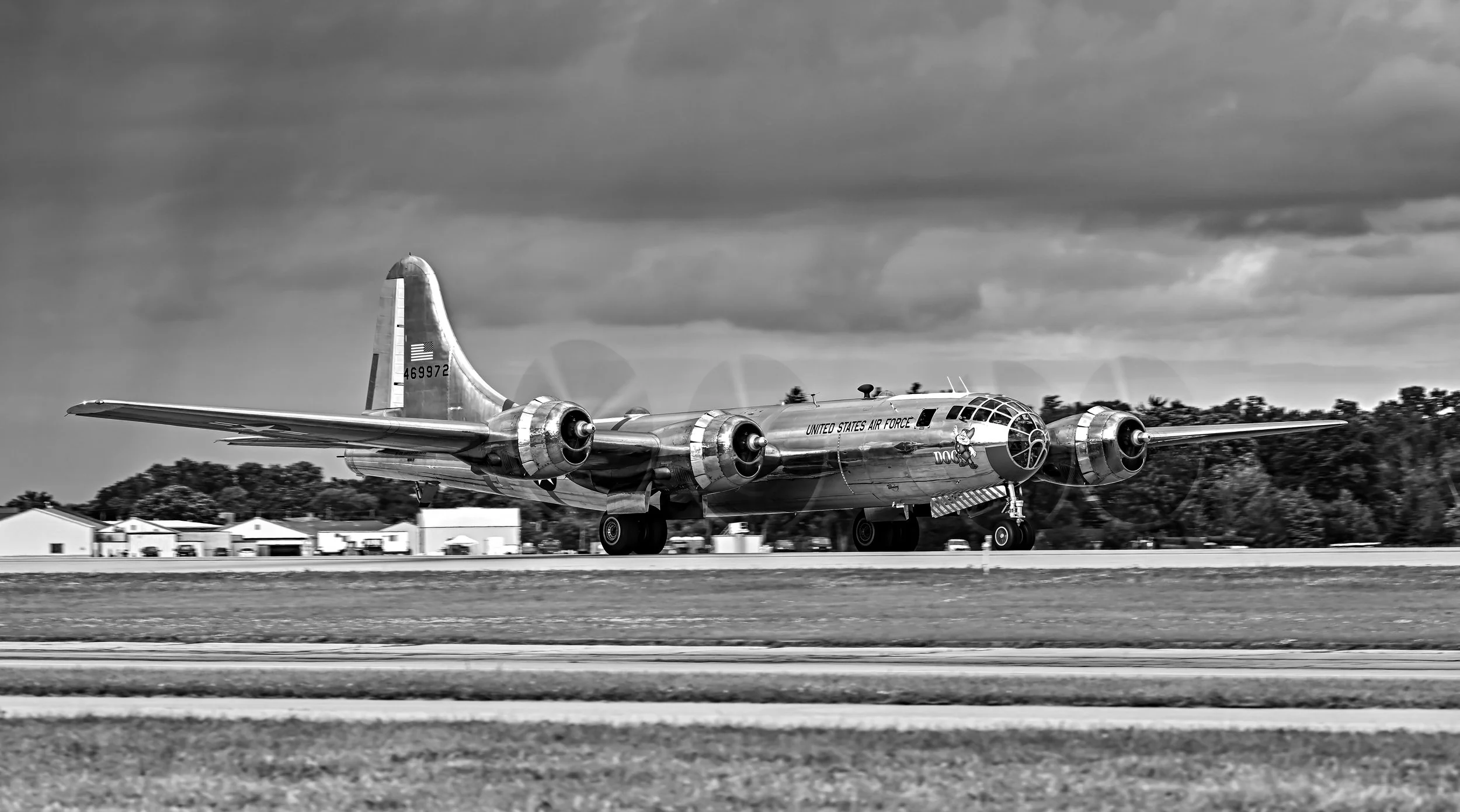
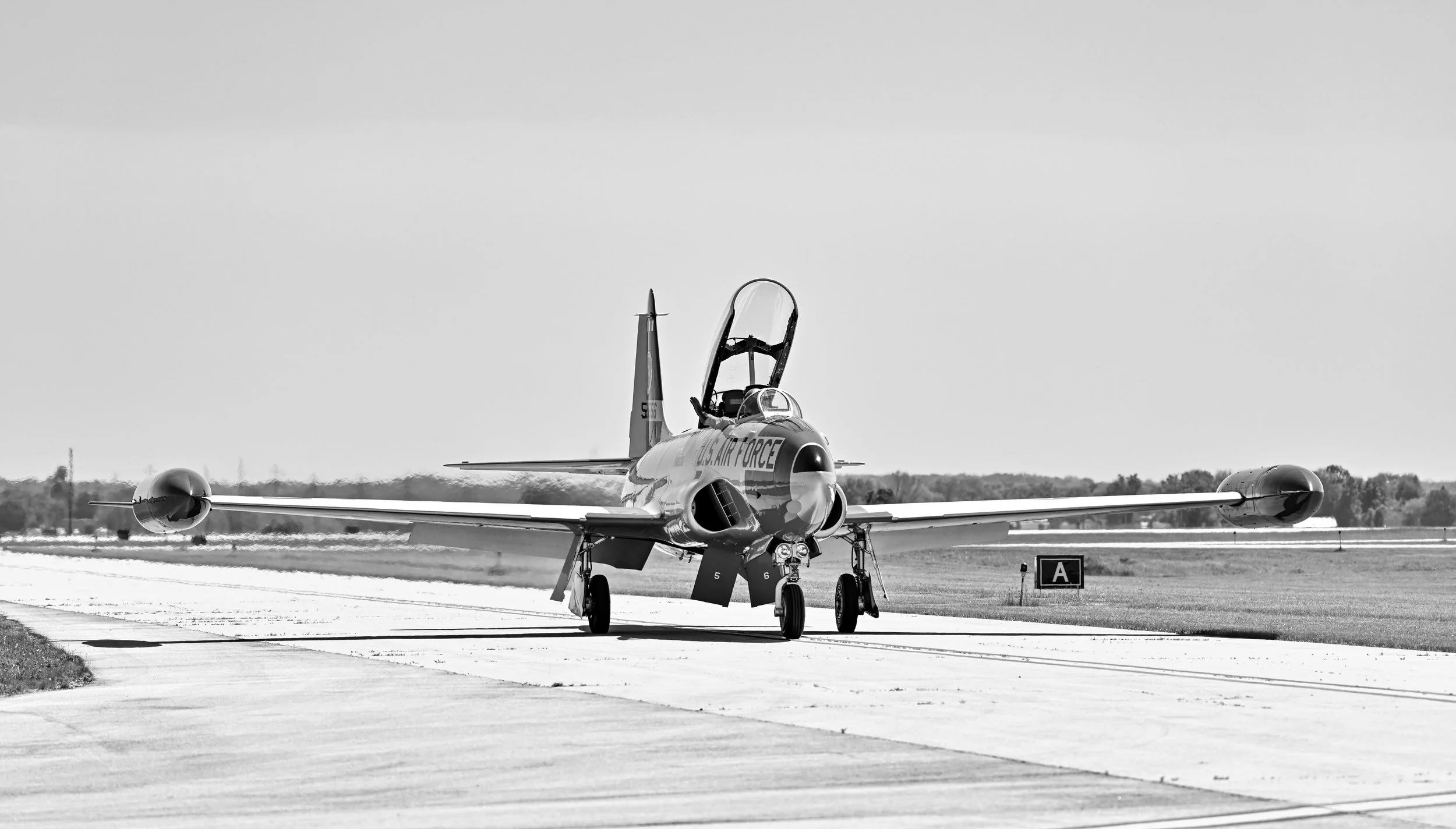
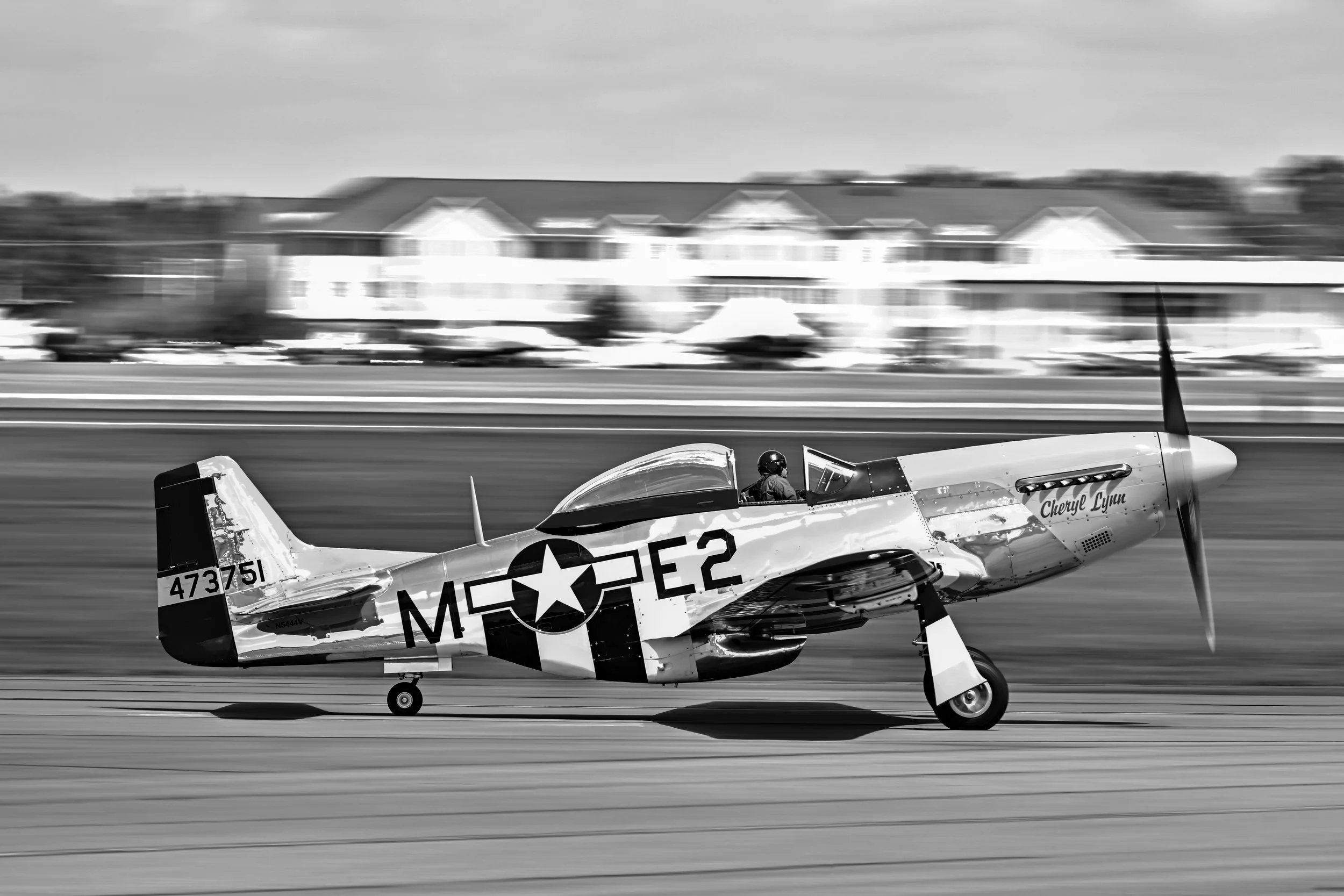
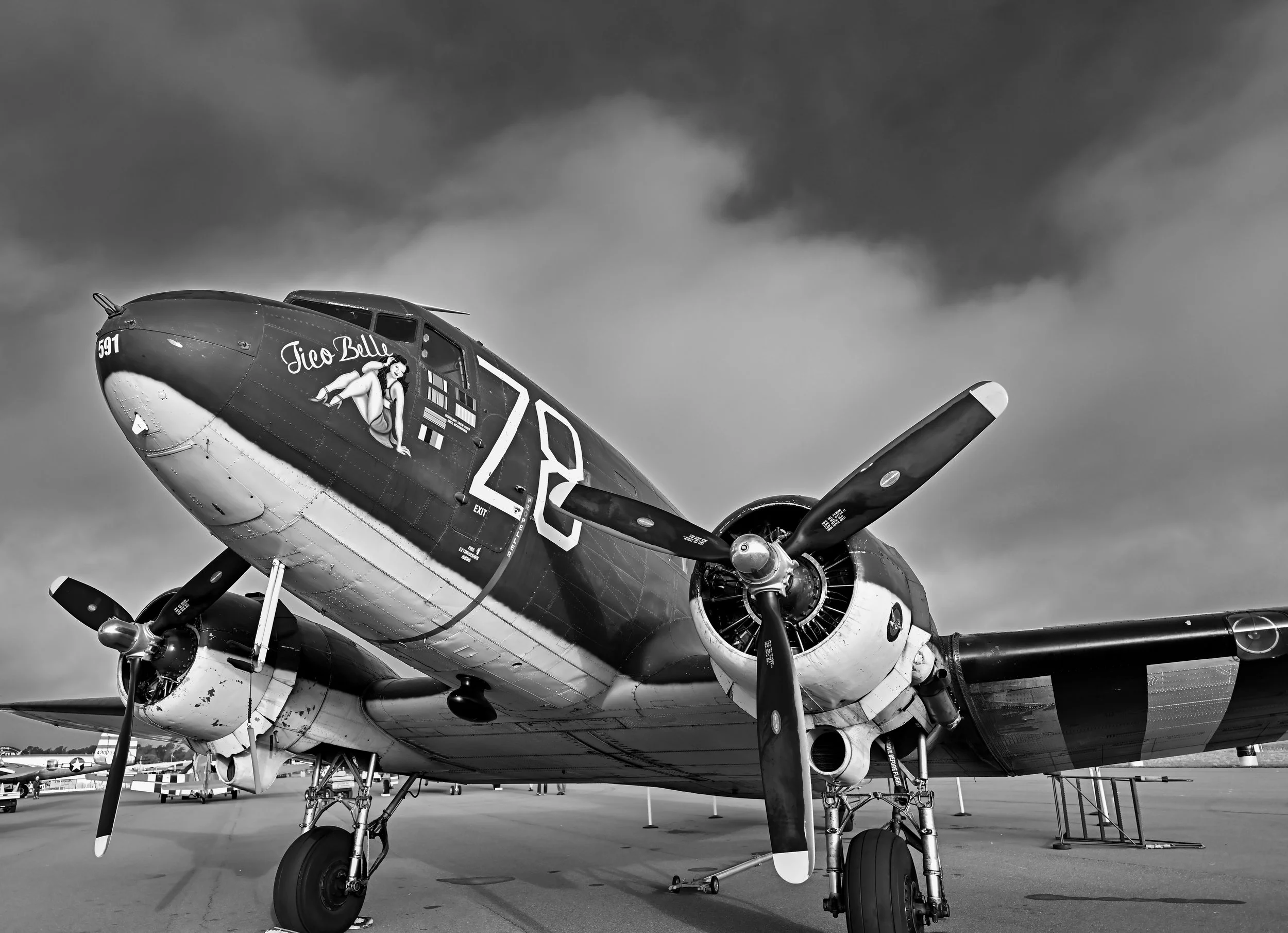
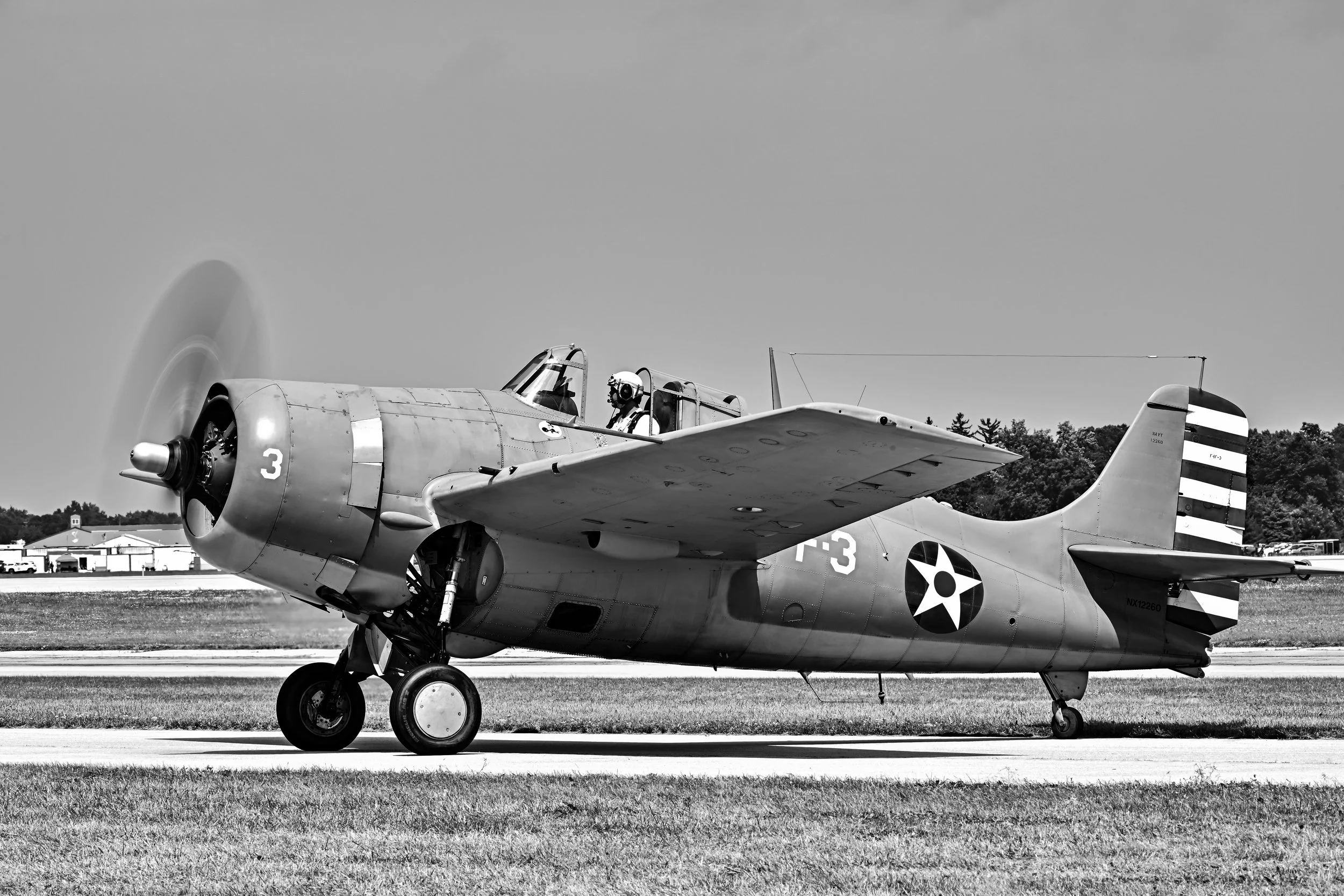
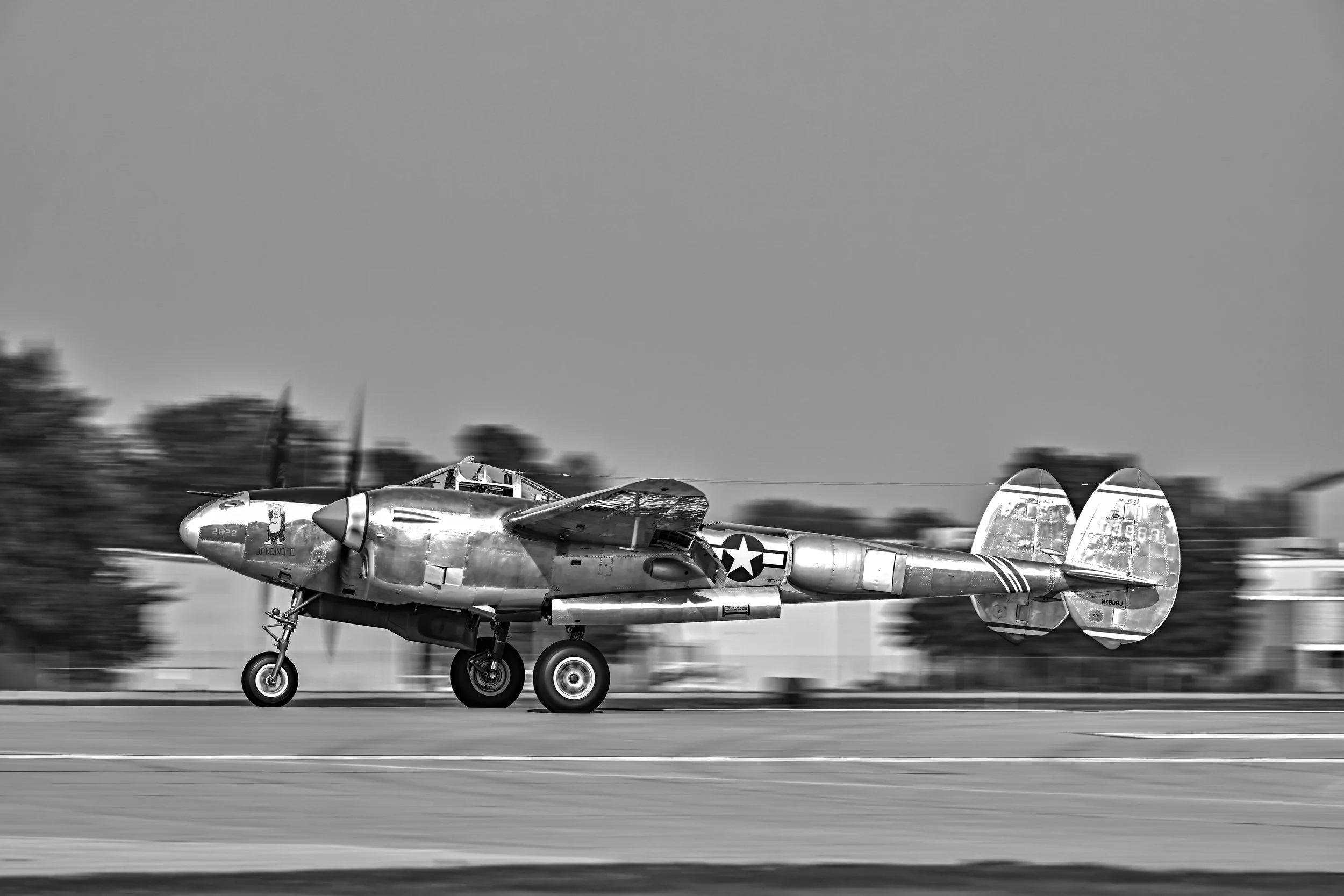
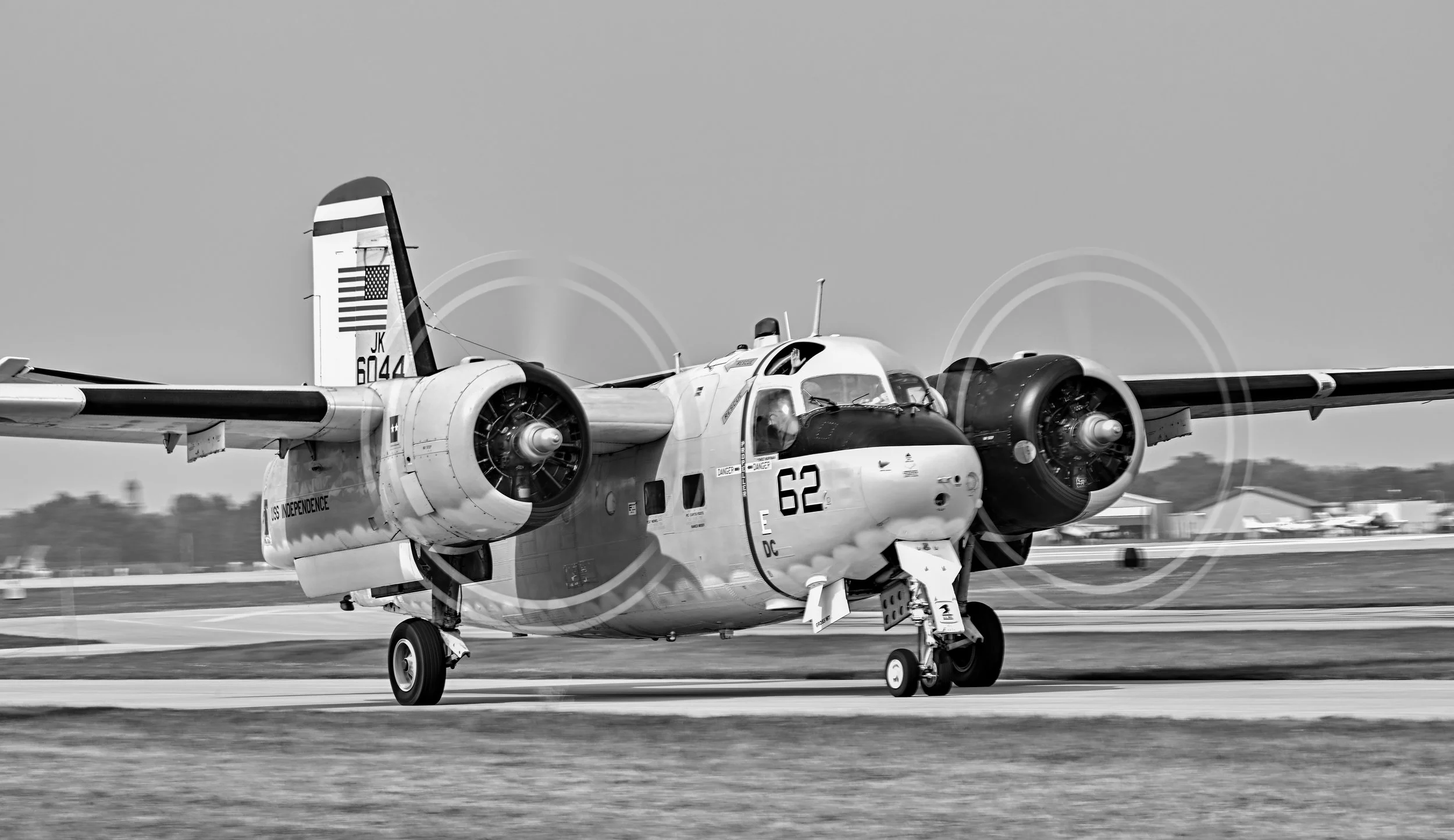
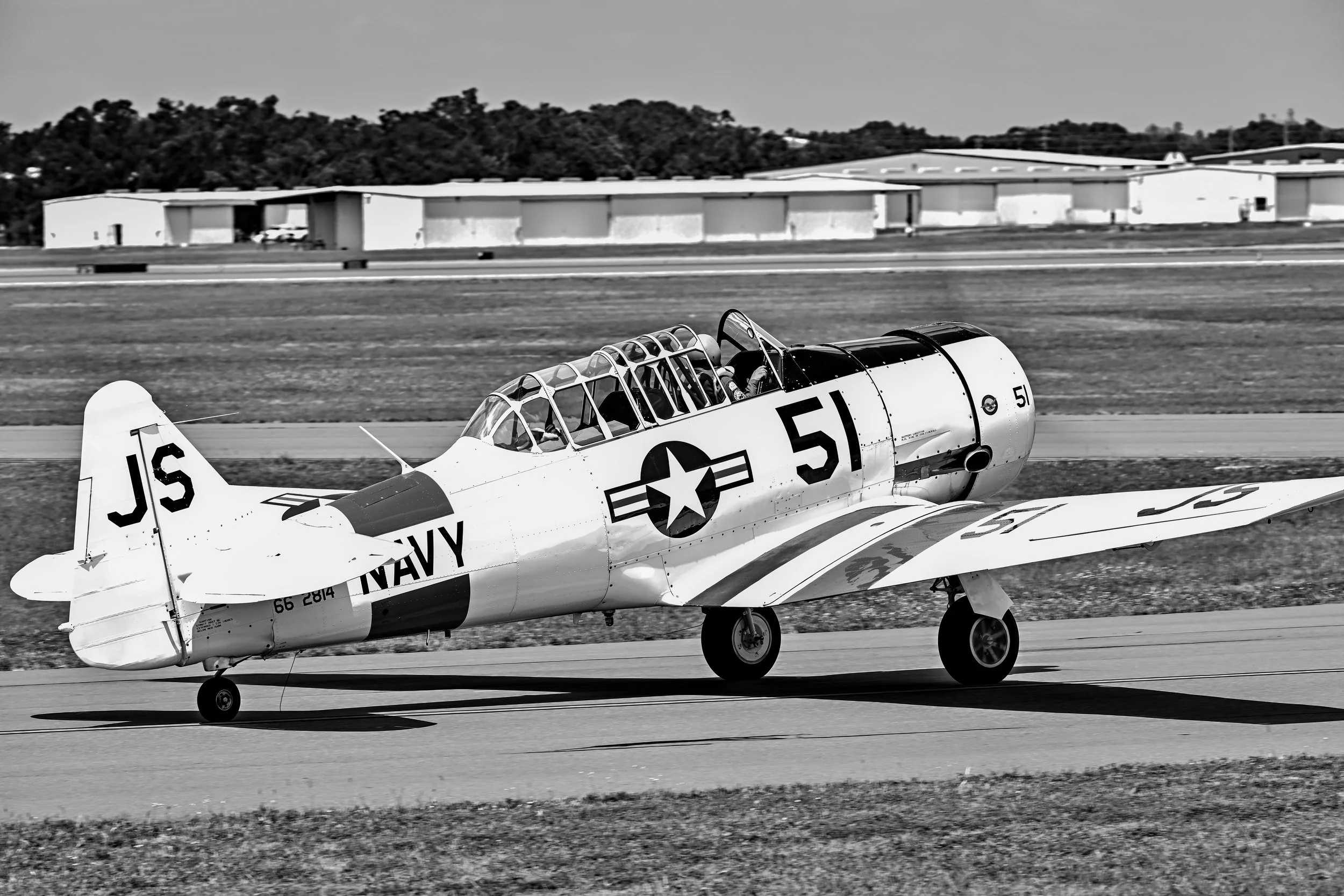
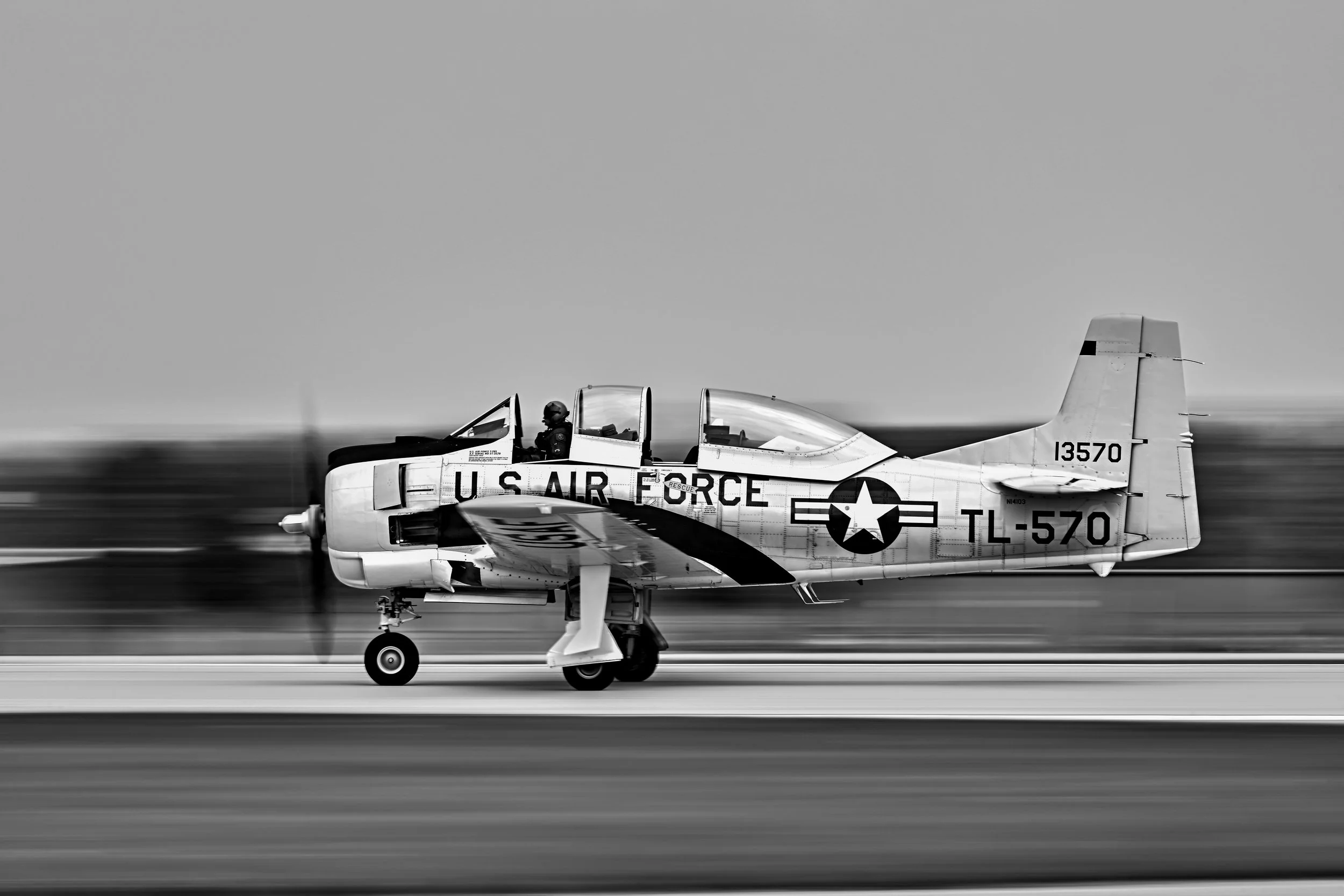
I found the black and white section I did from last year to be a fun little experiment so I decided to bring it back. While I didn’t attend a whole to airshows this year, the warbird selection was still plentiful. Photos selected below were from Sun N Fun, TBM Reunion and EAA AirVenture. Look forward to bringing more in 2026!
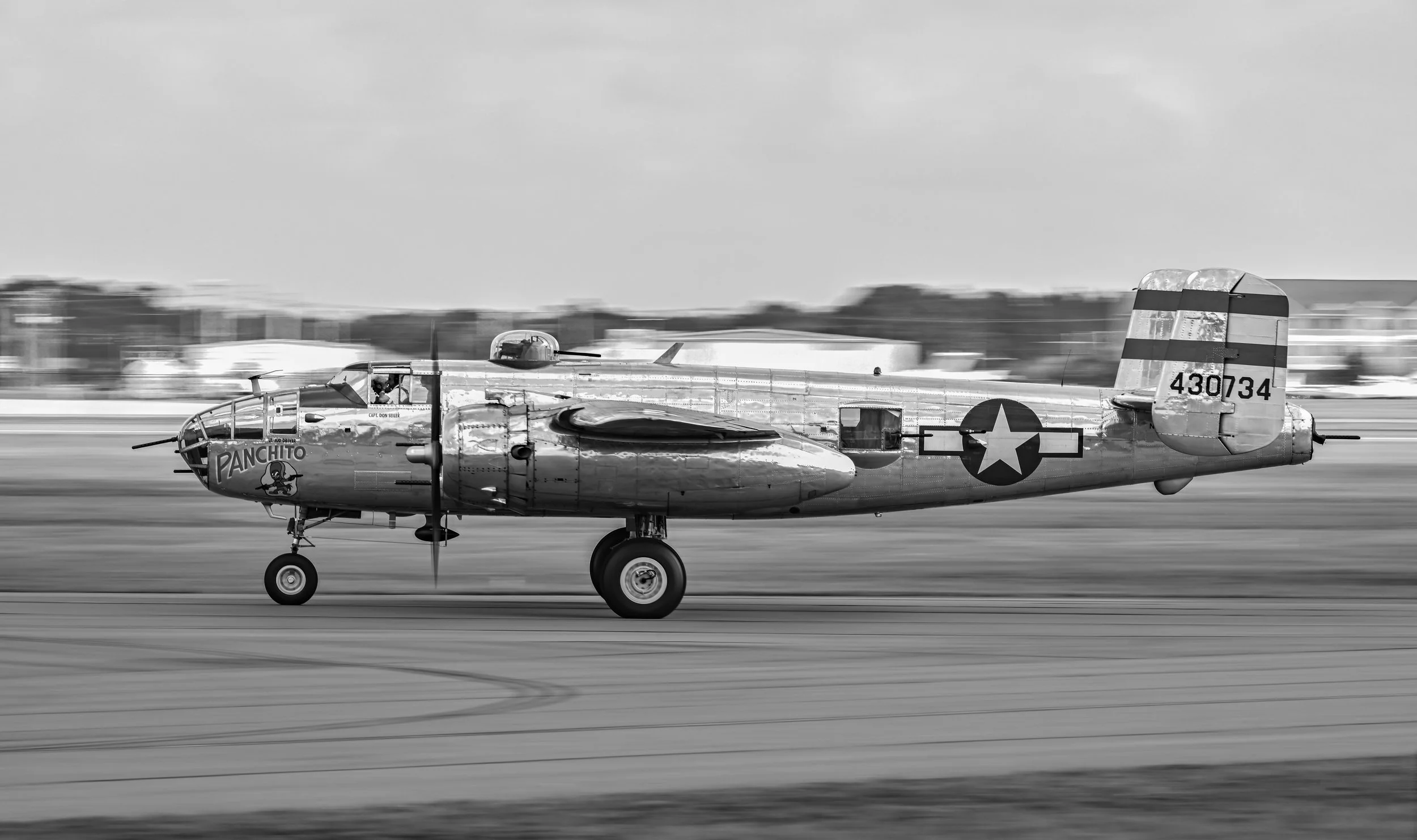
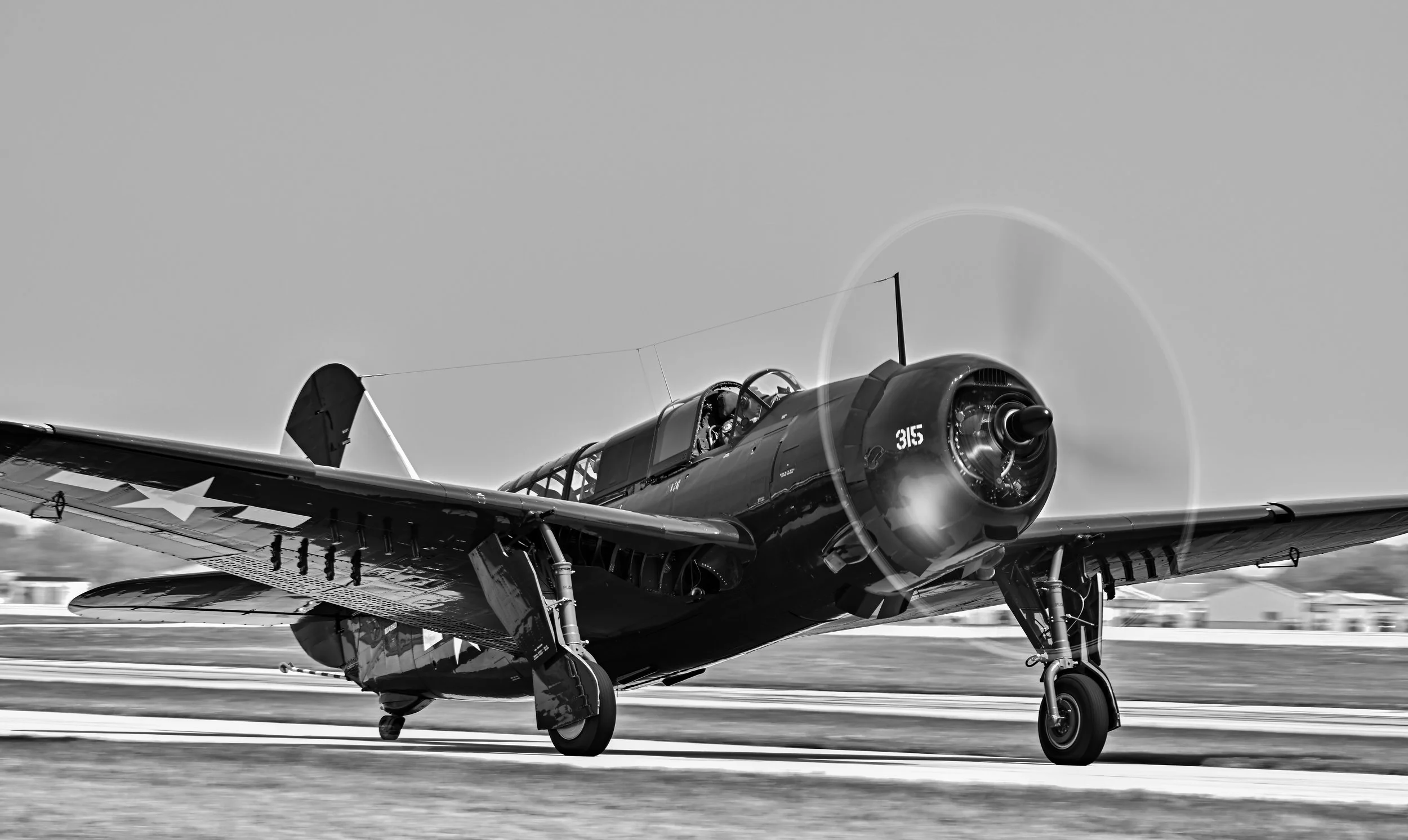
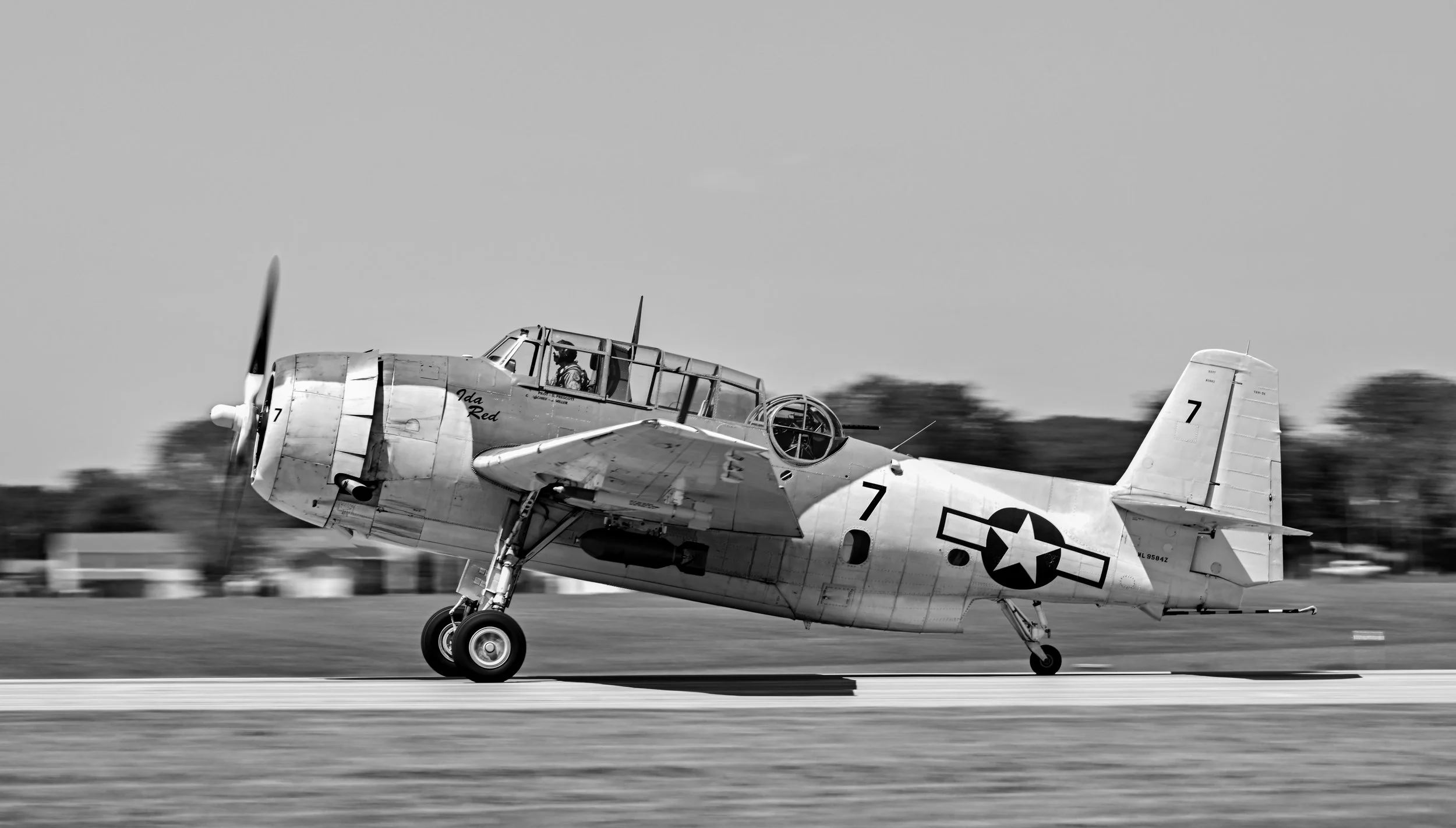
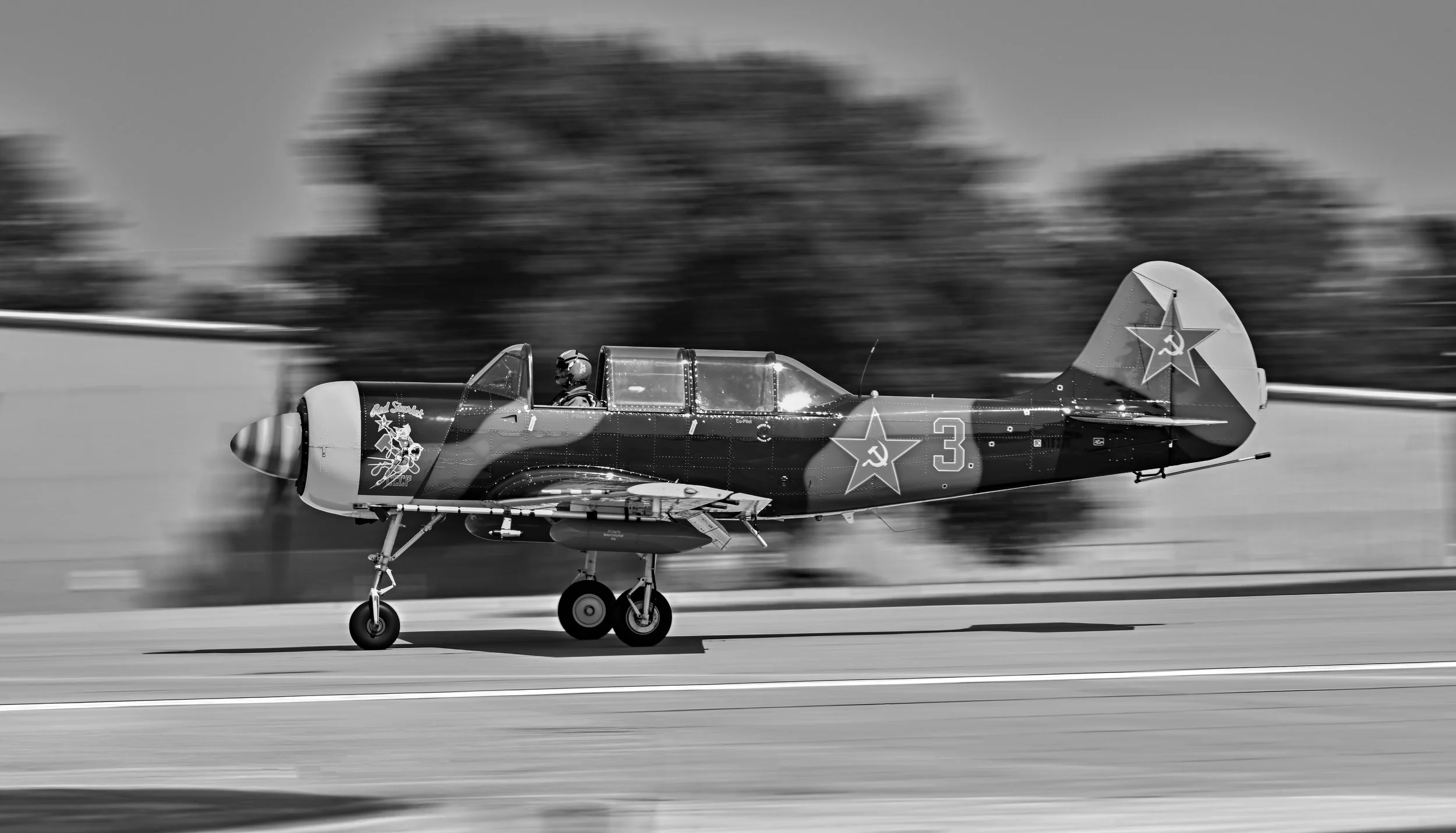
Clips From the 2025 Airshow Circuit
By Jacob Herb
Two TH-73A Thrashers from TAW-5 out of NAS Whiting Field in Milton, Florida taxi down Taxiway Delta towards static parking at the 2025 edition of the Sun N Fun Fly-In and Aerospace Expo. The Thrasher was first introduced in August of 2021 and replaced the aging TH-57 Sea Knight as the primary helicopter training platform for the Navy, Marine Corps and the Coast Guard.
A rarity for AirVenture this year was this U-2S Dragon Lady being on static display. The past couple of years, the U-2 has treated us to some fly-bys but not as a static display. Its really something to be this close to a running and moving U-2 that’s not at Beale or any other military installation.
A F8F Bearcat coming down RWY 5/28 which is used as a taxi way during the Sun N Fun Expo. This F8F-1B was brought into naval service in 1948 as BuNo 122095 and retired 3 years later in 1951. It served 14 years with the Royal Thai Air Force before coming into private hands. This Bearcat currently resides in Indiana.
P-51D Mustangs “Cavallino” (S/N 44-73454) and “Glamorous Glenn III” (S/N 44-63893) taxiing out of Fighter Town to fly some people around the Oshkosh area during AirVenture. In true AirVenture fashion, a pair of F-15C Eagles from the Massachusetts Air National Guard fly overhead on their arrival into the event.
A C-130H Hercules with the Arkansas National Guard bringing their 100 year anniversary livery aircraft into static display during AirVenture. It was a real treat to see an H model once more as these are being retired as more J models come online.
The Samaritan’s Purse DC-8 visited AirVenture one final time before being retired in November to Liberty University. It left early to aid assistance to victims in Jamaica after Hurricane Melissa ravaged the area. It was a treat to see the last North American flying DC-8 one final time.
Michael, Jacob, and Brett greatly appreciate everyone for viewing our now second Best of Magazine. It was a light year for all of us as life events took our attention away from the aviation field but that should change for next year. So from all of us at JetBlast Magazine, please allow us to wish you a blessed 2026 and we look forward to bringing you the best from the aviation front lines!
-The JetBlast Team